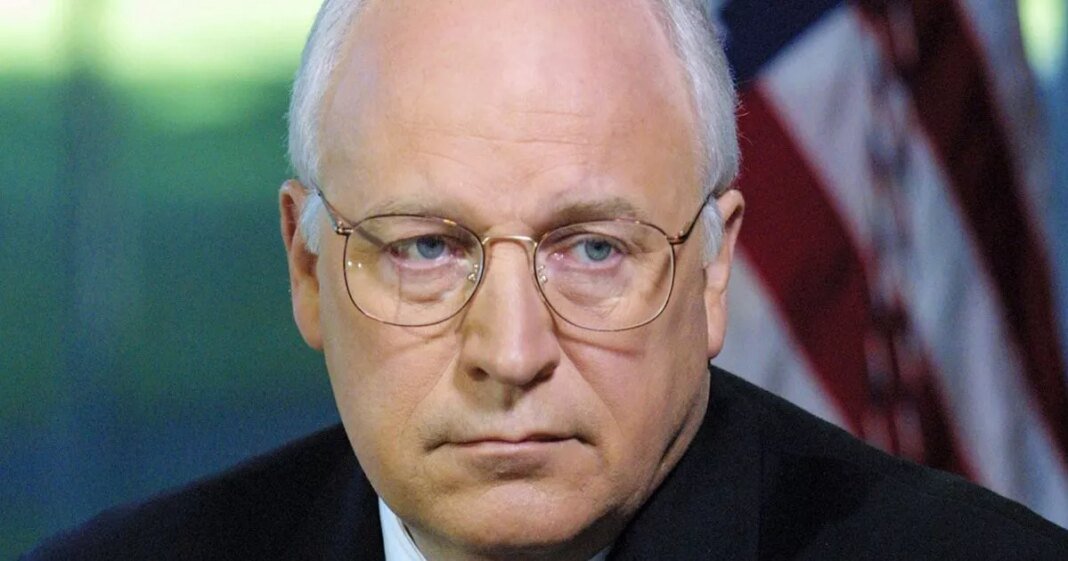

Former US Vice President Dick Cheney, known as one of the most influential deputies in American history, passed away at the age of 84. Cheney, often referred to as the “architect of the war on terror,” played a significant role in convincing Britain to support the Iraq war. His legacy is marked by controversy and far-reaching consequences.
Throughout his career, Cheney operated behind the scenes, wielding power from the shadows rather than seeking the limelight. While President George W. Bush served as the public face of the White House, Cheney was the strategic force driving policies with conviction and resolve.
In his later years, despite his conservative stance, Cheney distanced himself from the Republican Party due to his outspoken criticism of former President Donald Trump, whom he labeled a “coward” and a grave threat to the nation.
Cheney’s family confirmed his passing, stating that he succumbed to complications from pneumonia, cardiac, and vascular ailments. Born in 1941 in Lincoln, Nebraska, Cheney’s journey to political prominence began in Washington as a congressional aide after a brief stint at Yale University.
His ascent through the political ranks was marked by discipline and strategic acumen. Cheney’s tenure as Gerald Ford’s Chief of Staff in the 1970s showcased his mastery of bureaucratic power. He later served in Congress and as Secretary of Defense under President George H. W. Bush, overseeing the first Gulf War.
Cheney’s pivotal role as Vice President under George W. Bush came to the forefront following the tragic events of September 11, 2001. This period solidified Cheney’s push for preemptive war strategies, enhanced interrogation methods, and unprecedented surveillance measures.
His influence extended to shaping British foreign policy, particularly the decision to engage in military actions in Iraq and Afghanistan. Cheney’s unwavering belief in unilateral action and assertive foreign policy led to lasting repercussions in the Middle East and beyond.
Despite facing domestic controversies, including a widely publicized hunting incident in 2006, Cheney remained resolute in his convictions. His openness about personal matters, such as his daughter’s same-sex marriage, set him apart from his conservative base.
Cheney’s departure from office in 2009 was met with low approval ratings, yet he remained steadfast in his defense of his actions. In his memoir, “In My Time,” Cheney remained unapologetic, emphasizing his commitment to what he believed was right.
His legacy, characterized by polarizing viewpoints, reflects a man who made tough decisions in the face of adversity. Cheney is survived by his wife Lynne and their daughters Liz and Mary, both of whom have followed in his political footsteps.