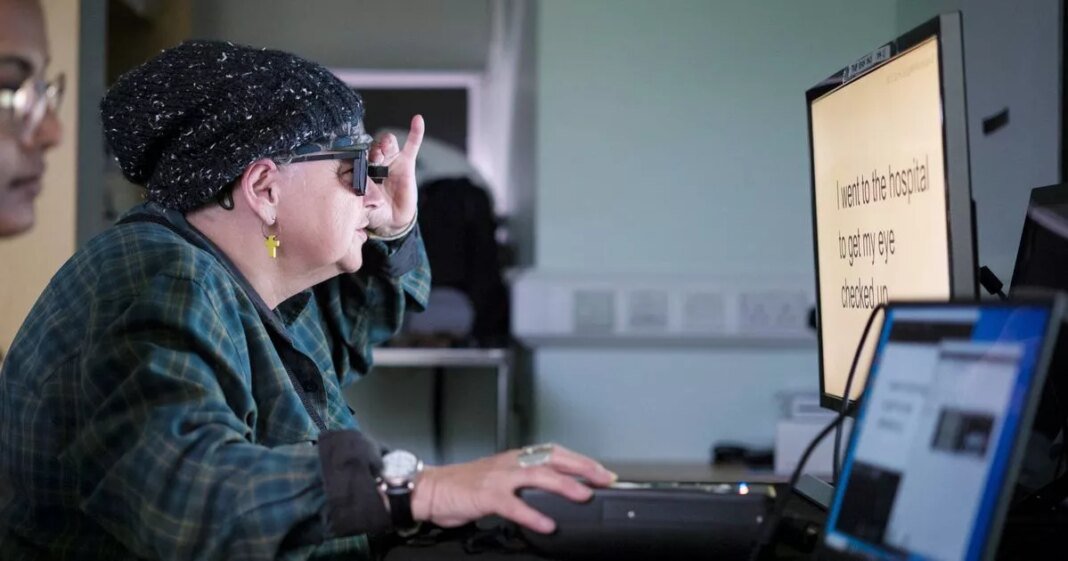

A self-proclaimed book enthusiast has become one of the initial individuals globally to regain her sight through a bionic eye implant, marking a significant breakthrough in eye health. Scientists have successfully restored vision in patients suffering from a prevalent eye condition by utilizing a specialized chip positioned behind the retina and providing them with virtual reality glasses. This innovative approach has been lauded as a groundbreaking advancement in artificial vision, offering optimism to approximately 700,000 individuals in the UK grappling with age-related macular degeneration (AMD).
Among those benefiting from this cutting-edge technology is Sheila Irvine from Wiltshire, who had been afflicted with geographic atrophy (GA), an advanced form of dry AMD resulting in the loss of central eyesight and limited peripheral vision. Following the insertion of a minute 2mm by 2mm Prima chip behind her retina at Moorfields Eye Hospital in London, Ms. Irvine has successfully relearned reading and writing.
She now utilizes augmented-reality glasses equipped with a video camera that transmits data to a portable computer via the chip. The computer then converts this information into electrical signals, which are relayed to the optic nerve and subsequently processed by the brain as visual input.
Describing her experience, Sheila expressed her joy at regaining the ability to see letters after feeling like she had black discs in her eyes before the implant. The revolutionary procedure, involving the participation of 38 patients across 17 sites in multiple countries, offers new hope to individuals suffering from AMD, a condition that impacts the macula, a crucial part of the retina responsible for vision.
Dr. Mahi Muqit, a senior vitreoretinal consultant at Moorfields, remains optimistic about the potential future availability of this technology within the NHS. He emphasized the life-altering impact on patients who can now engage in activities like reading, writing, and solving crossword puzzles, significantly enhancing their quality of life.
The groundbreaking method, detailed in the New England Journal of Medicine, revealed that 84% of trial participants could read letters, numbers, and words using the Prima chip, with some achieving improvements in vision chart performance. Sheila’s decision to participate in the research was fueled by her desire to contribute to advancements benefiting future generations, underscoring the transformative impact of the technology on her life.
Despite being diagnosed with AMD over 15 years ago, Ms. Irvine has remained resilient and determined not to let her condition hinder her daily activities. Her positive outlook and active lifestyle serve as a testament to the newfound possibilities enabled by the bionic eye technology.
Dr. Muqit highlighted the emotional and social benefits experienced by formerly isolated and depressed visually impaired patients who have now regained functionality and rediscovered their passions. The procedure, which involves a vitrectomy to insert the Prima chip, allows patients to use virtual-reality glasses connected to a waistband computer for enhanced visual experiences.
The device operates seamlessly, ensuring safety and comfort for users, with the ability to be utilized extensively without time constraints. The successful outcomes of the trial offer a glimpse into a future where artificial vision can profoundly impact the lives of those affected by sight-related impairments.