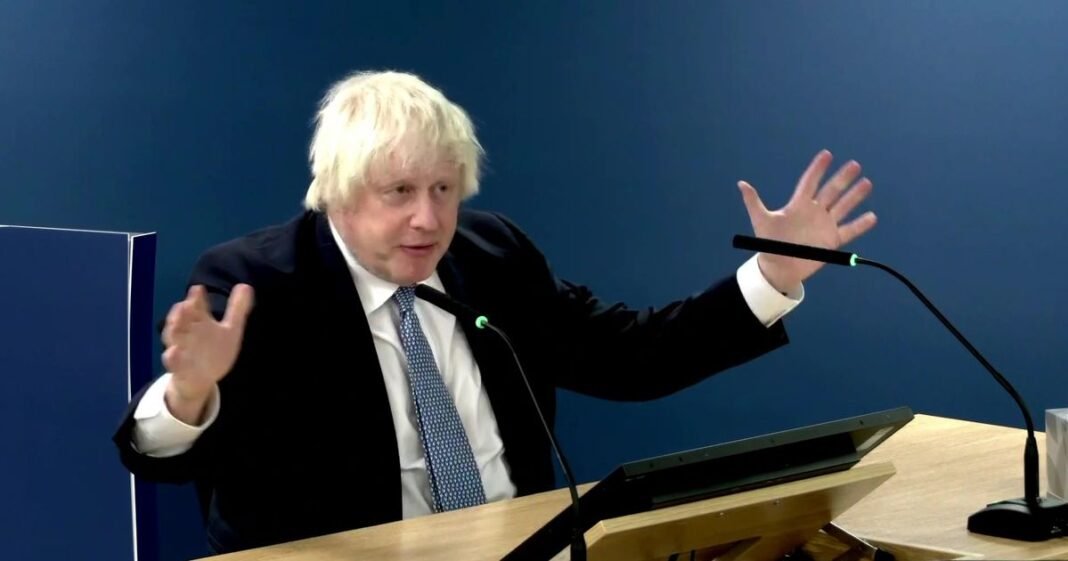

Boris Johnson has acknowledged the delayed realization of the severity of Covid-19 within his government during the pandemic.
In a testimony to the Covid-19 Inquiry, the former Prime Minister expressed his belief that children might have been better off excluded from lockdown measures. He faced inquiries regarding the abrupt closure of schools during the pandemic and the potential harm inflicted on a generation of children.
Reflecting on the past, Johnson mentioned that in hindsight, the extensive lockdown regulations, including the Rule of Six, may have been overly stringent, especially for children. He suggested that there could have been a way to exempt children from certain restrictions.
The UK underwent a national lockdown from late March to June 2020, limiting movement to essential activities like purchasing food or seeking medical assistance.
During September, England implemented the “Rule of Six,” restricting social gatherings to six individuals. Children were included in this restriction in England but not in Wales.
When it was pointed out that outdoor play was crucial for children’s exercise, Johnson stated that his understanding was that children should have been allowed outdoor activities.
Criticism was directed at the government for the lack of preparedness in managing school closures and remote learning. The decision to close schools abruptly was announced on March 18, coming into effect two days later.
Upon leaving the inquiry in West London, Johnson faced protests from parents of children suffering from Long Covid, highlighting the challenges faced by families during the pandemic.
The inquiry revealed that many children faced developmental setbacks due to closures and isolation, particularly those in households lacking necessary resources like computers or facing chaotic living conditions.
The absence of a comprehensive national plan for remote learning until mid-March 2020 was highlighted during the inquiry, leading to challenges for families with limited access to technology or key workers.
Johnson admitted that while he understood the necessity of school closures, the decision was a difficult one, impacting the educational prospects of vulnerable children.
The inquiry also heard testimonies suggesting inadequate planning for school closures and remote learning, with last-minute decisions causing disruptions in the education system.
Despite the challenges faced, Johnson emphasized the importance of taking responsibility for the decisions made during the pandemic and expressed pride in the efforts of teachers and schools in navigating the difficult circumstances.
While acknowledging the necessity of school closures to prevent further spread of the virus and alleviate pressure on the healthcare system, Johnson maintained that the decisions were made to safeguard public health.
England’s Chief Medical Officer, Sir Chris Whitty, echoed the sentiment that school closures were unavoidable but could have been managed more effectively.