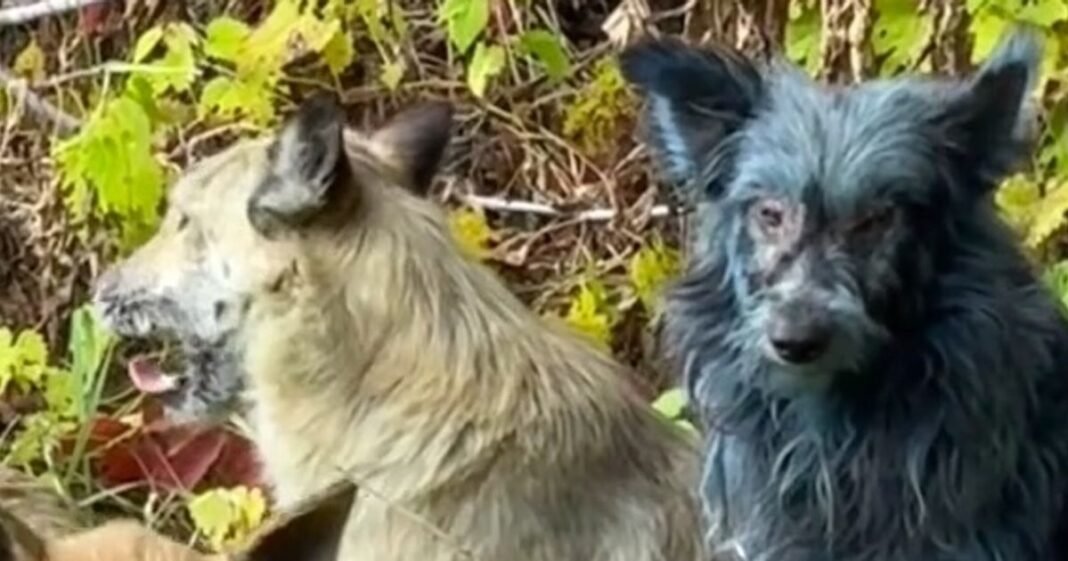

Residents were shocked by the appearance of dogs that have mysteriously turned blue near the Chernobyl nuclear power plant. These canines are believed to be descendants of pets left behind in northern Ukraine following the catastrophic event nearly four decades ago. The Dogs of Chernobyl organization, dedicated to caring for the strays within the 18-square-mile exclusion zone, reported encountering these blue-hued canines roaming the area.
Despite their unusual coloration, the dogs seemed to be in good health, according to the group established in 2017 to assist the stray animals in the region. The exclusion zone, established after the 1986 explosion of Reactor No. 4, remains restricted to most individuals, as it was the site of one of the most devastating nuclear disasters in history, claiming 31 lives and impacting thousands more.
The blue dogs have captured the curiosity of many, shedding light on the resilient wildlife in Chernobyl devoid of human interference. Approximately 700 dogs reside in the area, symbolizing survival. The charity provides essential care, including medical attention and food, and recently encountered three dogs with striking blue fur during their routine checks.
In a social media update, the organization shared, “A remarkable encounter we must address: Chernobyl blue dogs. While capturing dogs for sterilization, we came across three entirely blue dogs. The community raised questions about their unusual appearance, which remains a mystery to us. Our efforts to capture them for further investigation have been unsuccessful, as they appear to be active and elusive.”
Chernobyl has evolved into an unexpected sanctuary for wildlife in the aftermath of the worst nuclear disaster in history. The absence of human presence following the reactor fire led to the resurgence of various animal species. Today, wild horses, deer, and over 200 bird species thrive within the Chernobyl Exclusion Zone, spanning 1,600 square miles along the Ukraine-Belarus border.
At a recent conference, researchers studying the impact of radiation on animals emphasized the area’s flourishing biodiversity. They confirmed that the current radiation levels have not significantly harmed the animal and plant populations within the exclusion zone, maintaining stable and viable ecosystems.
Following the evacuation of over 100,000 individuals from the vicinity and the establishment of the Chernobyl Exclusion Zone within a 20-mile radius of the damaged reactor, the area witnessed the expansion of radioactive clouds across Europe. Although the region reopened to tourists in 2011, strict guidelines and regulations govern visits due to the persisting high radiation levels.
Visitors to Chernobyl must adhere to the stringent safety protocols mandated by the Ukrainian government, as failure to comply could result in substantial fines or potential imprisonment due to the lingering radiation hazards in the area.