
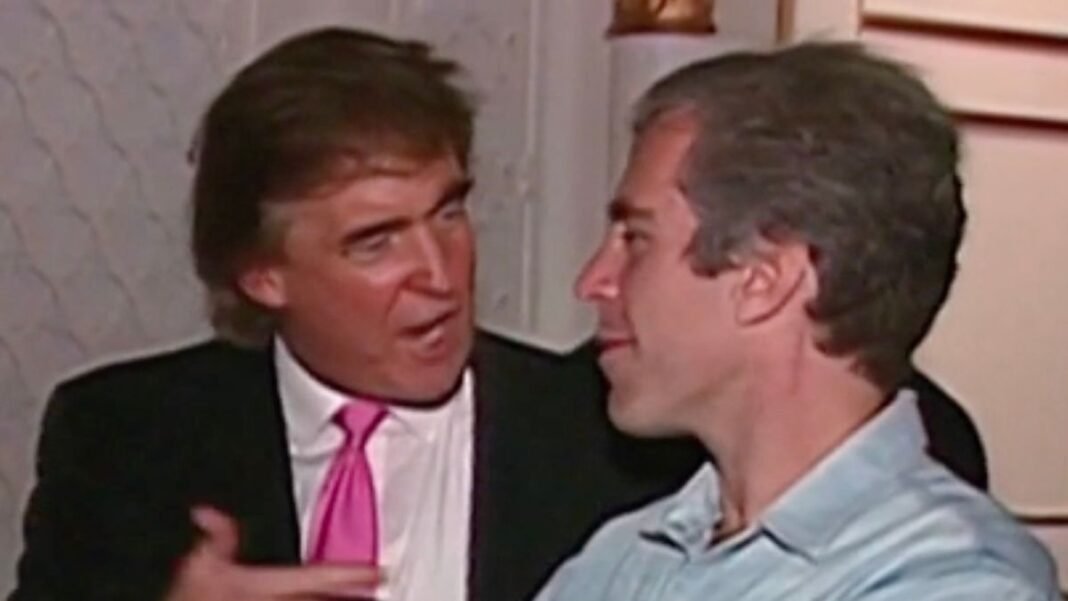

In a repeated pattern, Donald Trump has relied on diversion to evade uncomfortable truths, swiftly shifting attention when scrutiny looms. However, this time, even amidst conflicts with the media and global affairs, Jeffrey Epstein’s shadow looms too large to escape. Trump’s association with the disgraced financier has long been a point of intrigue, with Epstein’s recently disclosed emails alleging the president’s knowledge of concerning interactions with young women. These are not mere speculations but Epstein’s own admissions, portraying Trump not as an adversary but as a tacit supporter. Despite Trump’s claims of a strained relationship with Epstein, the emails suggest a lingering closeness that contradicts his public narrative.
During his pre-presidential campaign, Trump championed transparency, promising to unveil all details related to Epstein and condemn the exploitation of vulnerable individuals by the elite. However, these pledges remain unfulfilled, with crucial files withheld, victims’ pleas disregarded, and evidence concealed within bureaucratic layers.
As fragments of suppressed documents emerge, Trump’s professed anti-corruption stance crumbles, revealing his role as a protector of the very establishment he vowed to challenge. Trump’s current tactic involves deflecting attention from the Epstein scandal through a whirlwind of chaotic activities and disputes, attempting to overshadow the looming controversy with noise.
The uncovered emails, which are authenticated and linked to Epstein’s inner circle, hint at a sustained connection between Trump, Epstein, and Ghislaine Maxwell, contradicting Trump’s attempts to rewrite their shared history. The revelation strikes a nerve within Trump’s support base, who once trusted him to expose corruption among the elite, now feeling betrayed by his silence on the matter.
The movement that rallied behind Trump now faces internal divisions, with some adherents crafting conspiracy theories to shield the powerful, while others demand accountability. For a movement founded on challenging the “deep state,” the notion that their leader may have been complicit in concealing it presents a significant dilemma.
Trump’s typical playbook of promising transparency, burying inconvenient truths, and blaming the media falls short in the face of the Epstein emails, which delve into Trump’s pre-political persona fixated on image, reputation, and associations. This transcends political divides, delving into questions of morality and accountability, leaving a lingering query: why did Trump opt for silence over fulfilling his vow to expose Epstein’s transgressions?
Despite Trump’s mastery of spectacle and intimidation, this narrative remains beyond his control. The Epstein scandal represents a reckoning that Trump cannot evade, regardless of his efforts to distance himself from it.