
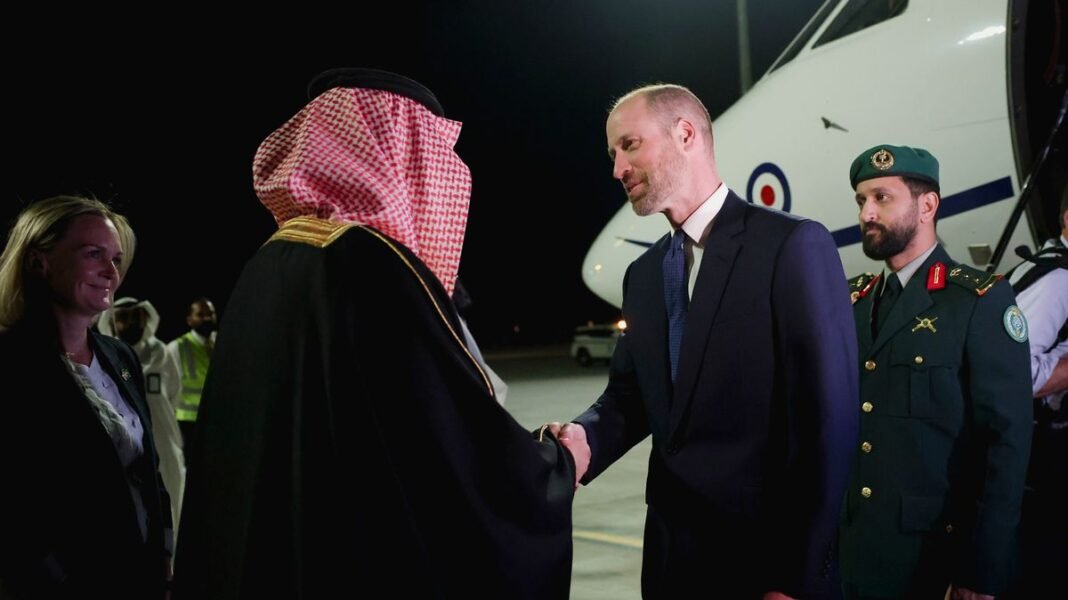

The Prince of Wales is currently in Saudi Arabia, aiming to distance himself from the Epstein scandal. During a recent encounter with a reporter, he avoided a question about his controversial uncle. However, Epstein’s connections extended beyond him and included mentions of various royal families in Europe and the Middle East.
In a recent report by The New York Times titled ‘A Look Inside Jeffrey Epstein’s Lair,’ a framed photograph of Saudi Crown Prince Mohammed bin Salman, also known as MBS, was discovered in Epstein’s New York mansion. Emails from Epstein to billionaire Tom Pritzker revealed mentions of gifts received from MBS, adding to the complexity of Prince William’s diplomatic visit to Saudi Arabia.
On his visit to Riyadh, the Prince of Wales arrived without his wife, Kate Middleton, who stayed in the UK to care for their children. This decision may have been influenced by past controversies, such as the Riyadh Comedy Festival, which faced criticism for downplaying Saudi Arabia’s human rights issues.
During his trip, the Prince engaged in a PR moment by meeting young female footballers in Riyadh, showcasing the advancements in women’s rights under MBS’s reform initiatives. Despite progress in areas like sports attendance and job opportunities for women, Saudi Arabia still ranks low on the Global Gender Gap Index.
While some reforms have been made to the concept of guardianship in Saudi Arabia, significant limitations remain for women’s rights, including restrictions on marriage, divorce, and sexual autonomy. LGBTQ+ rights are virtually non-existent in the country, with severe penalties for individuals found guilty of homosexuality.
MBS’s efforts to promote a modern image of Saudi Arabia through events like comedy shows and sports tournaments have faced criticism for overshadowing ongoing human rights violations. The royal visit serves as another attempt at ‘Royal-washing,’ drawing attention to the complexities of diplomacy and human rights advocacy in the region.
The visit raises questions about the motives behind showcasing royal family members in diplomatic engagements and the balance between promoting positive change and addressing human rights concerns in Saudi Arabia.