
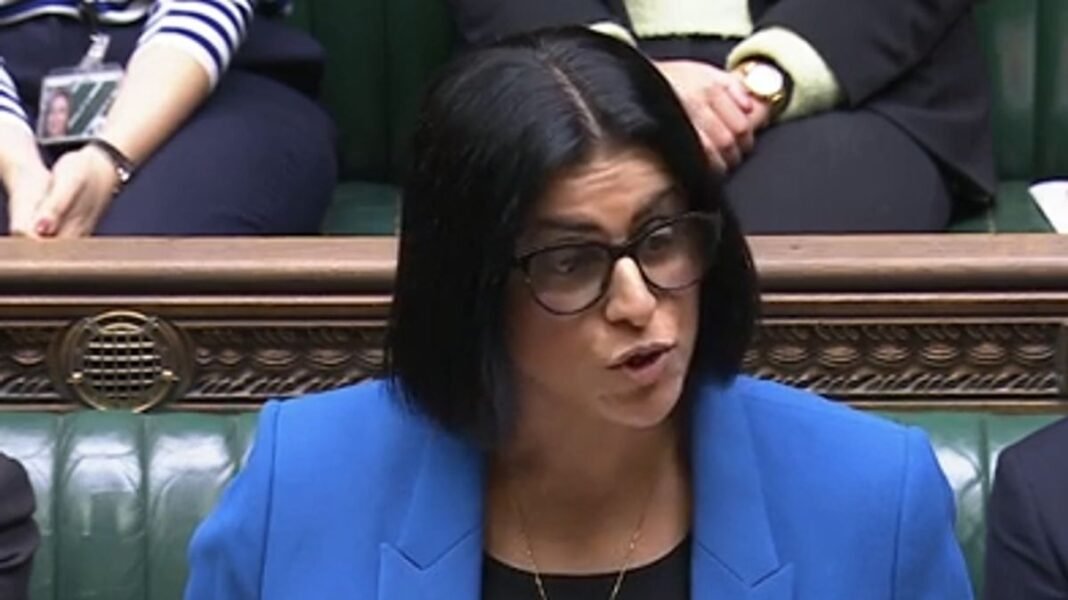

Shabana Mahmood has unveiled significant changes to immigration rules, marking the most substantial overhaul in half a century. The new regulations prioritize high earners and public sector workers, aiming to acknowledge those who positively impact the economy and abide by regulations. The proposed adjustments extend the period before migrants can seek permanent settlement, setting a standard qualifying time of 10 to 15 years, a substantial increase from the current five-year requirement.
The government’s strategy includes a mix of incentives and penalties. Skilled public sector employees, entrepreneurs, and high-income individuals will receive expedited processing, while others may have to wait for decades. For instance, migrants arriving via small boats or relying on benefits might face a 20 to 30-year waiting period before being eligible to apply for settlement. Critics caution that such extended delays risk subjecting individuals fleeing conflict and persecution to prolonged uncertainty and stress.
In a plea to lawmakers, Ms. Mahmood emphasized the importance of managing migration effectively to prevent the amplification of division and animosity. She highlighted the need to demonstrate that immigration can continue to be a constructive element of the nation’s narrative while addressing the concerns of local communities facing significant societal changes.
The proposed revisions will impact approximately two million individuals who arrived post-2021, excluding those with existing settled status. The Home Secretary emphasized that the privilege of settling permanently in the country must be earned, outlining stringent criteria such as a clean criminal record, English proficiency at A-level standard, no government debts, and a minimum of three years’ National Insurance contributions.
Furthermore, individuals reliant on benefits for over a year could face a decade-long delay in settlement eligibility. However, volunteering could lead to a reduction in the waiting period, according to the proposals. The new rules also suggest that migrants may only access benefits and social housing after acquiring British citizenship.
Skilled frontline workers like doctors, high earners, and entrepreneurs are slated for expedited processing, with the possibility of applying for permanent settlement after five years. Conversely, low-wage workers, including those on health and social care visas, may face a 15-year baseline requirement. The Labour government had previously closed this visa route due to widespread abuse.
Ms. Mahmood also announced penalties for migrants dependent on benefits, imposing a 20-year waiting period for settlement, quadrupling the current duration and exceeding European norms. Additionally, the proposals introduce the condition that migrants must attain British citizenship before becoming eligible for benefits and social housing.
The government’s stance is that these reforms will establish a fairer immigration system for British citizens, while acknowledging the contributions of migrants to the economy and public services. Immediate family members of UK citizens and Hong Kong BN(O) holders will retain the existing five-year settlement pathway.
Enver Solomon, CEO of Refugee Council, expressed concerns that the proposed measures might prolong uncertainty and stress for individuals fleeing conflict, hindering their ability to rebuild their lives and integrate into society effectively. Solomon emphasized the importance of providing refugees with stability to facilitate their successful resettlement and contribution to their new communities.