
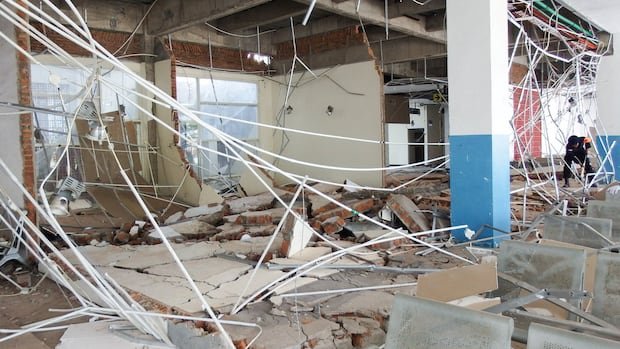

At least 47 individuals lost their lives following a powerful magnitude 7.7 earthquake and numerous aftershocks that hit eastern Indonesia on Saturday, as confirmed by the National Disaster Mitigation Agency (BNPB). Approximately 2,000 people sought refuge in safer areas in the aftermath of the calamity.
Efforts to access Nagekeo, the nearest region to the quake’s epicenter, have been hindered by landslides obstructing roads and disrupting communication channels, according to officials. Although a tsunami warning was issued initially, it was later rescinded approximately three hours after the seismic event.
Nona, a 51-year-old resident of Talibura village in East Nusa Tenggara, described the tremors as significant, prompting her and 12 others to flee their home to safety. In Maumere, a port town, rescue teams discovered 20 deceased individuals, six injured, and two individuals trapped under debris, as reported by Fathur Rahman, the head of the city’s rescue agency.
Residents remain trapped in various structures within the affected areas, with reports of landslides impeding access to several locations. The head of BNPB, Suharyanto, highlighted ongoing rescue efforts and the challenges posed by blocked roads and communication breakdowns.
The governor of East Nusa Tenggara Province, Emanuel Melkiades Laka Lena, disclosed that five individuals perished as structures collapsed while they were sleeping. Initial data from BNPB indicated significant damage to residential buildings, schools, healthcare facilities, places of worship, and other infrastructure.
Videos circulating on social media depicted chaotic scenes as buildings crumbled, prompting people to flee to safety amid the chaos. Residents across multiple regions experienced intense shaking lasting about a minute, leading to widespread evacuations.
Indonesia, situated along the “Pacific Ring of Fire,” a region known for high seismic activity due to tectonic plate interactions, faces recurring threats from earthquakes and volcanic eruptions.