
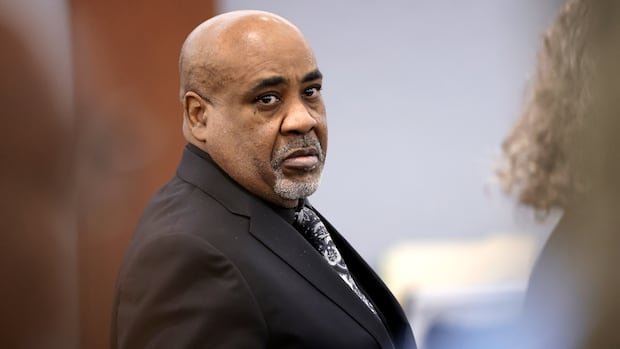

A jury has reached a verdict in the case of Duane “Keffe D” Davis, finding him guilty of orchestrating the 1996 killing of rap legend Tupac Shakur. This marks the first conviction in a case that has captivated hip-hop enthusiasts for decades. Davis, aged 63, was convicted on Monday of murder using a deadly weapon and faces a potential life sentence. The jury deliberated for three hours following a lengthy trial in Las Vegas.
Following the announcement of the verdict, emotions ran high in the courtroom. Shakur’s sister, Sekyiwa “Set” Shakur, was visibly distraught, while Davis’s son covered his face with his hand. Chief Deputy District Attorney Binu Palal emphasized to the jurors that Davis had obtained a firearm and actively sought out Shakur and Death Row Records co-founder Marion “Suge” Knight after an altercation earlier that evening involving Davis’s nephew.
Despite variations in Davis’s recounting of events over the years, Palal argued that the consistent detail was Davis’s presence inside a white Cadillac from which the fatal shots were fired. Defense attorney Michael Sanft challenged the jurors to find evidence beyond Davis’s statements linking him to the scene in Las Vegas or inside the Cadillac on the night of the shooting. Sanft highlighted the absence of surveillance footage or phone records placing Davis at the location.
Amidst the trial, attention was drawn to a photograph displayed of Shakur and Knight taken just moments before the shooting. The decades-old case has intrigued both hip-hop enthusiasts and legal experts. Shakur, a highly influential rapper, was fatally shot while in Las Vegas on September 7, 1996, when a white Cadillac pulled up beside him at a red light and shots were fired. He succumbed to his injuries six days later, while Knight survived.
Davis emerged as a key figure in the case after publicly disclosing his involvement in the shooting, claiming to have been in the Cadillac and providing the gun to others in the vehicle. Prosecutors underscored that under Nevada law, aiding in a murder is tantamount to committing the crime. Davis is the only surviving individual among the four men allegedly present in the Cadillac that night.
Palal stressed to the jurors that Davis’s statements did not necessitate independent corroboration and emphasized that the focus should be on Davis’s role in providing the weapon and orchestrating the attack. The prosecution maintained that the shooting was premeditated, citing testimony and Davis’s accounts of the group’s deliberate search for Shakur before the incident.
During the trial, Palal referenced Davis’s 2019 memoir, “Compton Street Legend,” and an interview where Davis promoted it as containing the “real truth.” Despite claims of changed details in the book, Palal argued that the central narrative remained consistent. Conversely, the defense contended that Davis’s memoir was not fabricated for monetary gain but rather to recount events truthfully.
In a rebuttal, prosecutor Marc DiGiacomo highlighted a scrapbook maintained by Davis that contained articles about Shakur, suggesting a disturbing fascination with the murder. The trial’s conclusion marks a significant development in a case that has long intrigued fans and legal observers alike.