


A unique find of an underwater nursery containing billions of baby sea cucumbers close to Sanikiluaq, Nunavut, is aiding scientists in their research on the species — and it has the potential to provide economic benefits for the Arctic community in the future.
Lucassie Arragutainaq, who manages the Sanikiluaq Hunters and Trappers Association, mentioned that his community frequently consumes small, juvenile sea cucumbers. However, larger adult sea cucumbers could be exported to markets in China and Japan.
With an interest in potentially incorporating this species into plans for a commercial scallop fishery, the association reached out to researchers from Memorial University in Newfoundland to examine Cucumaria frondosa, commonly known as the Orange-footed sea cucumber, in 2018.
Annie Mercier, a professor in the university’s ocean sciences department, along with her team — guided by local residents — discovered the nursery the following year.
Arragutainaq noted that his community was previously unaware of this nursery.

Lucassie Arragutainaq, manager of the Sanikiluaq Hunters and Trappers Association, shared that the community regularly consumes small, young sea cucumbers, while larger adults could be sold to China and Japan. (Liny Lamberink/CBC)
“We were absolutely ecstatic,” expressed Mercier.
According to Mercier, there are approximately 1,800 sea cucumber species worldwide, and their nursery habitats remain largely undocumented. She explained that these creatures are cryptic, meaning they are difficult to locate.
Mercier and her colleagues published a 2023 study in the peer-reviewed journal Polar Science detailing the nursery found along the coast near Sanikiluaq, marking it as the first discovery of a Cucumaria frondosa nursery.
The juvenile sea cucumbers measure less than two millimeters and appear as pink flecks on the rocks and mussel shells where they reside. While adult sea cucumbers are located deep on the ocean floor, Mercier indicates that the juveniles are found nearer to the surface.
She remarked that the nursery is “massive” and likely extends along the entire coastline of the Belcher Islands archipelago, lying between one to three meters beneath the ocean’s surface.
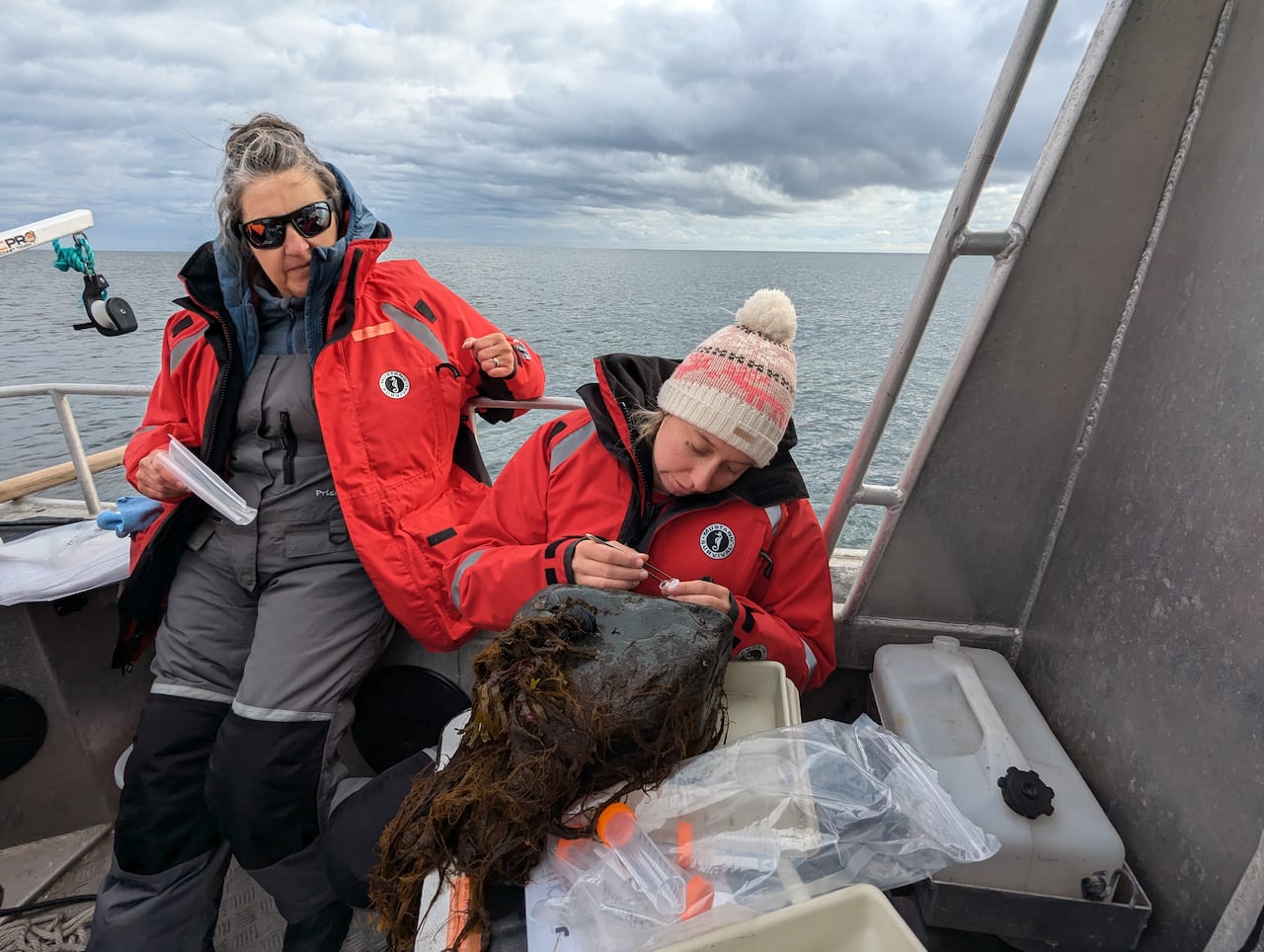
Annie Mercier and Joséphine Pierrat during a research expedition to Sanikiluaq in 2024. (Submitted by Joséphine Pierrat)
“This discovery has really opened many new research paths, and we are extremely thankful we were able to find this,” Mercier noted. “When you have young specimens, you can observe their growth rates, migration patterns, and behavioral changes.”
This data is also important for the management of the species, she added.
‘They’re everywhere’
Joséphine Pierrat used a small silver spatula to highlight sea cucumbers in a bucket filled with water, mussels, and rocks.
A juvenile resting against the side of the white bucket was easily recognizable — it was brown, spiny, and over an inch long — but the tiny babies were more challenging to detect.
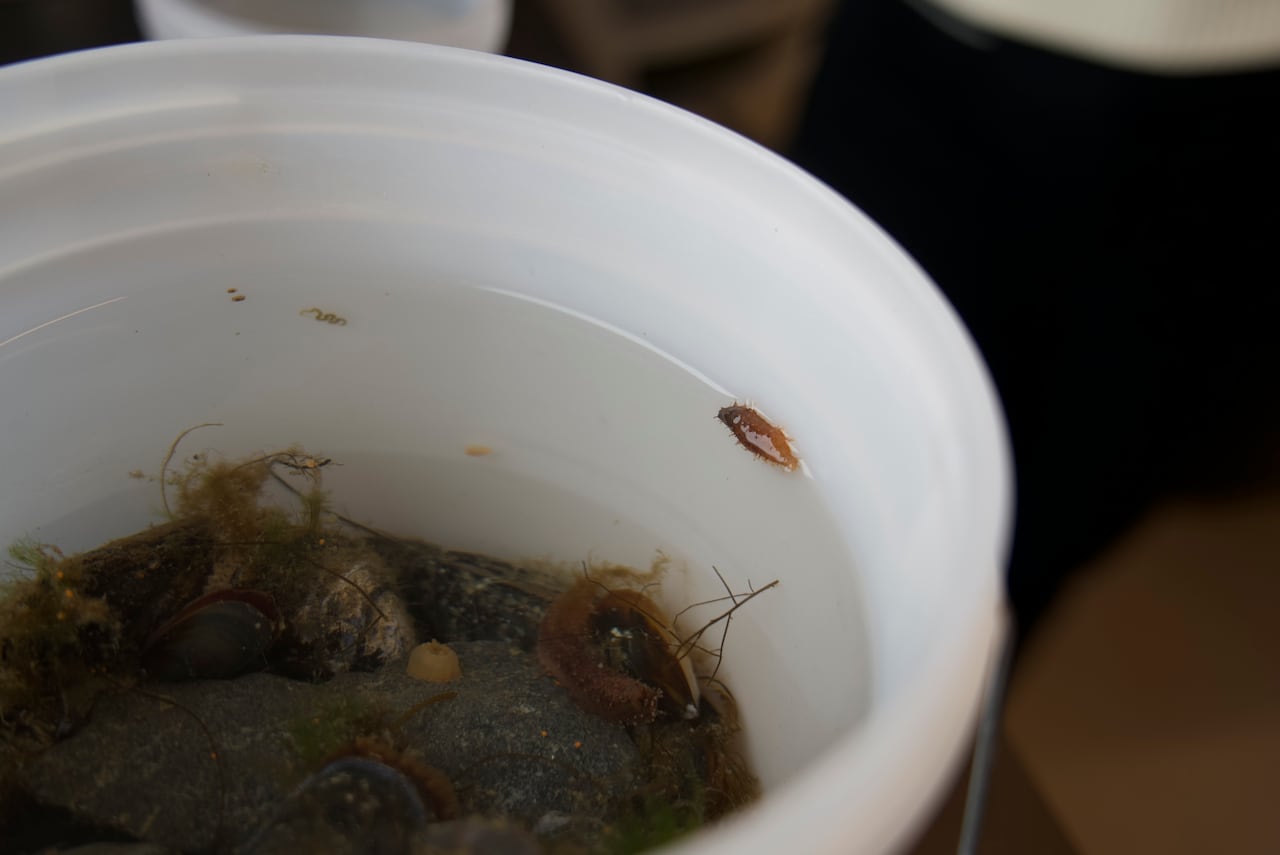
A juvenile sea cucumber located on the side of a bucket filled with various rocks, mussels, and other organisms collected by researchers in Sanikiluaq in September. (Liny Lamberink/CBC)
“This tiny pink speck? It’s a baby sea cucumber under four months old,” Pierrat, a postdoctoral researcher in the ocean sciences department, said while pointing to a speck on a mussel. “We have a lot of them. One here, here, here, here — they’re all around.”
Although Mercier was not present on this particular visit to Sanikiluaq, four members of her team, including Pierrat, were. On a Sunday in mid-September, they spent time at the Qikitait Centre analyzing samples collected from the turbulent waters days before.
The center houses both the Sanikiluaq Hunters and Trappers Association (HTA) and the Arctic Eider Society, and it also offers lab facilities and accommodations designed for researchers like Pierrat.
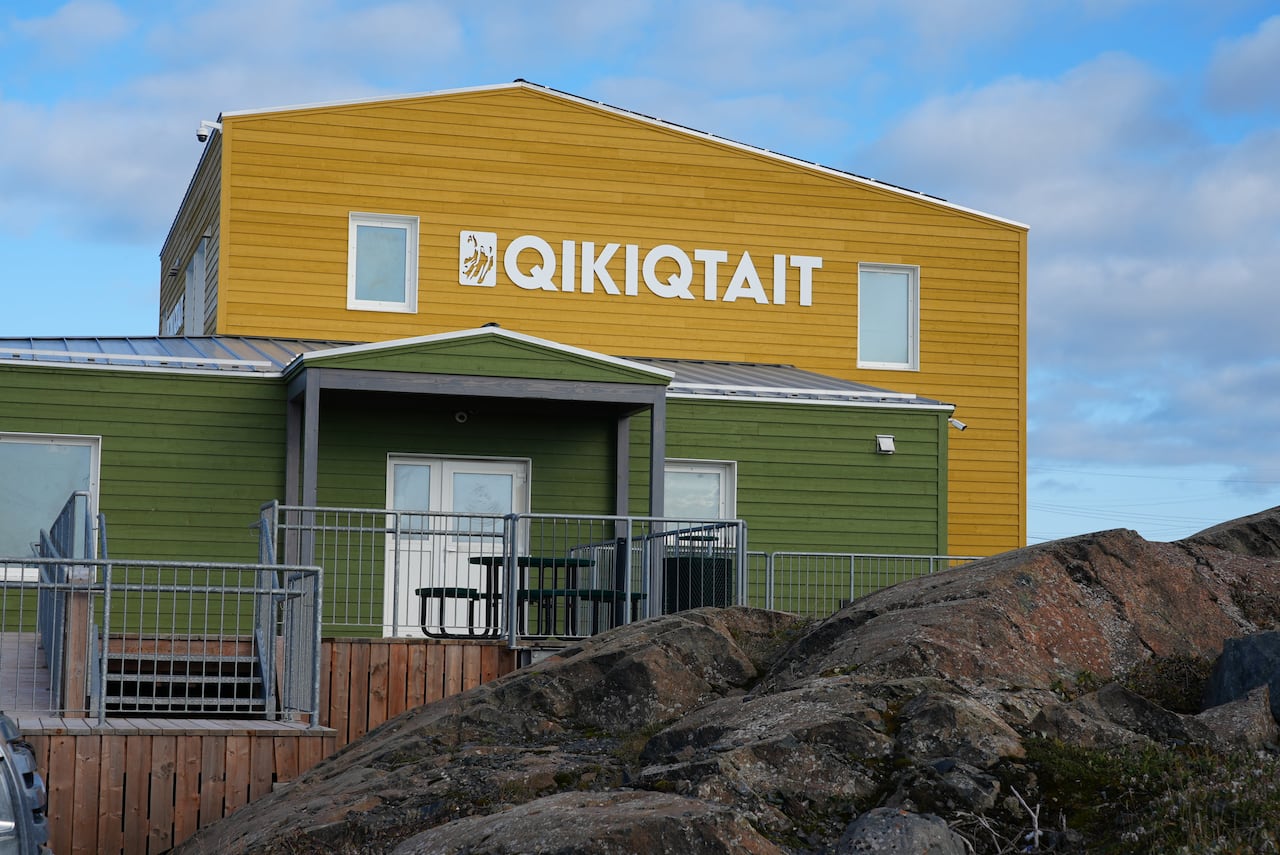
Qikiqtait, which hosts the Arctic Eider Society and the Sanikiluaq Hunters and Trappers Association, is where researchers from Memorial University analyzed samples from the ocean floor that included sea cucumbers and other marine life. (Liny Lamberink/CBC)
“We are collecting data with the community’s assistance … because they are familiar with the sea cucumber populations and how to gather them,” Pierrat explained.
“Then, we return to the lab to study them, measuring, weighing, performing dissections, and gathering data that we later share with the HTA.”
Discovering new insights
The association requires this data to support its case to the Department of Fisheries and Oceans for a commercial fishery.
Arragutainaq mentioned that the community initially explored the idea of establishing a scallop fishery approximately 12 or 13 years ago. They are now considering the inclusion of sea cucumbers in that fishery, he added.
“It will take considerable time due to all the regulations,” he stated.
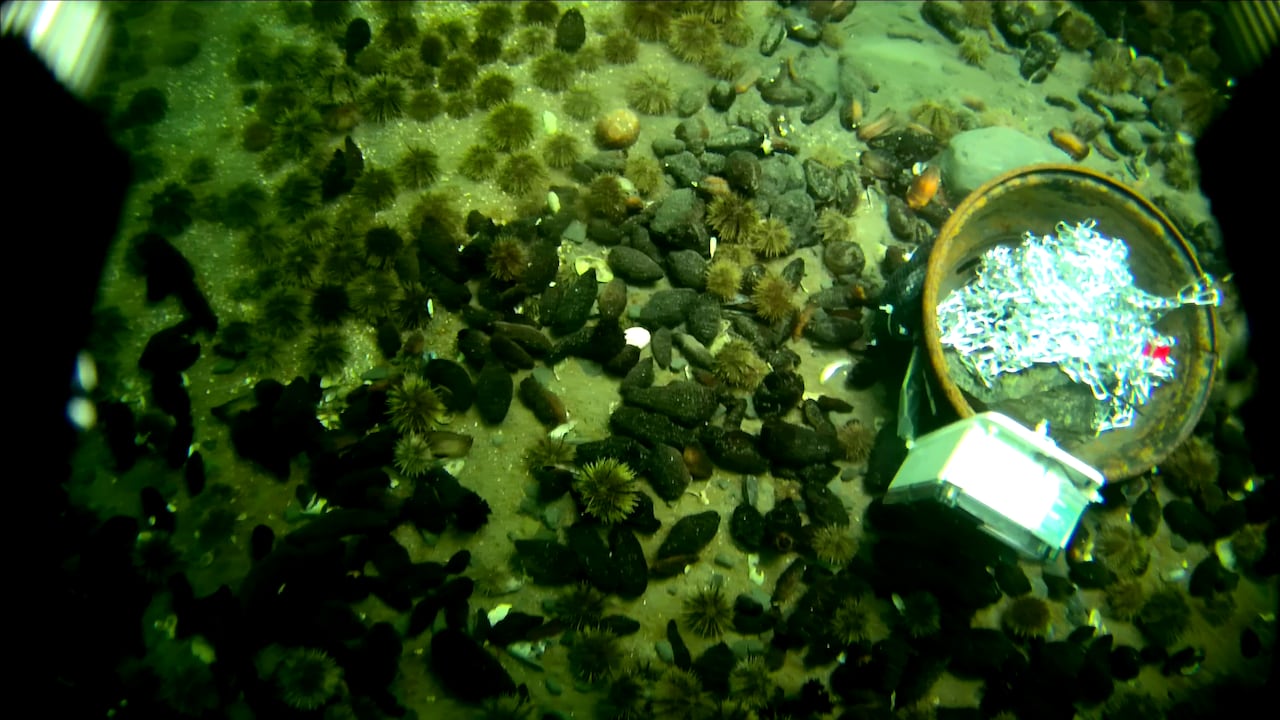
An underwater image of a time lapse camera, surrounded by sea cucumbers and sea urchins, used by the research team to document life on the ocean floor. (Submitted by Joséphine Pierrat)
Mercier emphasized that a gradual approach with careful management in the future is essential. Numerous sea cucumber fisheries globally have experienced significant depletion and show a poor sustainability record, she noted.
Regarding the advantages for his community, Arragutainaq stated that a fishery would provide job opportunities for local residents.
“It’s something new we also need to learn,” he remarked. “It seems feasible, as it serves as a food source.”
Pierrat mentioned the potential for a dual market: larger adult sea cucumbers could be processed and dried for sale in other markets, while the smaller ones, consumed whole, could be enjoyed locally.
Arragutainaq noted that sea cucumbers can be enjoyed both raw and roasted.
“It’s crunchy, salty, that sort of thing. It’s delicious.”