
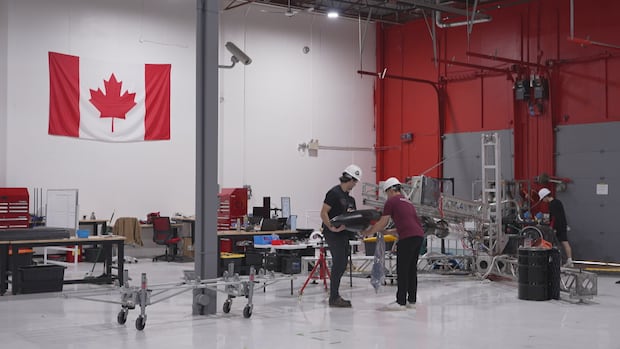

As the sole G7 country lacking its own launch capabilities, Canada is keen on developing a domestically produced rocket.
Several Canadian firms are in a race to establish the nation’s own access to space as promptly as possible, coinciding with concerns from some SpaceX clients about the industry leader potentially offering fewer orbital opportunities.
However, these rocket manufacturers are tackling a costly endeavor under strict timelines and fluctuating governmental priorities, making the path to space anything but straightforward.
Due to Canada’s lack of in-house rocket launching capabilities, businesses and government entities in the country rely heavily on external sources to deploy their satellites into orbit. Most often, these are American firms — particularly SpaceX, which successfully launched all 12 Canadian satellites in 2025, as reported by SpaceQ, a Canadian industry outlet.
These technologies are crucial, according to Marc Boucher, who founded SpaceQ. They support telecommunications, military applications such as threat detection, and Earth monitoring for purposes like wildfire tracking.
Boucher warns that without control over its own launches, Canada faces the risk of foreign entities denying the launch of Canadian technology.
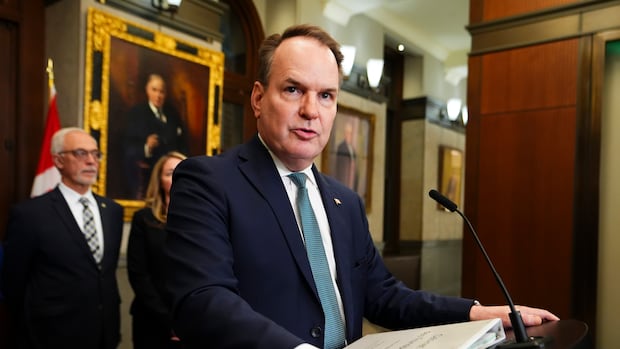
On Tuesday, government House leader Steven MacKinnon introduced the Canadian Space Launch Act as a framework for developing Canada’s own space launch capabilities. ‘This is about giving ourselves the options and the capability of protecting Canada, making sure our Armed Forces stay current and on pace with the rest of the world,’ MacKinnon said.
A sovereign solution
In February, the Canadian government highlighted space as a vital sovereign capability in its Defence Industrial Strategy and introduced legislation in April that would permit the government to authorize launches from Canadian territory upon approval.
Funding has also been allocated in recent months, including $8.3 million each for three Canadian firms engaged in rocket development, as part of a multi-year competition aimed at achieving light-lift rocket capabilities by 2028.
One of the recipients is NordSpace, a company established in 2022 that focuses on developing satellites, robotic space technologies, and the necessary launch infrastructure. Although its first suborbital rocket test attempt in 2025 was not successful, the company intends to make another attempt shortly, potentially within a few weeks.
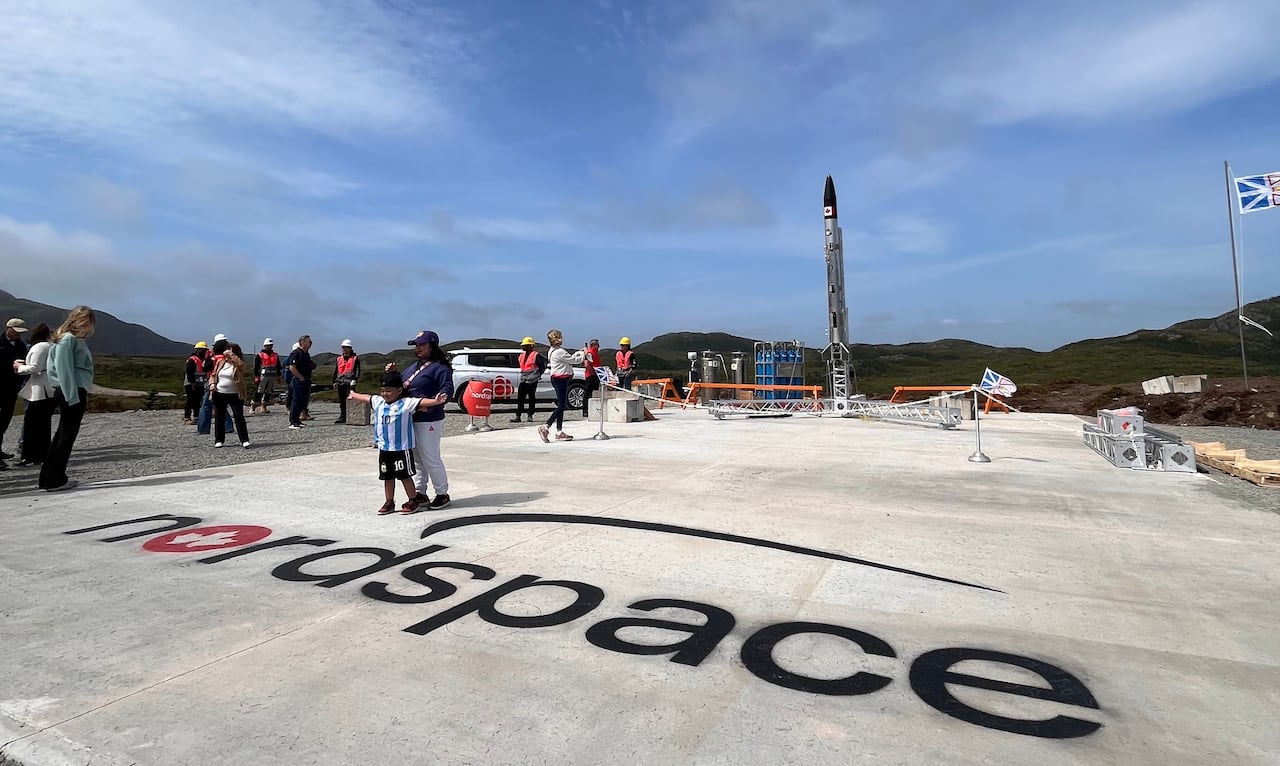
NordSpace’s suborbital rocket on the launchpad in 2025. The company’s first attempt to launch the vessel in summer 2025 was unsuccessful, but it’s preparing to try again soon. (Peter Cowan/CBC)
Another player is Reaction Dynamics, which has been innovating a unique engine design since 2017.
Both NordSpace and Reaction Dynamics aim to achieve orbital launches by 2028, aligning with governmental objectives.
Completing the trio is Canada Rocket Company, the latest entrant in the field.
Founded by CEO Hugh Kolias late last year, Canada Rocket Company focuses on creating a medium-lift rocket capable of transporting numerous satellites into low Earth orbit simultaneously, utilizing nine methalox-fueled engines.

Hugh Kolias, founder of Canada Rocket Company, is pictured in the company’s Etobicoke headquarters on Sept. 23. With newfound attention from the Canadian government on space sovereignty and the help of private funding, Kolias says he is confident his team can make it to space by 2032. (Laura MacNaughton/CBC)
The company has recruited numerous engineers, many of whom hail from leading rocket manufacturers such as SpaceX and Blue Origin, and is constructing a $30-million testing facility in London, Ontario, to support this goal.
Developing such a vehicle will require significant time and extensive testing, with the first launch targeted for 2032.
Kolias reports that his firm has secured $22 million in private investments in addition to government funding.
Both Kolias and Boucher highlight that securing funding has historically been a challenge in Canada, complicating the already daunting task of rocket development.
“We have the skillsets … because Canada produces a lot of good engineers. But where we’ve been lacking is funding,” Boucher stated.
Yet, with both private and public investments increasing, Kolias feels hopeful that the situation is improving — even as some other CEOs and experts remain more cautiously optimistic.

Executives of Canada Rocket Company and other attendees toss the first shovels of dirt at the groundbreaking of the firm’s test facility under construction in London, Ont. (Submitted by Canada Rocket Company)
Fly away, Falcon 9
Simultaneously, SpaceX is planning to eventually reduce its Falcon 9 rocket operations as it shifts to a larger vehicle known as Starship, which raises concerns for customers who depend on the firm for satellite launches, but could also present opportunities for new rocket developers.
The Falcon 9, which is reusable and falls under the medium-lift category, is responsible for transporting both SpaceX’s own Starlink satellites and those of other companies for a fee.
Reports suggest that SpaceX has started declining satellite launch requests for the Falcon 9 beyond 2028 as it transitions to the new rocket platform. This is particularly alarming for smaller companies that rely on SpaceX’s rideshare program, which enables multiple businesses to send one or two satellites each on a shared launch.
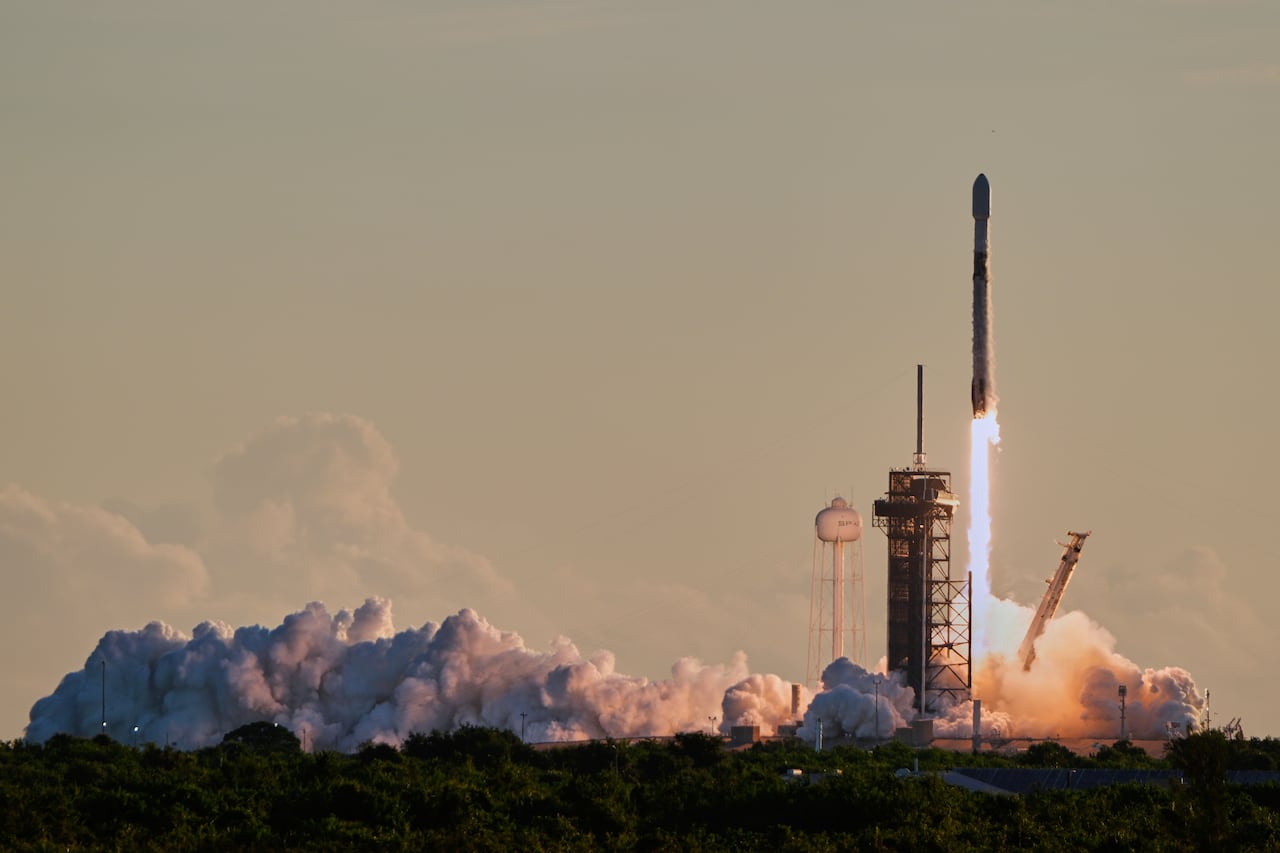
A SpaceX Falcon 9 rocket lifts off from Kennedy Space Center in Cape Canaveral, Fla., on Sept. 24, 2025. The Falcon 9 has become the workhorse of the launch industry, and its eventual phaseout has some customers worried about how they’ll get to space. (John Raoux/The Associated Press)
Kepler, a Canadian satellite communications firm, has launched most of its 33 satellites aboard the Falcon 9.
CEO Mina Mitry, who also serves as an advisor to Canada Rocket Company, anticipates that competitors to SpaceX — such as Rocket Lab, with whom he has already arranged a future launch — will step in to fulfill some of this demand. However, smaller enterprises may experience challenges due to reduced rideshare opportunities.
“For those looking to launch one, two, or three satellites for experimental purposes, the barriers to entry have significantly increased,” Mitry stated. “This poses a major issue for the industry.”
The reduction of Falcon 9 only underscores the necessity for a Canadian rocket manufacturer, Mitry emphasizes.
With its medium-lift rocket targeting the same market as the Falcon 9, Kolias hopes that Canada Rocket Company can seize some of the market share left behind when SpaceX transitions to the larger Starship.
A long way from liftoff
At NordSpace, CEO Rahul Goel is cautiously optimistic.
Goel has aspired to build rockets since he was a child, but spent the first decade of his career establishing another company and generating funds to invest in NordSpace “because securing investment was challenging.”
While he sees the current interest in his sector and the funding his company has received as positive, he is concerned that this momentum may not last and is hurrying to develop launch capabilities just in case.

Rahul Goel, founder and CEO of NordSpace, expresses pride in the prospect of launching a fully Canadian-made rocket from Canadian soil, particularly amid a rise in nationalistic sentiments. (Anand Ram/CBC News)
“I’ve witnessed how quickly circumstances can change, and I understand that they can revert just as swiftly,” Goel remarked.
Boucher from SpaceQ estimates that developing a light-lift rocket could require at least $50 million, with medium-lift rockets needing even more investment. He believes that additional funding from both private and public sectors will likely be essential for each company to achieve orbit — especially given the tight deadline of 2028.
“This is not a short-term endeavor. It’s a long-term commitment,” Boucher emphasized. “It took SpaceX years before their first successful launch. We will likely need several years before we can expect regular launches from Canada.”