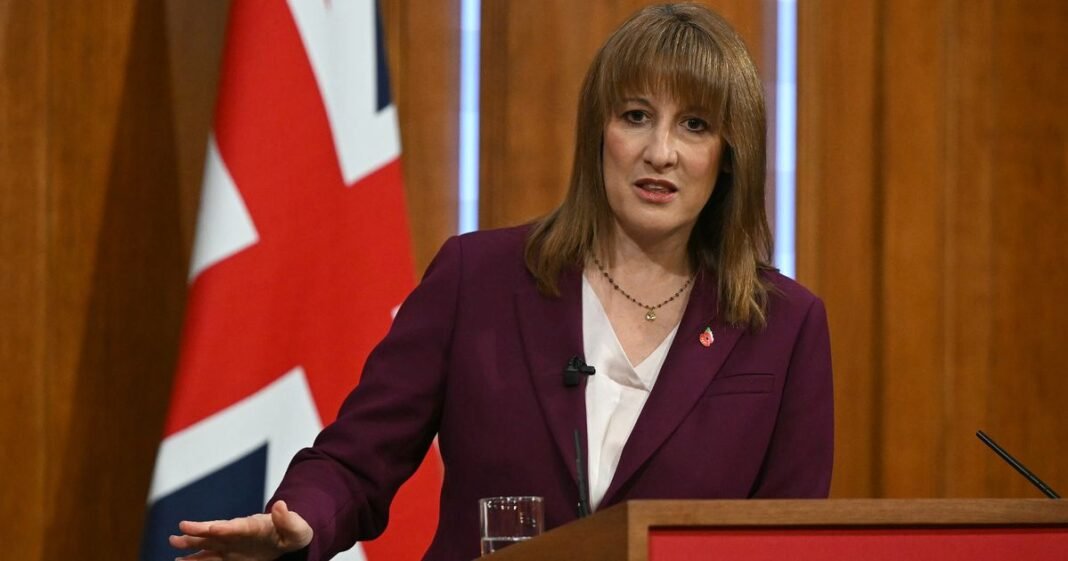

Rachel Reeves made a bold move by providing a preview of the upcoming Budget set to take place in three weeks. Although lacking specifics, the announcement carried significant weight in terms of the overall strategy.
Contrary to the perception that last year’s tax-raising Budget was a one-off event, it now appears that further tax increases are on the horizon, potentially including promises that deviate from the party’s initial pledges. Reeves emphasized the likelihood of additional tax hikes, a decision that could have far-reaching implications for the upcoming general election and future economic stability.
Despite steering clear of direct references to election matters in her speech, the growing discourse in recent weeks indicated an unavoidable discussion on fiscal policies. The anticipation of another impactful Budget, scheduled just ahead of the election, suggests a focus on tax hikes rather than extensive budget cuts, with a commitment to avoiding a return to austerity measures.
Labour’s previous commitments to refrain from taxing working individuals were underscored in their manifesto. However, changes in economic conditions have prompted a reevaluation of taxation policies, with experts suggesting that adjustments to major tax categories may be necessary to meet revenue targets.
The potential for tax adjustments has stirred speculation, with proposals suggesting significant revenue gains through marginal increases across tax brackets. While the implications of such changes remain uncertain, the impact on various income groups, including pensioners and self-employed individuals, could be substantial.
The discussion around potential tax modifications has also turned towards alternative strategies, such as redistributing levies from specific sectors to general taxation. These proposals aim to alleviate financial burdens on households and address inflation concerns, albeit with associated fiscal trade-offs.
Amidst the deliberations on tax reforms, considerations extend to sectors beyond income tax, including value-added tax (VAT) and other indirect levies. Proposals to modify VAT rates and streamline taxation mechanisms form part of the broader strategy to balance revenue generation with economic stability.
As the Budget approaches, the focus on mitigating cost pressures faced by households becomes increasingly critical. Efforts to address rising energy and food prices, potentially through VAT adjustments and targeted relief measures, are central to the government’s strategy to improve living standards.
Beyond direct tax reforms, the potential impact on pension schemes and gambling duties highlights the complexity of balancing revenue needs with sector-specific considerations. Debates on optimizing tax structures to achieve fiscal objectives while minimizing unintended consequences continue to shape the ongoing policy discourse.