
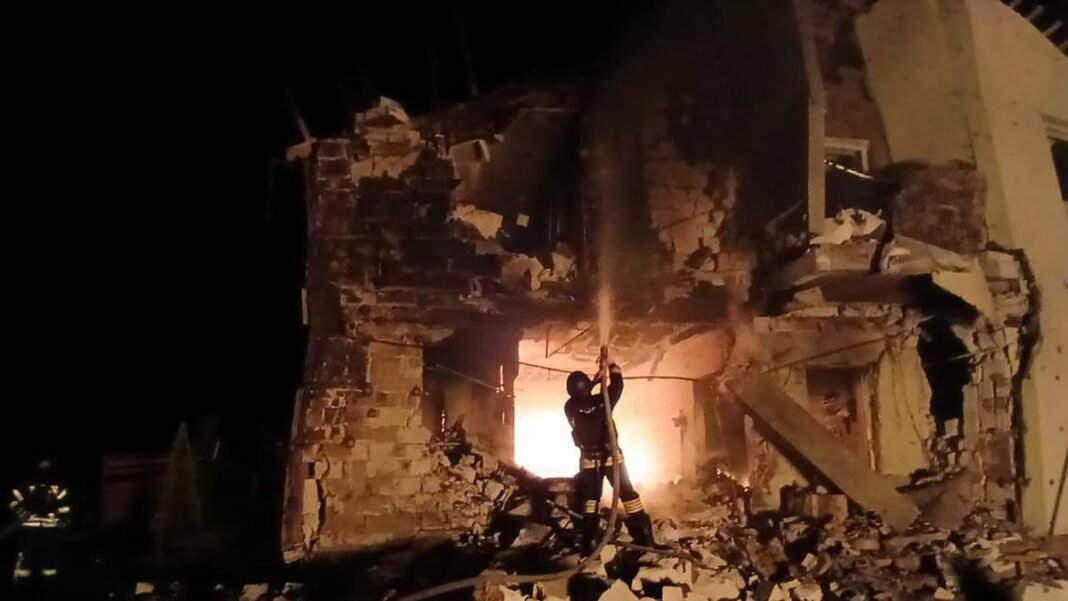

Poland and fellow NATO countries mobilized fighter jets this morning in response to an onslaught by Vladimir Putin, who unleashed over 650 drones and 50 missiles on Ukraine overnight, resulting in extensive damage and widespread power outages across the nation.
Poland’s military confirmed the deployment of fighter jets and an early warning aircraft in response to the heightened state of alert for Warsaw’s ground-based air defense and radar systems. The strikes by Russian forces on Ukrainian infrastructure resulted in the deaths of three individuals, including a seven-year-old girl, and left 17 others seriously injured, including six children, as reported by Kyiv authorities.
The attacks led to nationwide power disruptions, with Ukrainian Prime Minister Yulia Svyrydenko stating that the intention was to cast Ukraine into darkness and disrupt the populace’s ability to stay warm during the approaching winter season.
Communities near Ukraine’s border with Poland also faced attacks, prompting Polish warplanes to be put on standby to intercept any potential missile incursions.
Poland’s operational command announced that Polish and allied air forces were engaged in response to the Russian strikes on Ukrainian targets. Fighter pairs and an early warning aircraft were swiftly mobilized, with air defense and radar systems placed on high alert.
In a coordinated effort, jets from Norway, Spain, and Turkey joined the operations, with German forces providing support through a Patriot missile system. Polish airports in Radom and Lublin were temporarily shut down during the operations, which concluded around 10:30 am.
The Russian escalation involved various advanced weapons, including Kinzhal air-launched missiles, ballistic explosives, Kh-101 cruise missiles, and lethal “kamikaze” Shahed drones. Air defense systems were activated across Ukraine to counter the attacks, resulting in injuries, fires, and significant damage to homes and infrastructure.
In the face of the relentless strikes, Ukrainian President Volodymyr Zelensky confirmed the destruction caused, with residential areas and critical infrastructure bearing the brunt of the assaults. The city of Zaporizhzhia endured sustained strikes for hours, while other regions like Dnipro and Ivano-Frankivsk also faced severe bombardment.
The Burshtyn Thermal Power Plant, a vital energy junction in Ukraine, sustained damage, impacting power supply to neighboring regions. Additionally, attacks on energy infrastructure in various regions caused disruptions to essential services like heating and water supply.
Polish Minister of Defense Władysław Kosiniak-Kamysz acknowledged the challenging circumstances, detailing the interception of a Russian reconnaissance aircraft by Polish jets. The incident underscored the ongoing tensions in the region and the need for constant vigilance.
NATO’s eastern flank remained on high alert following previous airspace violations, signaling a tense environment in the region. The recent drone attacks prompted discussions within NATO about territorial security threats, highlighting the alliance’s readiness to respond to any aggression.
Kremlin spokesperson Dmitry Peskov’s remarks in mid-September further underscored the escalating tensions between NATO and Russia, with accusations of Western involvement in the conflict intensifying the geopolitical standoff.
The situation in the region remains volatile, with ongoing military activities and heightened security measures in place to safeguard against further incursions and attacks.