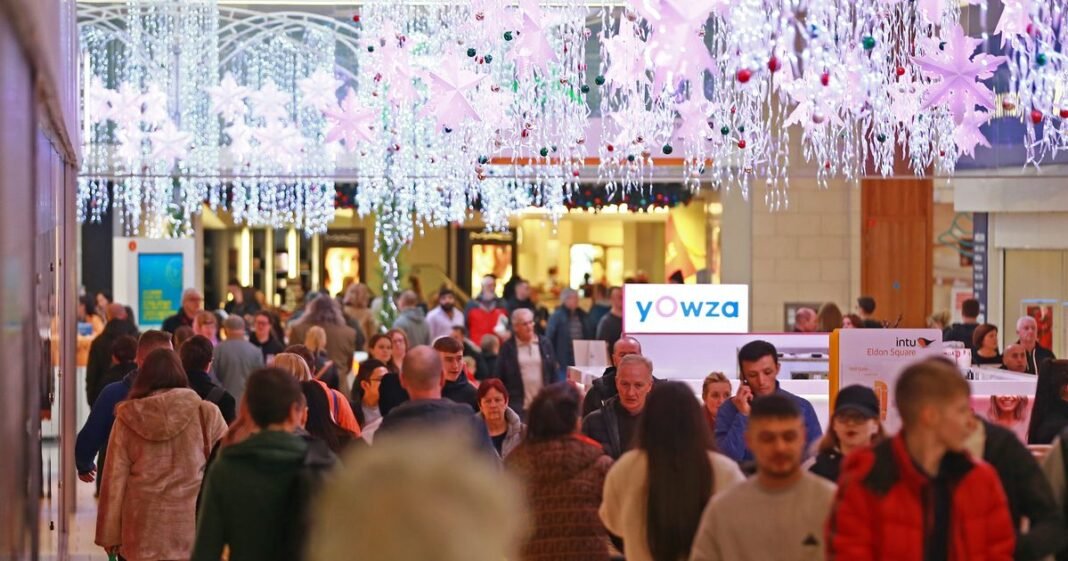

Britons are projected to spend a substantial £3.43 billion on last-minute Christmas shopping during what is being referred to as “Panic Weekend.” VoucherCodes.co.uk, a discount website, anticipates that 49.6 million individuals will engage in festive shopping over the upcoming weekend, with 36.8 million planning to visit physical stores, providing a boost to town and city centers nationwide.
The forecast indicates that expenditures will peak at an average of £2.3 million per minute on “Super Saturday,” totaling £1.75 billion overall. This weekend represents the final opportunity before Christmas for many to complete their gift purchases, with some only starting now. Zoe Morris, a savings expert at VoucherCodes.co.uk, highlighted the trend of more Brits procrastinating this year, with an additional 10 million people expected to partake in the “Panic Weekend,” marking a 26.2% increase in shoppers compared to last year.
The optimistic news for retailers is that the anticipated spending spree this weekend is nearly 13% higher than the previous year. Data on foot traffic showed a 5.1% rise last week, with the high street emerging as the favored shopping destination. As the countdown to Christmas nears its conclusion, retail leaders are encouraged by these trends. The expectation is that foot traffic will continue to grow, especially with schools and many offices breaking for the holiday this week, leading to a surge in last-minute gift purchases and festive grocery shopping over the weekend.
The accuracy of these predictions will only be confirmed when stores release their holiday trading figures in the early months of the new year. Concerns over the late timing of the Budget announcement and fears of potential tax hikes leading up to Christmas have impacted consumer spending. A recent snapshot survey revealed that household sentiment post-Budget remains pessimistic, with households expressing increased concerns about their financial outlook compared to recent years.
Maryam Baluch, an economist at S&P Global Market Intelligence, expressed disappointment in the current household confidence levels, citing deteriorating financial conditions and signs of job insecurity. With subdued consumer confidence and spending intentions weakening, the economic outlook remains uncertain as the new year approaches.