
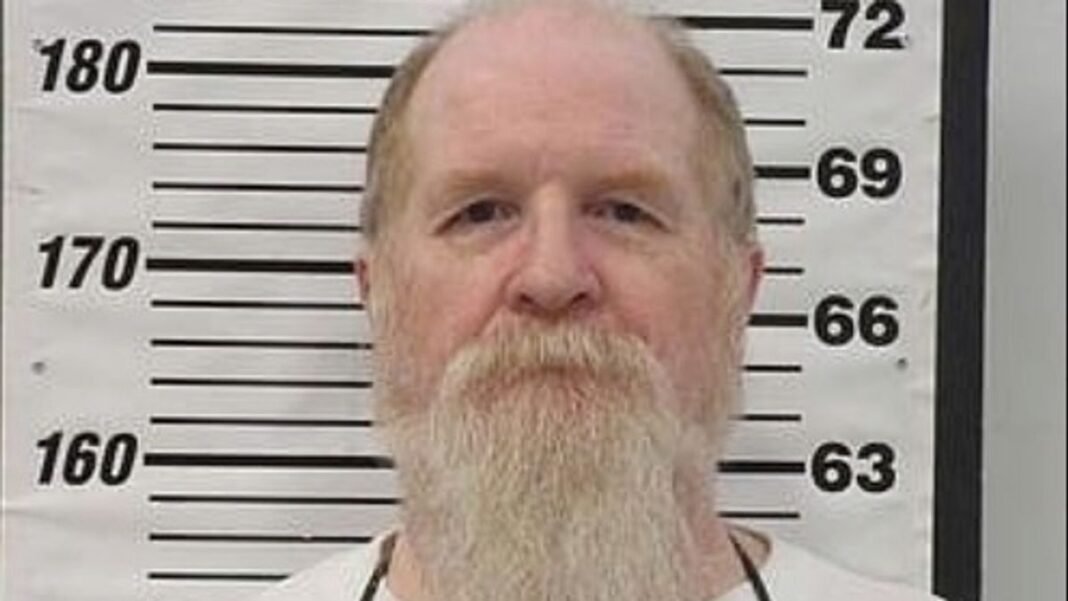

A convicted murderer in Tennessee, Harold Wayne Nichols, who committed a heinous crime 35 years ago by raping and killing a student, has decided not to select his method of execution between the electric chair and lethal injection. Consequently, Nichols is set to receive a lethal injection next month, automatically chosen on death row in Tennessee. He still has a two-week window to change his decision, as in 2020, he had initially opted for the electric chair before his execution was postponed.
Nichols, who confessed to the rape and murder of Karen Pulley and other violent acts in Tennessee in the late 1980s, expressed regret during his trial in 1990. Despite acknowledging his remorse, he admitted he would have continued his criminal activities if he hadn’t been apprehended. Having been sentenced to death in Tennessee, one of the 27 states where capital punishment is legal, Nichols falls under the category of inmates convicted before January 1999 who can choose electrocution over lethal injection. This alternative method has only been used five times in Tennessee over the past decade.
Tennessee’s lethal injection process faced scrutiny due to concerns about its drug protocol. Governor Bill Lee halted executions in 2022 after an independent review revealed issues with the drug testing for executed inmates since 2018. The state subsequently introduced a new execution protocol using pentobarbital as the sole drug. Legal challenges have arisen against this new method, with a trial expected in April.
In a separate incident, Norman Mearle Grim Jr, a man in Florida, was executed despite maintaining his innocence in the rape and murder of his neighbor, Cynthia Campbell. Grim received a three-drug injection on death row in Florida, marking the state’s 15th execution this year.
The developments in these cases reflect ongoing debates and legal challenges surrounding capital punishment in the United States, with attention drawn to the methods and protocols used in carrying out executions.