
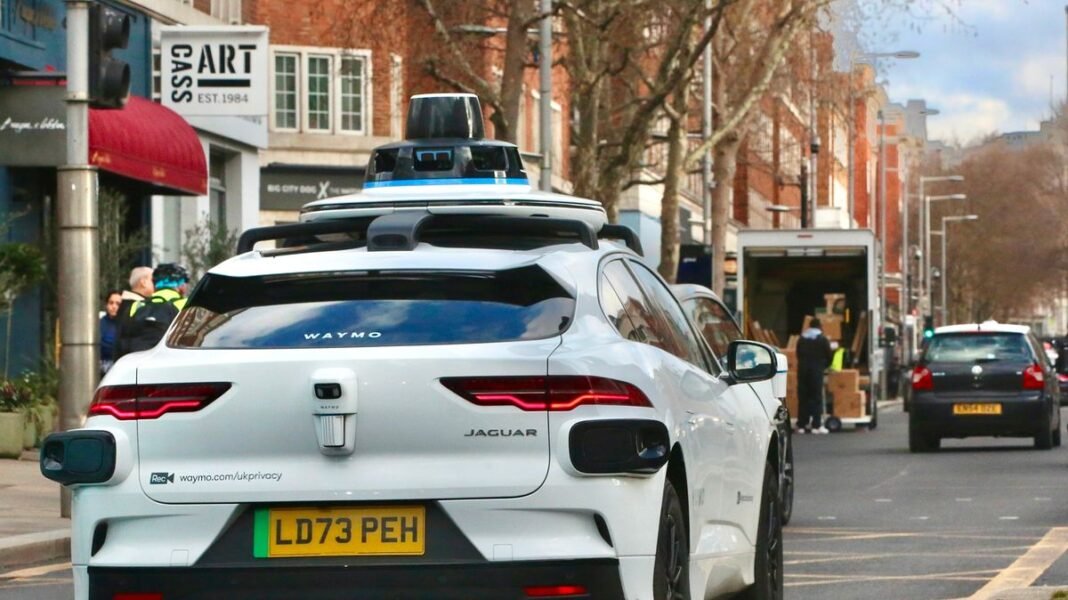

An upcoming development in the UK transportation sector may see a fleet of autonomous taxis hitting the roads as early as this autumn. Waymo, a US-based company, has disclosed its plans to introduce a fully autonomous taxi service in London by the end of this year. The company, known for its advanced technological solutions, has already initiated testing of its self-driving cabs, referred to as robotaxis, on the streets of the capital.
Waymo is currently in the process of obtaining official safety approval to commence passenger services. The company, a subsidiary of tech giant Google, asserts that its cutting-edge technology has the potential to significantly reduce traffic accidents as well as pedestrian and cyclist injuries.
While the fares for Waymo’s autonomous taxis are expected to be higher compared to traditional human-driven Uber and black cabs, the company believes that its service will attract individuals who are apprehensive about human drivers, especially during nighttime journeys, and those who value privacy.
Nicole Gavel, Waymo’s senior director overseeing business development and strategic partnerships, stated, “Our aim is to become the most trusted driver globally,” emphasizing the company’s commitment to enhancing road safety. She also described the experience of riding in one of their cabs as “magical.”
Although the introduction of Waymo’s driverless cabs may lead to increased vehicular presence on the roads, the company has not disclosed the exact size of its planned fleet for London. With a fleet of 1,000 vehicles in San Francisco and 700 in Los Angeles, Waymo has not ruled out the possibility of expanding its self-driving cab services to other cities and towns in the UK in the future.
In a parallel development, ride-hailing giant Uber has also commenced trials of autonomous taxis in London. Waymo executives have expressed confidence in their vehicles’ ability to navigate the diverse driving conditions in the UK, from complex road networks to adverse weather conditions like heavy rain.
The company’s technology, which involves continuous monitoring of the surroundings and the ability to predict unexpected events such as pedestrians emerging from blind spots, has been praised for its advanced perception capabilities by Ben Loewenstein, Waymo’s head of policy and government affairs for the UK and Europe.
Waymo’s technology is slated to be integrated into a fleet of electric Jaguar I-Pace cars. Despite the company’s optimism, there are skeptics like Steve McNamara from the Licensed Taxi Drivers’ Association, who question the public’s trust in autonomous vehicles, especially for tasks like transporting children to school.
Addressing the broader societal implications, Andy Prendergast from the GMB highlighted the need to carefully consider the impact of driverless cars on various aspects, including employment. Notably, Tesla’s self-driving software has faced scrutiny following multiple incidents, including a fatal accident in the US.
As the autonomous taxi technology evolves, Waymo’s distinctive London taxis, equipped with prominent rooftop contraptions and advanced cameras, offer a glimpse into the future of transportation. While the interior resembles a luxurious vehicle with leather seats, the presence of a touch screen tablet and other innovative features signals a departure from conventional taxi experiences.
Although human drivers are currently overseeing Waymo’s testing operations, the company envisions a future where passengers will occupy the driver’s seat. This transition to a fully driverless experience hinges on regulatory approvals, marking a significant milestone for the technology.
Waymo and other companies pioneering similar advancements are banking on the UK populace embracing autonomous transportation, akin to their American counterparts. While there may be a surge of individuals eager to boast about their driverless rides, the true test lies in the public’s willingness to pay a potentially substantial premium for this futuristic mode of transport.