
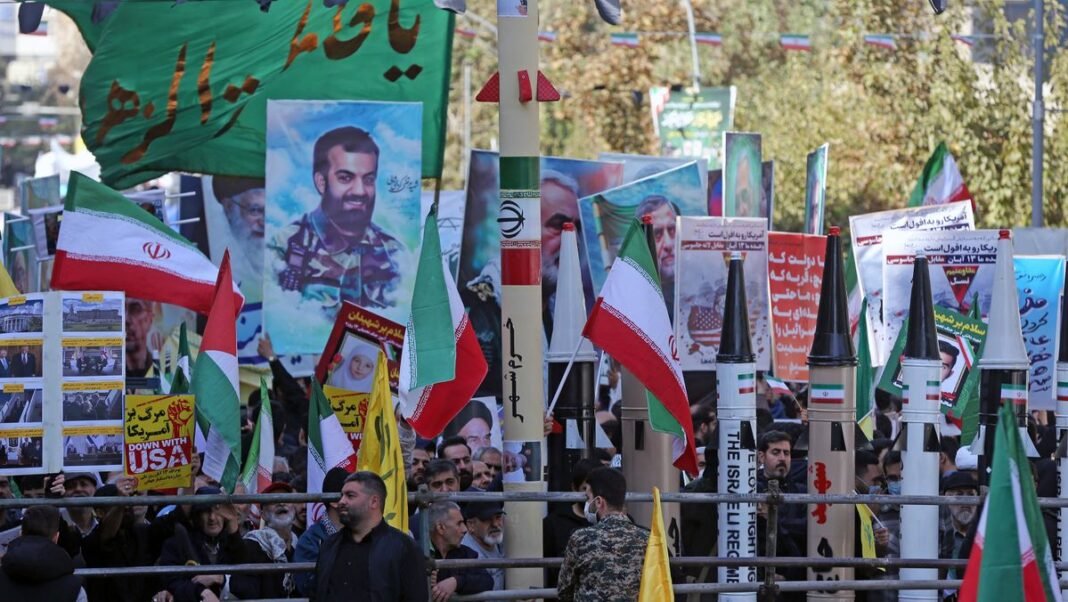

Iranian rebels are optimistic that the fall of Tehran’s government could pave the way for a democratic system. In the 1950s, Prime Minister Mohammad Mosaddegh attempted to introduce a constitution and reforms aimed at limiting the Shah’s power. However, a coup in 1953 reinstated the Shah, leading to significant instability in the Middle East stemming from Tehran.
Since 1979, the Shia regime has expanded its military influence, extending its reach from Tehran through Iraq, Syria, and into Lebanon. Hezbollah, a well-funded proxy force of Iran, has posed a constant threat to Israel, while Houthi rebel fighters in Yemen have also become a challenge to Israel and its allies.
Recent conflicts, such as the Gaza war, have weakened Iran’s proxy forces and strained its economy due to sanctions. The regime’s nuclear ambitions have drawn the attention of the US, further undermining its power and increasing the possibility of an uprising.
This potential shift in power could reshape the Middle East, leading to either civil war, IRGC dominance, or the emergence of a new free society. Key to these potential changes is the defection of senior IRGC officers. The risk of state collapse in Tehran could trigger a chaotic civil war resembling the aftermath of the Syrian and Iraqi conflicts, potentially causing mass displacement and a refugee crisis.
The involvement of the Islamic State in a power vacuum or the successful quelling of an insurgency will have significant implications for Iran’s future. While challenges remain in dealing with the entrenched IRGC, there is growing support within Iranian society for a peaceful transition and stability in the region. Iran’s neighbors also have a vested interest in a post-regime Iran that is stable and cooperative.