
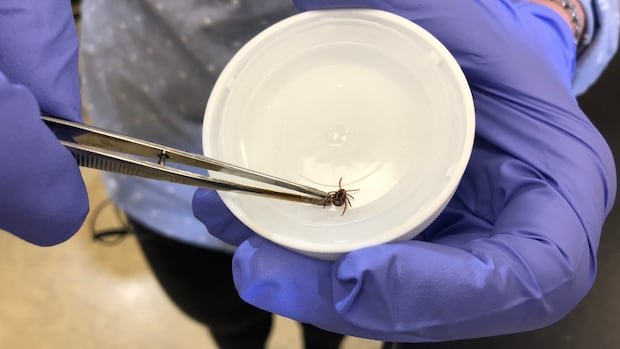

The provincial government of Nova Scotia has granted $1.2 million to a laboratory at Acadia University for the ongoing research on preventing and managing tick-borne diseases. Nicoletta Faraone, who heads the Canadian Tick Research and Innovation Centre, emphasized the crucial role of these funds in establishing and expanding the lab. The allocated funds will primarily support the lab’s surveillance efforts, focusing on identifying tick species in the region, their disease-causing pathogens, and their reactions to repellents and attractants.
Tick-borne illnesses, such as Lyme disease and anaplasmosis, can be transmitted to humans through the bites of these blood-sucking arachnids. The advanced equipment at the lab will enhance the efficiency of pathogen testing, aiding in a better understanding of ticks and improving strategies to minimize exposure to tick bites.
The funding originates from Research Nova Scotia’s Focused Research Initiative, which receives financial backing from the Department of Advanced Education. Stefan Leslie, the CEO of Research Nova Scotia, highlighted the significance of addressing tick-borne diseases through practical research that extends beyond laboratory settings.
Recent data from the Public Health Agency of Canada revealed over 5,800 reported cases of Lyme disease nationwide in 2024, with Nova Scotia alone accounting for 2,350 cases, representing 40% of the national total. Additionally, there has been a rise in other tick-borne illnesses like anaplasmosis, a bacterial infection transmitted by blacklegged ticks and brown dog ticks.
Apart from the provincial funding, the federal government is contributing $455,000 to the project through the Atlantic Canada Opportunities Agency. This financial support enables the lab to continue its breeding program for ticks, a step towards self-sufficiency in tick supply. Previously, ticks had to be purchased from a tick-breeding facility in North America, but now Acadia University aims to breed its own ticks for research purposes.
The ability to breed ticks locally will not only facilitate the study of Canadian tick genetics but also generate revenue by selling specimens to tick researchers across Canada and internationally. The lab has already initiated its tick breeding activities, with ongoing efforts to optimize environmental conditions for tick colony multiplication.
For more information, you can access the source article [here](https://www.cbc.ca/news/canada/nova-scotia/acadia-tick-lab-funding-9.7320252).