
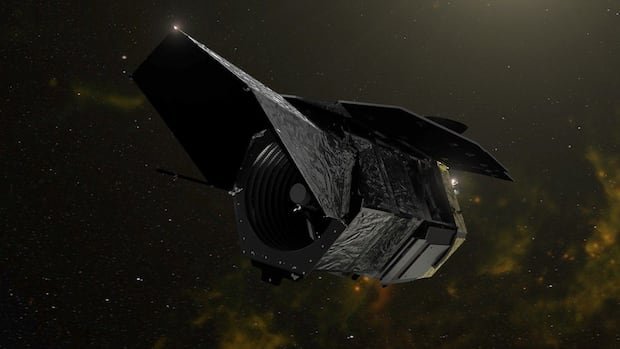

At 7:26 a.m. on Sunday morning, a new space telescope is set to launch from Cape Canaveral, Fla., atop a Falcon Heavy rocket, aiming to unlock mysteries of the universe. The Nancy Grace Roman Space Telescope, named after NASA’s inaugural chief astronomer and known as the “mother of the Hubble Space Telescope,” will embark on a mission lasting five years, with potential for extension, orbiting at a distance of 1.5 million kilometers at the L2 point where gravitational forces ensure a stable orbit.
Distinguished from existing telescopes like the Hubble and James Webb Space Telescopes, Nancy Grace Roman boasts unique features such as a 2.4-meter mirror similar to Hubble’s, a coronagraph for blocking starlight to reveal distant planets, and a Wide Field Instrument capable of imaging areas 100 times larger than Hubble. Its advanced camera can capture billions of stars, enabling diverse sky and stellar surveys.
Anticipation surrounds the potential discoveries Nancy Grace Roman may unveil, including the quest for exoplanets. Utilizing methods like the transit technique, the telescope aims to scrutinize over 100 million stars, significantly expanding our understanding of exoplanets. Additionally, it will employ microlensing to delve deeper into space, enhancing the search for Earth-like planets.
In its pursuit of knowledge, Nancy Grace Roman will also investigate dark matter and dark energy, components constituting a significant portion of the universe. By studying galaxies and globular clusters, the telescope aims to discern the distribution and characteristics of dark matter alongside normal matter. Furthermore, it will delve into the enigmatic realm of dark energy, driving the universe’s expansion.
Through its specialized instruments and comprehensive mission objectives, the Nancy Grace Roman Space Telescope is poised to revolutionize our understanding of the cosmos, promising groundbreaking insights into the universe’s complexities.