
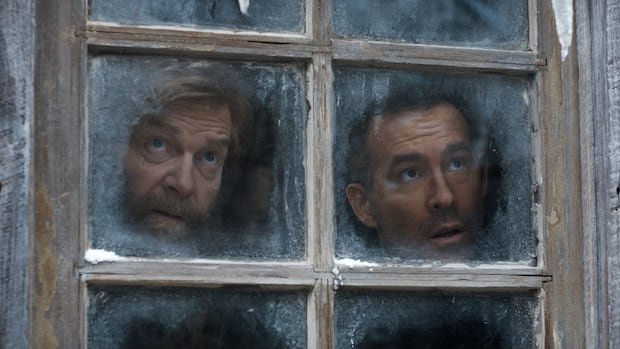

In a surprising twist, “Mayday,” a film from the 1980s, challenges the notion that people from different backgrounds are inherently different. The storyline follows an American pilot, Troy (Ryan Reynolds), and a former KGB agent, Nikolai (Kenneth Branagh), who form an unlikely bond amidst Cold War tensions.
Initially, it seems unbelievable that Nikolai would show empathy and altruism towards Troy, especially given his Russian background and the political climate of 1987. As they navigate through dangerous situations, including encounters with a rogue KGB agent, the film challenges stereotypes and portrays foreigners as complex and genuine individuals.
“Mayday” successfully blends action and comedy, with Branagh portraying a charismatic yet kind-hearted character, while Reynolds adds humor as the straight-man foil. The film strikes a balance between entertainment and depth, avoiding overreliance on Reynolds’ trademark sarcasm seen in other movies.
The cinematography in “Mayday” is notable for its restrained yet impactful approach, contrasting with the fast-paced editing common in modern films. The narrative, reminiscent of ’80s classics, subtly conveys the message that people from all nations share common humanity, despite political differences.
While some may view “Mayday” as a typical American film of its era, it stands out for its nuanced portrayal of both American and Russian characters. The movie prompts viewers to question simplistic notions of good and evil during the Cold War, ultimately highlighting the universal nature of human experiences.