
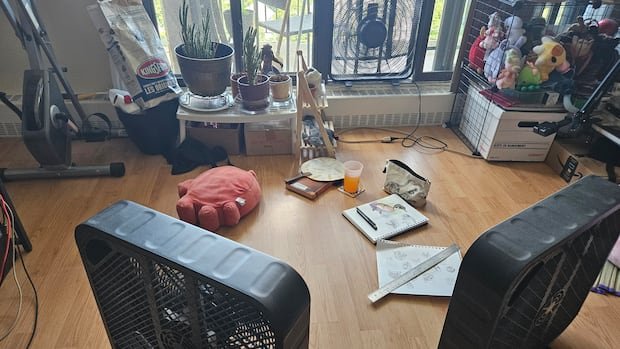

Since a recent heat wave struck mainland Nova Scotia, Miriam Williams and her husband have been using six box fans in their highrise apartment to alleviate the 40 C feels-like temperature. Williams expressed the unbearable conditions and joined ACORN’s protest at the Halifax Common splash pad, pushing for government action to address rising extreme heat risks. The demands include setting indoor temperature limits for rentals and providing cooling subsidies.
Williams highlighted the challenges faced by vulnerable individuals, especially children and the elderly, during the heat wave. Concerned about the lack of government action, she emphasized the need for immediate measures. Christian Salmeron, another participant in the rally, shared his struggle to find a cool indoor workspace due to the high temperatures, echoing the sentiments of others in similar situations.
Despite no explicit ban on window air conditioners in his building, Salmeron noted the absence of such installations, citing cost concerns. Williams, who owns a portable air conditioner, mentioned the high operational costs, making its use limited. The protesters urged for a provincewide indoor temperature cap and called for support to prevent landlords from restricting air conditioner types and offering financial aid for their purchase.
The necessity for such initiatives was stressed to mitigate the adverse effects of extreme heat. Reports highlighted the significant impact of heat-related deaths, such as the 619 reported in British Columbia during the 2021 heat wave. Initiatives like the bylaw amendment in New Westminster, B.C., requiring rental units to maintain a safe indoor temperature, have set a precedent for addressing heat-related challenges.
While the provincial government emphasized the landlord’s discretion on air conditioning rules, efforts are being made to ensure rentals are habitable and safe. Municipalities like Halifax are focusing on climate action plans to prepare communities for extreme heat events and address indoor heat risks effectively. The push for adequate measures aims to safeguard residents from the detrimental effects of oppressive heat conditions.