
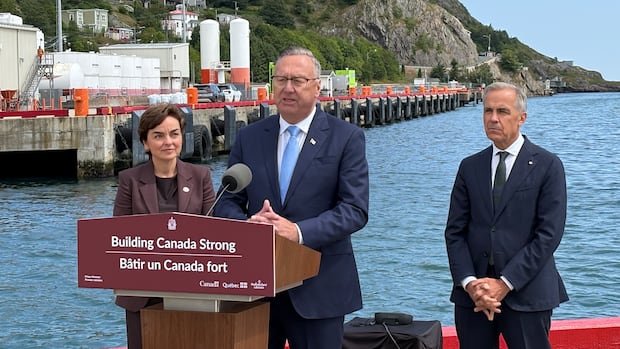

Ottawa has declared a significant clean energy investment in North American history. Prime Minister Mark Carney, accompanied by N.L. Premier Tony Wakeham and Quebec Premier Christine Fréchette, revealed a new agreement concerning Churchill Falls and other electricity ventures in Labrador during a gathering in St. John’s. Wakeham expressed relief over moving past the old Churchill Falls agreement and 2024 memorandum of understanding, deeming the new deal beneficial to all parties.
The leaders converged at Pier 17 with the backdrop of the ocean to announce the details of the colossal $70 billion investment. This investment, funded by Ottawa with $10 billion, includes upgrading the Churchill Falls generating station, developing the Gull Island hydroelectric project, constructing transmission lines, and initiating a 2,000 MW onshore wind energy project in Labrador. The upgraded generating capacity of Churchill Falls will nearly triple, providing enough power to serve the combined needs of Toronto, Montreal, and Vancouver households.
Carney highlighted the significance of the projects, emphasizing the creation of 23,000 jobs. The deal aims to provide Quebec with a secure power source and enable N.L. to generate revenue from natural resources amidst financial challenges. Additionally, the agreement intends to reduce electricity bills for Newfoundlanders and Labradorians through a 15% rebate.
Describing the agreement as a “win-win-win,” Wakeham noted the improved financial prospects for N.L., with an increased net present value of $49 billion. The agreement is set to remain effective until March 31, 2027, pending any alterations by both parties. The potential impact of the upcoming Quebec election on the agreement was also discussed, with Wakeham emphasizing the current benefits for both provinces.
Furthermore, the agreement envisions enhancing the current Churchill Falls facility by 23.5%, generating an additional 760 MW for Newfoundland and Labrador. The agreement also includes study proposals for a new wind project and transmission lines development. Carney emphasized the federal government’s collaboration with the Innu Nation in developing the wind project and financing transmission line construction.
The expansion of Labrador’s mining industry is set to benefit from the increased power supply, with Ottawa allocating funds to support this growth. However, uncertainties loom over the agreement’s longevity in light of the impending Quebec election. Fréchette defended the deal, highlighting the job and energy benefits for both Newfoundland and Quebec.