
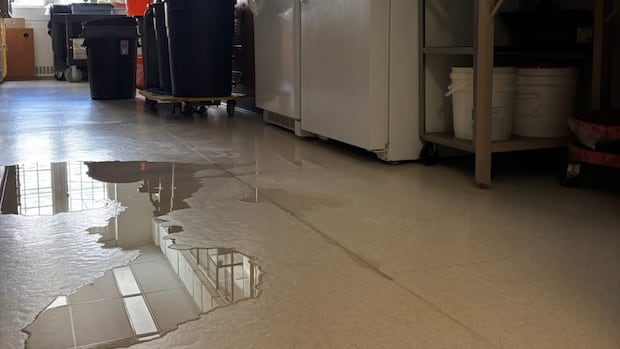

A four-day power interruption at Western University in London, Ontario, has resulted in the loss of invaluable research samples, postponed experiments, and raised doubts among biology students and faculty regarding the university’s ability to safeguard millions of dollars’ worth of scientific research.
Since Friday, the Biological & Geological Sciences Building, Materials Sciences Addition, Chemistry Building, and Natural Sciences Centre have been relying on backup power due to an incident at a campus power substation.
Western reported that power was restored to the majority of buildings on Friday evening, but the four impacted buildings are still using backup power while crews work on repairs. The university announced that it has limited access to these buildings “out of an abundance of caution,” and is collaborating with students, faculty, and staff to resolve individual issues, including providing access necessary to fulfill research obligations.
Students and faculty indicate that this is the fifth significant outage affecting biology research facilities since August 2025.
“We’re going to be a laughing stock,” remarked Beth MacDougall-Shackleton, a biology professor.
“Not only my Canadian colleagues but also others I’ve spoken with in so-called ‘developing countries’ — they all have much more dependable access to electricity than we do here.”

Beth MacDougall-Shackleton, a biology professor at Western, expresses concern that the university’s power reliability issues could lead to it becoming a laughing stock. (Submitted by Beth MacDougall-Shackleton)
MacDougall-Shackleton explained that biology research relies on maintaining stable environments for living organisms and materials that are sensitive to temperature. However, growth chambers housing insects and plants are overheating, and freezers containing research samples are thawing due to insufficient backup power. Researchers have also been unable to access animals used in their studies.
The outages have compelled the department to replace thousands of dollars’ worth of reagents, enzymes, and other research materials, she stated.
Nevertheless, the most significant losses cannot be quantified monetarily.
Graduate students have invested months or even years breeding insects, cultivating plants, and developing bacterial strains, many of which may no longer be viable.
“You can’t even assign a dollar value to the samples that have been lost,” said Matheus Sanita Lima, a fifth-year PhD candidate in biology and chair of the Society of Biology Graduate Students.

Matheus Sanita Lima, a fifth-year PhD candidate and chair of the Society of Biology Graduate Students at Western University, highlights the irretrievable samples lost due to the power outage. (Submitted by Matheus Sanita Lima)
Sanita Lima mentioned that the department has lost irreplaceable samples, including specimens from extinct species, collections dating back to the 1970s, and materials from long-term cohort studies that cannot be replicated.
For graduate students adhering to strict research timelines, these losses could result in additional months or years of effort.
Students and faculty demand action
Sanita Lima and MacDougall-Shackleton reported that they have consistently voiced their concerns to Western’s administration during this outage and previous incidents, but have been disappointed by the responses.
“No one seems to believe that it’s the university’s responsibility to maintain the power supply,” MacDougall-Shackleton stated.
During a meeting on Monday, graduate students, faculty, and staff agreed to reach out to their respective unions. They suspect that Western’s management of the ongoing outages may violate provisions in their collective agreements that mandate the university to provide the necessary infrastructure to support teaching and research.
They are also urging Western to commit to a set of changes.
In the immediate term, they seek the university to offer quicker, clearer communication during outages, including regular updates on expected restoration timelines.
In the long run, they are advocating for Western to invest in modernizing the campus electrical system and increasing maintenance staffing levels, especially as the university continues to grow.
Damage to reputation and potential funding risks
MacDougall-Shackleton warned that the ongoing outages could harm Western’s reputation among research collaborators, donors, and taxpayers who support the university’s scientific endeavors.
She also cautioned that it could threaten significant research funding.
Research involving vertebrate animals at Canadian universities is overseen by the Canadian Council on Animal Care. If Western were to lose its accreditation with this organization, she noted, it could jeopardize approximately $60 million in annual Tri-Council funding.
“Financially, it’s crucial, and I find it surprising that Western does not take this more seriously.”
The power outages have also hindered researchers from accessing animal facilities independently, which are secured by electronic card-access systems.
MacDougall-Shackleton pointed out that researchers have had to repeatedly contact Western’s special constables to gain access so they can bring in portable air conditioning units and prevent animals from overheating.
“It makes me feel ill to consider the risks we are facing.”