
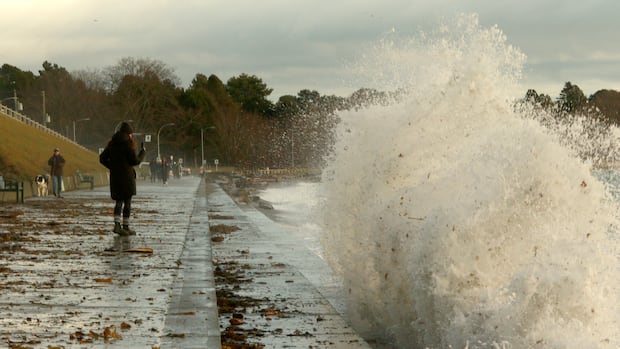

A massive underwater wave linked to this year’s El Niño weather phenomenon is traveling up the western coastline of the Americas, raising concerns among researchers regarding how climate change is amplifying the effects of this naturally occurring event.
The Kelvin wave, as it is termed, is not a surprise. However, similar to El Niño itself, it is occurring in the context of human-induced climate change that has already elevated ocean and atmospheric temperatures.
A smaller wave made its way to British Columbia earlier this summer, and the next one is predicted to arrive in one to two weeks, according to Bill Merryfield, a research scientist with Environment and Climate Change Canada.
“In fact, we observed a rise of over 30 centimeters in some areas back in June. The upcoming wave appears to be even stronger,” Merryfield remarked.
What triggers it?
The Kelvin wave is a naturally occurring atmospheric event, similar to El Niño. During typical years, winds blow from east to west across the equatorial Pacific, generally moving water from South America toward Asia.
However, in El Niño years, these east-to-west winds may weaken or reverse, allowing water to flow eastward.
“When these Kelvin waves reach South America’s coast, the accumulated water has no further eastward path. Therefore, it diverges and begins to flow along the coastlines of the Americas,” Merryfield explained.
Data from sea-level monitoring at Tofino, located on Vancouver Island’s Pacific side, illustrates the effects of the earlier Kelvin wave observed in June.
Unlike a massive tsunami, the Kelvin wave temporarily elevates sea levels.
“Think of it as a broad, shallow bulge in the ocean surface spanning hundreds of miles, raising the water height by about a foot,” explained Daniel Swain, a climate scientist at the University of California, to CBS News last month.
What effects will it have on the West Coast?
Merryfield indicated that the effects are most significant during king tides, which are particularly high tides resulting from the gravitational forces of the sun and moon aligning to create elevated tides.
“If you add that 30 centimeters of sea level rise to a king tide, and then potentially combine it with a winter storm that causes a storm surge, that’s when serious issues can arise,” he warned.
“The additional foot or so of sea level rise due to El Niño can create substantial impacts.”
The extreme global temperatures associated with this year’s potent El Niño could lead to nearly half a million additional fatalities worldwide by February, according to a report that also underscores the role of climate change in exacerbating extreme heat.
These storm surges could be further heightened by another consequence of El Niño, which would elevate sea levels along the British Columbia coastline. El Niño can enhance northward winds along the coast, pushing even more water toward the shore.
These cumulative effects — the Kelvin wave, intensified northward winds, and winter storms, alongside climate change that is already increasing sea levels and intensifying severe weather — could exacerbate flooding and erosion along the coastline. Historical strong El Niños have resulted in significant beach erosion in California.
Local officials are currently deploying emergency sand onto beaches and anticipate the Kelvin wave will raise water levels by six to twelve inches, as reported by the Associated Press.
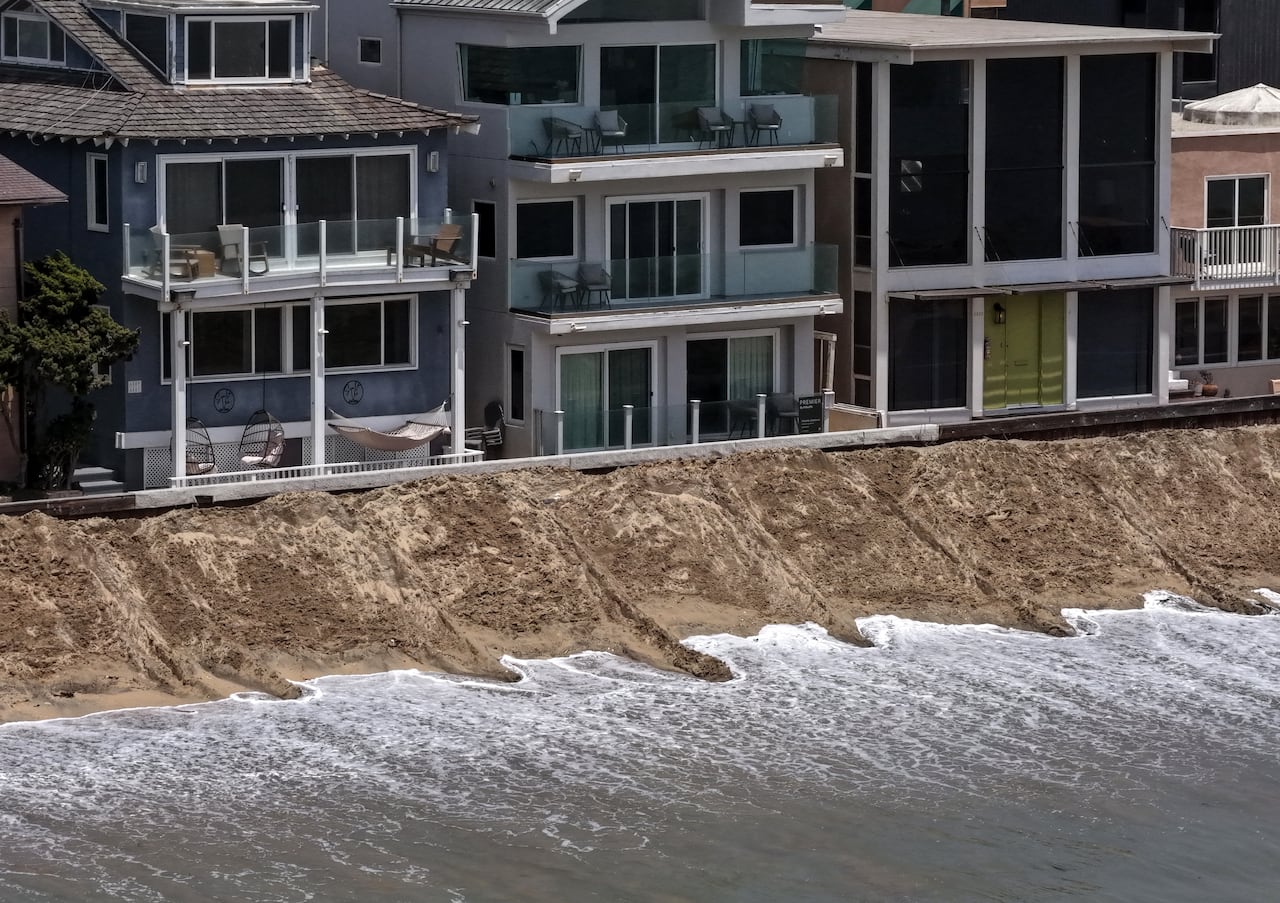
Exceptionally high king tides and powerful waves damaged protective sand and wooden berms in Long Beach, Calif. in June. (Justin Sullivan/Getty Images)
The consequences of the Kelvin wave — and El Niño in general — could persist well beyond this season, Merryfield cautioned.
Oceans absorb a significant amount of the excess heat trapped by greenhouse gases, which helps moderate global warming as humanity continues to rely on fossil fuels. However, during El Niño events, some of that stored heat is released from the ocean into the atmosphere.
This could result in 2027 being recorded as the warmest year ever, “by a considerable margin,” Merryfield noted, echoing similar warnings from various climate research organizations and scientists.