
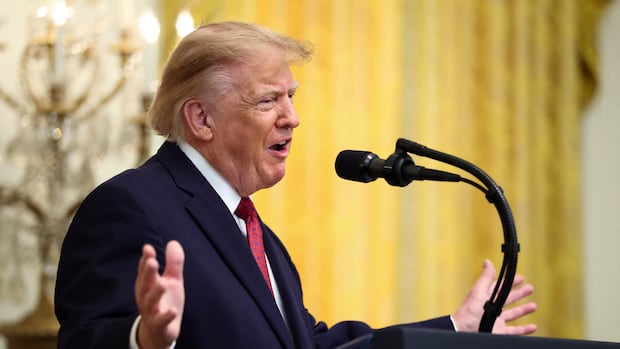

The verbal clash between U.S. President Donald Trump and Canadian officials persisted on Wednesday as he deviated from his prepared remarks during a Hispanic Heritage Month event, criticizing Canadian leaders as “very bad.”
At the White House, Trump asserted that the U.S. was “stupidly run” prior to his administration, claiming that previous leaders permitted automakers to relocate their assembly operations overseas, including to Canada.
Canada has had a substantial domestic auto manufacturing sector since 1904, emerging around the same time as its American counterpart.
Nonetheless, Trump maintained that former presidents “permitted other nations to produce our vehicles and sell them back to us,” asserting that he is reversing this trend with his administration’s high-tariff policies. The Trump administration has consistently indicated its intention to undermine Canada’s auto sector.
“Canada has exploited us for many years. They are the worst of all countries,” Trump declared.
“I appreciate the Canadian populace, but their leaders have taken advantage of our foolish leadership for a long time. They felt encouraged… They pretend to be completely innocent. They are not. They were quite bad. But now they are learning a lesson.”
-
Trump signs order to rename Lake Ontario as ‘Lake America’
-
‘Lake America’ change highlights Canada’s reliance on U.S. tech
One of those “lessons,” as described by the president, includes his decision to rename Lake Ontario in the U.S.
While addressing a predominantly Hispanic crowd, Trump mentioned that his initiative to change the Gulf of Mexico to the Gulf of America was “even cooler.”
“There may be a few individuals here who aren’t fond of that one,” he commented.
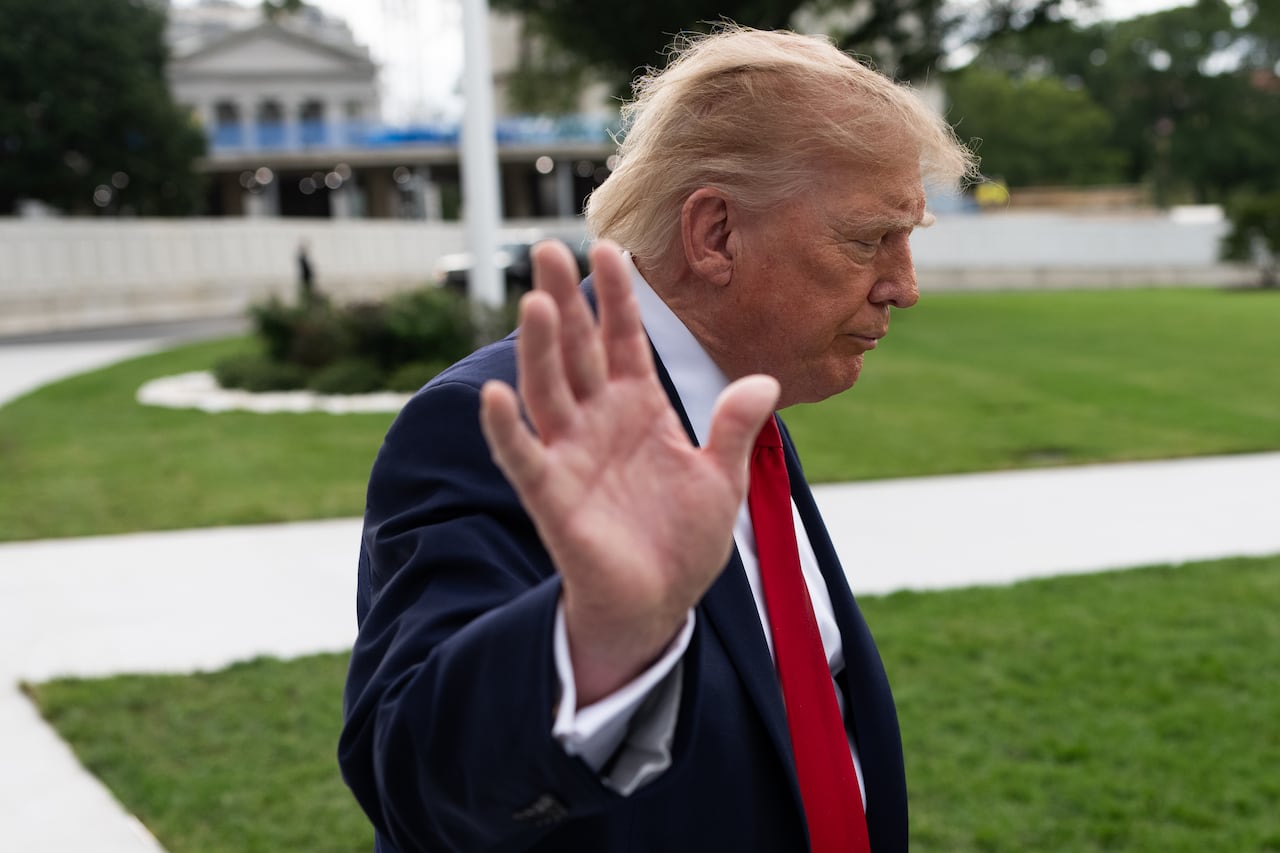
Trump waves to reporters on the South Lawn of the White House in Washington, D.C., on Saturday. This week, the U.S. enacted an import ban on a list of Canadian products. (Aaron Schwartz/Getty Images)
Import ban in effect
These remarks by Trump followed a day after he enacted an import ban on various Canadian goods, including molasses, motorcycles, dairy items, and alcoholic beverages.
The prohibition on Canadian beer, wine, and spirits could have the most severe impact; Canada exported approximately $1.2 billion of these products last year, according to Statistics Canada data.
In a discussion with Fox Business, U.S. Trade Representative Jamieson Greer expressed the administration’s frustration with Canadian liquor regulations and restrictions that limit American businesses competing for provincial contracts — measures that were implemented only after Trump imposed tariffs on Canadian imports last year.
-
Trump’s top trade envoy says U.S. ‘comfortable’ with state of relationship with Canada
-
U.S. bans on imported Canadian motorcycle, dairy, alcohol products take effect as trade war drags on
Greer stated that the import ban is a response to those Canadian actions.
“We provided them considerable leeway,” Greer remarked.
“However, at some point, we said, ‘That’s enough, you must remove that, and if you don’t, we will retaliate.’ So we have reciprocated with some of the bans.”
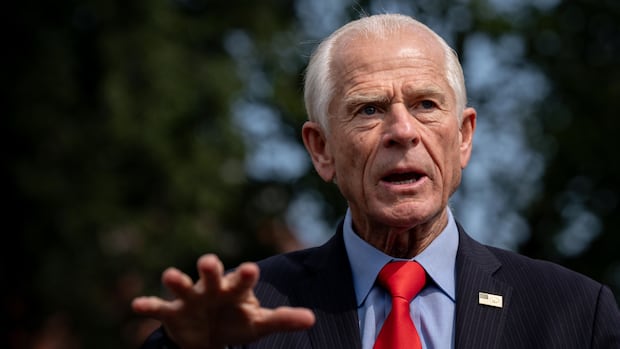
Trump trade adviser Peter Navarro told Canadian lobbyists to ‘get the hell out’ of the U.S. and warned Canada would ‘pay even more dearly’ if it interfered in the upcoming midterm elections. Navarro did not clarify what he meant by Canadian interference.
Peter Navarro, a prominent trade adviser to Trump, launched a tirade against Canada on Wednesday during a segment on former Trump campaign manager Steve Bannon’s podcast.
Navarro described Prime Minister Mark Carney and other Canadian officials as “frigging arrogant.”
He accused unnamed Canadian lobbyists of reaching out to U.S. lawmakers in Washington “more frequently than MAGA supporters” to sway them in Canada’s favor.
“They exploit us; they have been exploiting us for decades,” Navarro stated regarding Canada.
When asked about Navarro’s sharp criticisms this week, Carney declined to comment but emphasized that he believes a “mutually beneficial trade agreement” with the U.S. is possible in the future.
“Canada is prepared to negotiate in good faith,” Carney affirmed.
Greer noted that the U.S. is “always open” to a potential agreement with Canada, but added, “we are fairly content with our current position.”
Canada-U.S. trade picture
The assertions made by the Trump administration that Canada has been “taking advantage” of the U.S. are not substantiated by evidence.
The U.S. maintains a relatively modest trade deficit primarily due to its purchase of significant amounts of Alberta oil at reduced prices compared to global rates. Certain refineries in the U.S. Midwest are heavily reliant on this Canadian supply.
The U.S. consistently enjoys a trade surplus in services with Canada.
Despite Trump’s complaints about allegedly “ridiculously high tariffs” affecting U.S. farmers — a claim he reiterated on Wednesday — the majority of U.S. agricultural exports to Canada are tariff-free.
According to data from the World Trade Organization, 96.7 percent of these agricultural products enter Canada without tariffs. Data from Trump’s own agriculture department indicates that half of Canada’s agricultural imports come from the U.S.
While certain dairy products are subject to high tariffs, these apply only when exports surpass a specific quota. As the U.S. dairy lobby itself acknowledges, the U.S. has never approached those limits.