
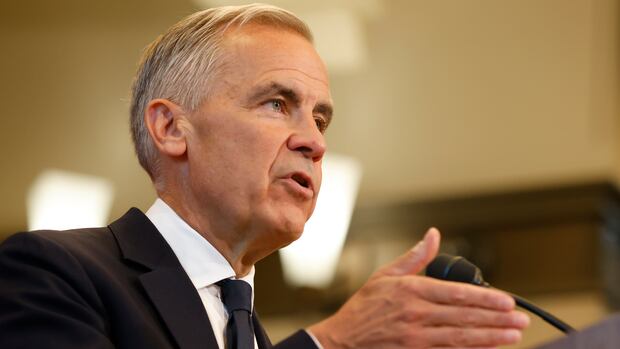

According to Prime Minister Mark Carney, a significant factor in his decision to abandon negotiations with the Trump administration was Washington’s insistence on terms that would “devastate” major Canadian industries, notably the automotive, steel, and aluminum sectors.
His remarks came amid pressure from Conservative officials to disclose specifics about the proposed agreement that collapsed late Friday evening.
“We had made some advancements in recent weeks,” Carney stated on Monday in Lévis, Quebec. “Ultimately, that progress was reversed, and we could not agree to the U.S. proposal, nor could we provide what they were asking.”
U.S. Vice-President JD Vance presented a contrasting perspective, accusing Canada of making “a series of unreasonable last-minute requests” and urging Carney to “stop exploiting America.”
While the federal government has not disclosed the specifics of the negotiations publicly, Ontario Premier Doug Ford, who has been updated on the discussions, labeled the proposed deal as “unfavorable” and expressed relief that Carney did not proceed with it.
Flavio Volpe, a member of Canada’s advisory committee on this matter and president of the Automotive Parts Manufacturers’ Association, noted that after negotiators reached a preliminary agreement, it was the responsibility of numerous Canadian and American officials to draft the precise terms of the contract.
As the “text began to take shape,” Volpe explained, it diverged from what had been originally discussed.
Here’s what CBC News has uncovered about the behind-the-scenes developments.
Pickup trucks excluded
CBC News reported that prior to the deal’s deadline, one of Trump’s senior aides — U.S. Commerce Secretary Howard Lutnick — expressed discontent with the negotiations and urged the U.S. to improve its stance.
Volpe remarked that Lutnick had adopted a tough approach regarding Trump’s goal to reduce Canada’s vehicle manufacturing output.
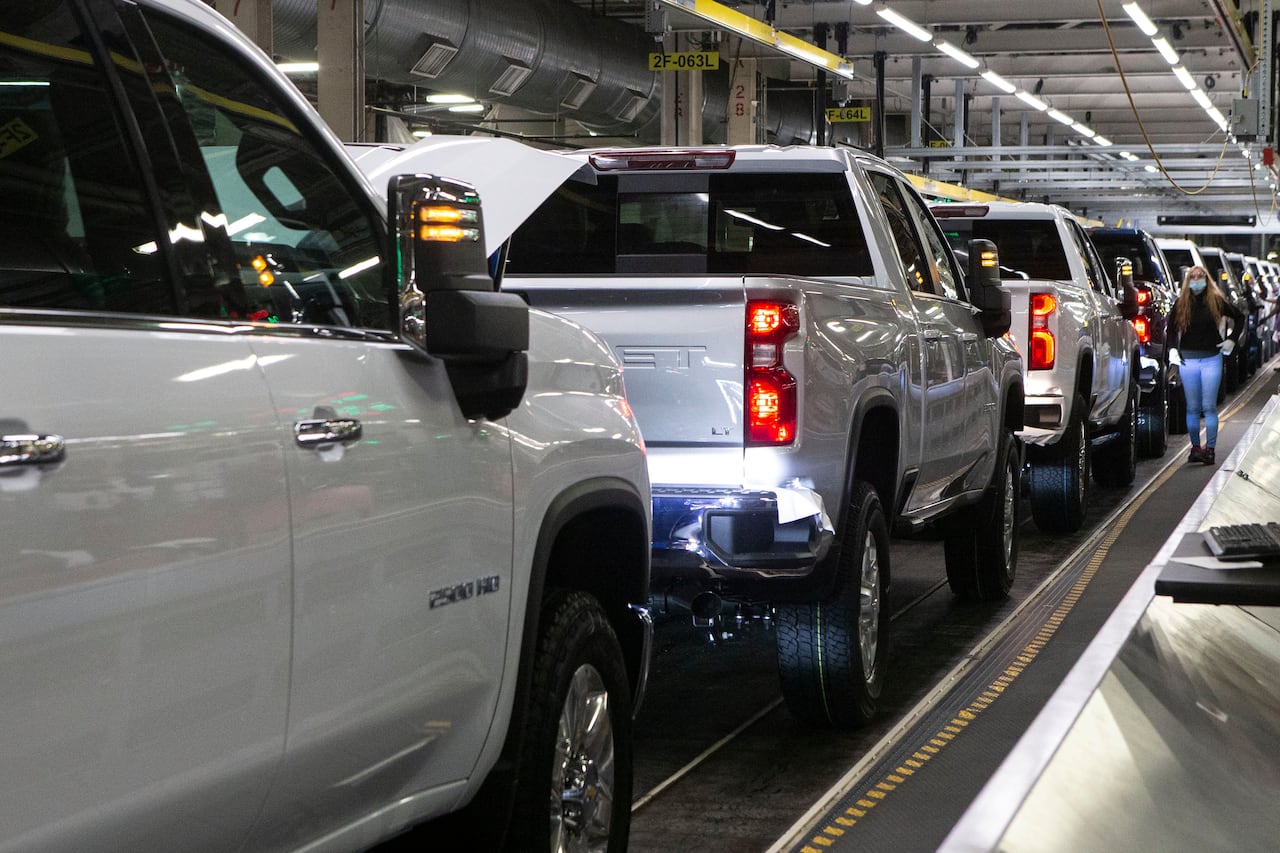
Carney stated that the talks with the U.S. deteriorated partly because American negotiators modified the terms shortly before the deadline, leaving medium- and heavy-duty trucks without tariff relief. (Chris Young/The Canadian Press)
Initially, American negotiators had consented to reduce the primary tariff on Canadian automobiles from 25% to 15%, according to Volpe. A source indicated that American auto content would be exempt, potentially halving that tariff rate. (The sector also sought an exemption for Canadian-produced auto content, which the U.S. reportedly declined, according to a source.)
However, just before the deadline, the U.S. announced its intention to exclude medium- and heavy-duty trucks, which meant omitting some of North America’s most profitable vehicles: pickup trucks.
The Ford F-Series and the General Motors Silverado are manufactured in Ontario facilities, and this exclusion could severely affect approximately 20,000 jobs, Volpe stated.
“The tariffs would have been prohibitively high in those areas, making the product unfeasible,” Volpe informed CBC’s The Current on Monday.
Carney referred to that exclusion as a “significant alteration” to the terms.
Threats to sovereignty
In the final moments of discussions, Carney indicated that the U.S. also attempted to limit Canada’s ability to negotiate trade agreements with other nations.
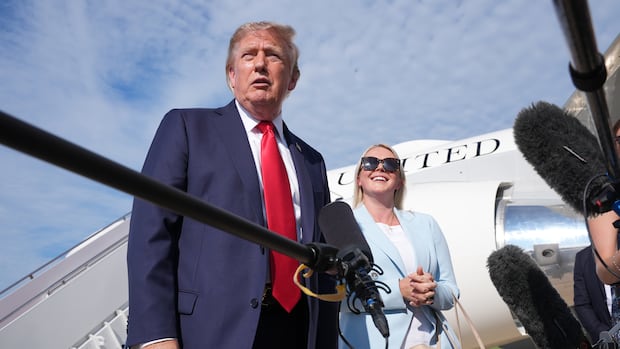
In the wake of the failed trade talks, Unifor national president Lana Payne claims that the Trump administration is intentionally targeting Canada’s manufacturing industry.
This demand would have directly undermined the prime minister’s strategy to reduce reliance on the U.S. and diversify trade relationships.
“The notion that the United States could dictate sovereign decisions made by Canada regarding entering a free trade agreement with another trustworthy partner was clearly something we were not willing to entertain,” Canada-U.S. Trade Minister Dominic LeBlanc remarked on CBC’s Power and Politics on Monday.
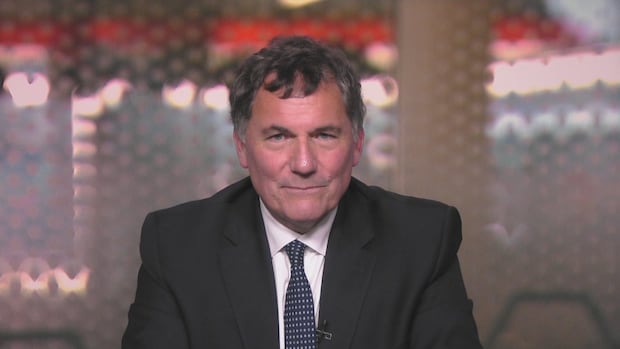
What would it take to get back to trade talks? Power & Politics asks the person leading Canada’s negotiations, Minister for Canada-U.S. Trade Dominic LeBlanc.
Moreover, the U.S. insisted that Canada impose sector-specific tariffs, primarily targeting steel and aluminum, on its trading partners. Nations with existing free trade agreements with Canada would be subjected to tariffs on imports exceeding 2025 levels, a source revealed.
Carney mentioned he was willing to align with the U.S. on sector-specific tariffs only if they were advantageous to Canada.
“That’s us making a decision that aligns with our mutual interests, rather than being instructed to do something or being constrained from pursuing other options,” he explained.
Steel, aluminum, lumber
Ultimately, the prime minister indicated there “wasn’t sufficient progress” regarding American tariff relief for steel, aluminum, and related products.
Sources indicated that the U.S. had planned to cut its tariffs on Canadian steel and aluminum from 50% to 25%. Derivative products would have been subject to tariff rate quotas, a source noted.
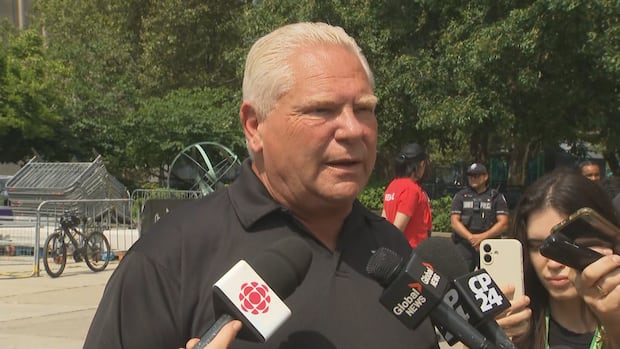
Ontario Premier Doug Ford stated that he received feedback from the province’s steel and auto sectors indicating that the U.S. government had proposed an unfavorable trade deal, and he commended Prime Minister Mark Carney for defending Canada in a “very complicated” situation.
Washington was also discussing the possibility of lifting a 10% Section 232 tariff on Canadian softwood lumber by September 1, but existing countervailing and anti-dumping duties would remain, according to industry sources.
Culture
Carney noted that the Americans also opposed Canadian regulations regarding bilingual product labeling.
U.S. Trade Representative Jamieson Greer dismissed the labeling concern on CNBC, labeling it a “funny, fake story.”
In response, Carney asserted on Monday that this is indeed a reality.
He described the labeling issue as an irritant for Americans and mentioned that during the final hours of discussions, they objected to Canadian policies that ensure easy access to French-language content on platforms like Netflix.
LeBlanc stated that it was the “cumulative total of various issues” that emerged towards the end of negotiations that led Carney to determine that the proposed agreement was not in Canada’s best interests.
Concessions Canada was ready to make
Had the U.S. agreed to “substantially” lower the tariffs that heavily burden Canadian industries, Carney indicated he was open to:
- Eliminating Canada’s retaliatory tariffs on American steel, aluminum, and automobiles.
- Encouraging provinces and territories to reinstate American alcohol on store shelves.
Carney urged premiers to lift procurement policies that barred U.S. companies from bidding on projects as a retaliatory response to American tariffs, according to Nova Scotia Premier Tim Houston.
Ottawa was also willing to modify dairy import licenses, granting licenses directly to retailers, a source in the industry revealed. This change could facilitate the sale of U.S. milk and cheese in Canadian markets, helping Americans meet their entire duty-free trade quota under CUSMA.
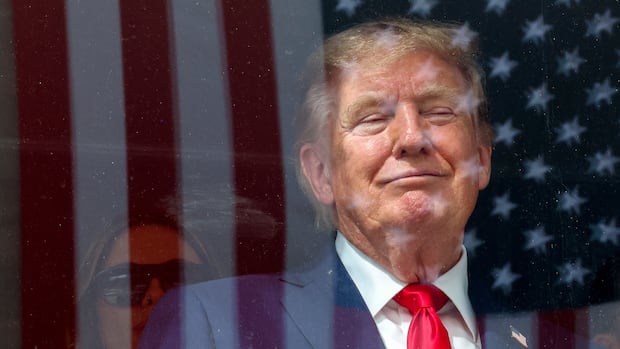
In his first response to the failed Canada-U.S. trade deal, President Donald Trump blamed Canada and accused it of wanting ‘the benefits of being a State, without being one.’ But some Republicans think hitting Canada with new tariffs is a mistake.
The prime minister was elected on a commitment to confront U.S. President Donald Trump and has vowed not to endorse a detrimental deal.
Had he not walked away, it would have fallen to Carney to advocate for it to Canadians, particularly at a time when polls indicate a lack of support for concessions and key figures were advising against the proposed terms.
Manitoba Premier Wab Kinew expressed belief that Canada could advocate for a more favorable agreement.
Former deputy prime minister and finance minister Chrystia Freeland stated to Bloomberg News that a “bad outcome” would involve Canada accepting a deal with permanent sector-specific tariffs.
Canada’s previous chief negotiator during Trump’s first term, Steve Verheul, also cautioned, sources indicated, that Canada would be forfeiting most of its leverage even before entering CUSMA discussions.
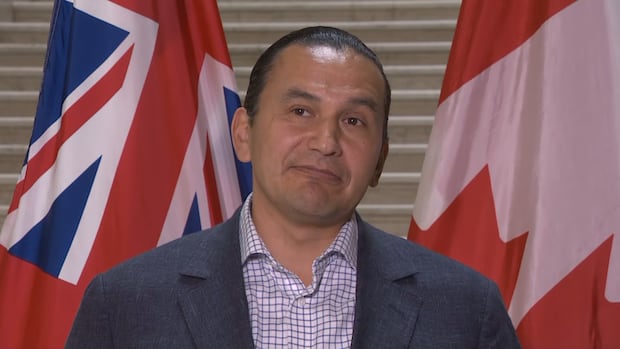
Premier Wab Kinew asserts that Manitoba fully supports Prime Minister Mark Carney’s decision to retaliate against the new U.S. tariffs of 50% on nearly $30 billion worth of Canadian goods. He emphasized that U.S. President Donald Trump has two years left in office, and that “sanity will hopefully return to America.”
In response to the criticism, LeBlanc noted that Carney has made it clear that the American tariffs breach the CUSMA agreement that Trump himself endorsed. However, he acknowledged that achieving zero tariffs in those sectors in the short term is not “realistic,” given that the U.S. is imposing tariffs on all its trading partners.
Angus Reid Institute president Shachi Kurl reported on Monday that her polling indicates 76% of Canadians believe it was the correct choice for Carney to withdraw.
“Nearly 70% of Canadians indicate that the prime minister demonstrated strength through his decision,” Kurl informed Power and Politics. “It’s a strong endorsement.”
LeBlanc stated that he will not rush back to negotiations unless there is a clear offer from the U.S. that places Canada in an “economically viable position” concerning steel, aluminum, automobiles, and forest products.