
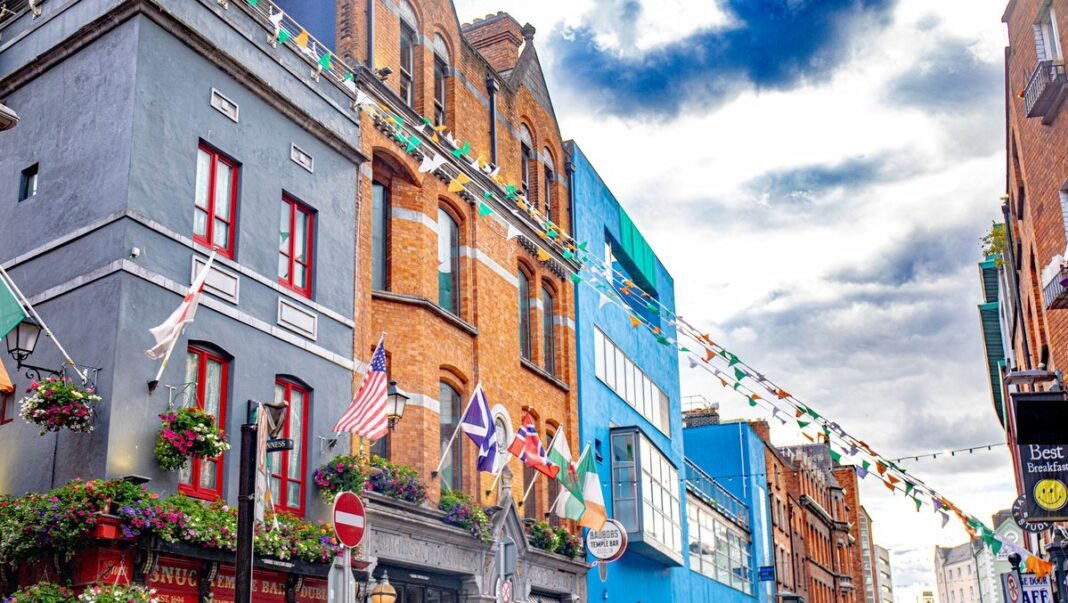

Temple Bar in Dublin is a topic that sparks debate among visitors, akin to the love-it-or-hate-it sentiment associated with Marmite. The area is teeming with pubs eager to serve drinks, particularly Guinness, albeit at premium prices nearing ten Euros per pint.
Upon my arrival in Dublin, I had the privilege of partaking in a connoisseur’s session at the Guinness Storehouse. Our host, Morgan, who expertly poured us a range of VIP pints, advised against venturing into Temple Bar. He emphasized that it tends to be a tourist hotspot and not necessarily where one would find the finest Guinness in the city. Instead, Morgan recommended establishments like The Lord Edward in the Liberties area and The Long Hall in the city center. Across the river from Temple Bar, The Cobblestone stands out for its traditional music offerings.
Dublin tour guide Mary Phelan suggests that while Temple Bar should not be the sole destination in the city, there is no harm in enjoying a few drinks or even just taking a leisurely stroll through the area. She encourages visitors to explore the main street leading towards Christ Church. Mary also highlights the lesser-known but excellent pub, Darkey Kelly’s on Fishamble Street, which offers a more relaxed atmosphere. Additionally, she mentions The Palace Bar on Fleet St, a historic establishment frequented by writers and journalists from The Independent and The Irish Times.
In addition to the vibrant nightlife, Temple Bar boasts a rich history that predates its pub culture. The area was originally inhabited by Vikings in 795 AD, with remnants of their ancient defenses still visible at Dublin Castle. The name “Temple Bar” derives from Sir William Temple, a British diplomat who constructed a grand residence and gardens there in the early 1600s, solidifying the area’s identity.
Officially, Temple Bar comprises a square on the south bank of the River Liffey, with various streets and narrow laneways branching out towards the river. During the day, the atmosphere is more subdued, with boutique shops, cafes, and pubs bustling with activity. Meeting House Square hosts occasional screenings and a weekly food market on Saturdays, surrounded by cultural attractions like The National Photographic Archive, The Gallery of Photography, and the Irish Film Institute.
However, it is after dark when Temple Bar truly comes alive, especially on weekends. With the highest concentration of pubs in Dublin, the area exudes a lively atmosphere that appeals to many tourists willing to pay a premium for the experience. Live music and singalongs are commonplace, creating a vibrant ambiance. While Temple Bar offers a unique experience, exploring other areas can provide a more authentic and cost-effective taste of Dublin’s beer culture.
For more details on visiting Dublin, visit ireland.com.