
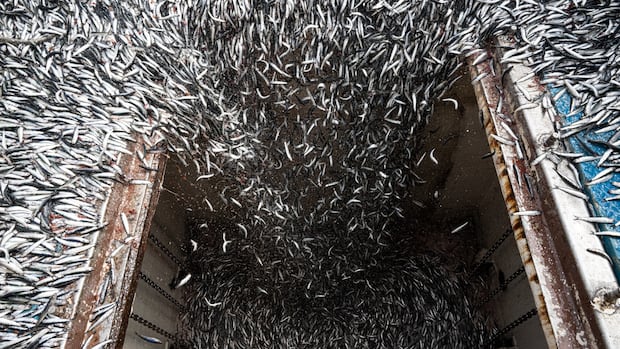

This narrative is part of an extensive investigation carried out by an international team of reporters from The Outlaw Ocean Project, a news organization located in Washington, D.C.
In 2020, investigators from the government in Goa, India, visited a factory called United Marine Products to assess its methods of disposing of toxic wastewater.
For several years, residents in the vicinity had voiced concerns about the factory, claiming it rendered the air unbreathable and contaminated their drinking water. The facility specializes in producing fish meal, a high-protein powder created by grinding and cooking wild-caught fish to be used as feed for farmed fish.
The inspectors soon uncovered that the factory’s management had resorted to a new and unlawful method for waste disposal, boring holes into the soil in a nearby field behind the plant. Authorities later determined that these boreholes had likely polluted the groundwater, adversely affecting local villagers and their livestock.
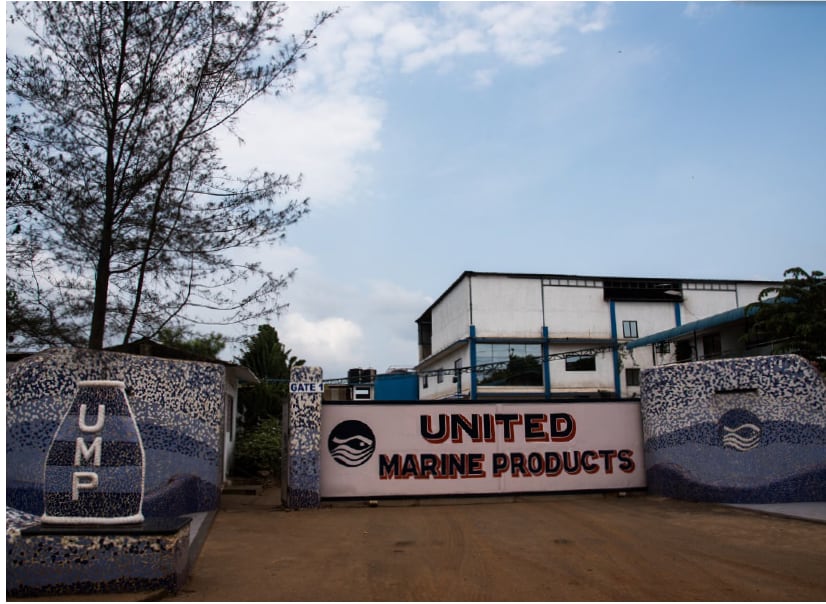
The United Marine Products facility in Councolim, Goa, India. In 2020, investigators found that the plant had drilled holes in the ground behind the factory to unlawfully dispose of wastewater resulting from fish meal processing. (Changing Markets Foundation)
The owner of the plant refuted any allegations of misconduct.
Consumers of seafood in Canada may feel disconnected from these distant issues.
However, this Indian factory was a supplier for Skretting, a prominent feed manufacturer utilized by numerous fish farms in Canada — meaning its products could potentially nourish the salmon from British Columbia and New Brunswick or trout from Quebec that are available in stores.
A five-year investigation by The Outlaw Ocean Project, based in Washington, D.C., revealed a range of concealed costs associated with producing this feed, including the decline of artisanal fishing jobs, chronic exposure to chemicals, preventable worker fatalities, and violent protests driven by the overwhelming odors from fish meal plants.
These social and environmental repercussions are primarily borne by the poorer nations from which the feed ingredients are sourced and processed, far removed from the locations where the resulting premium seafood is consumed.
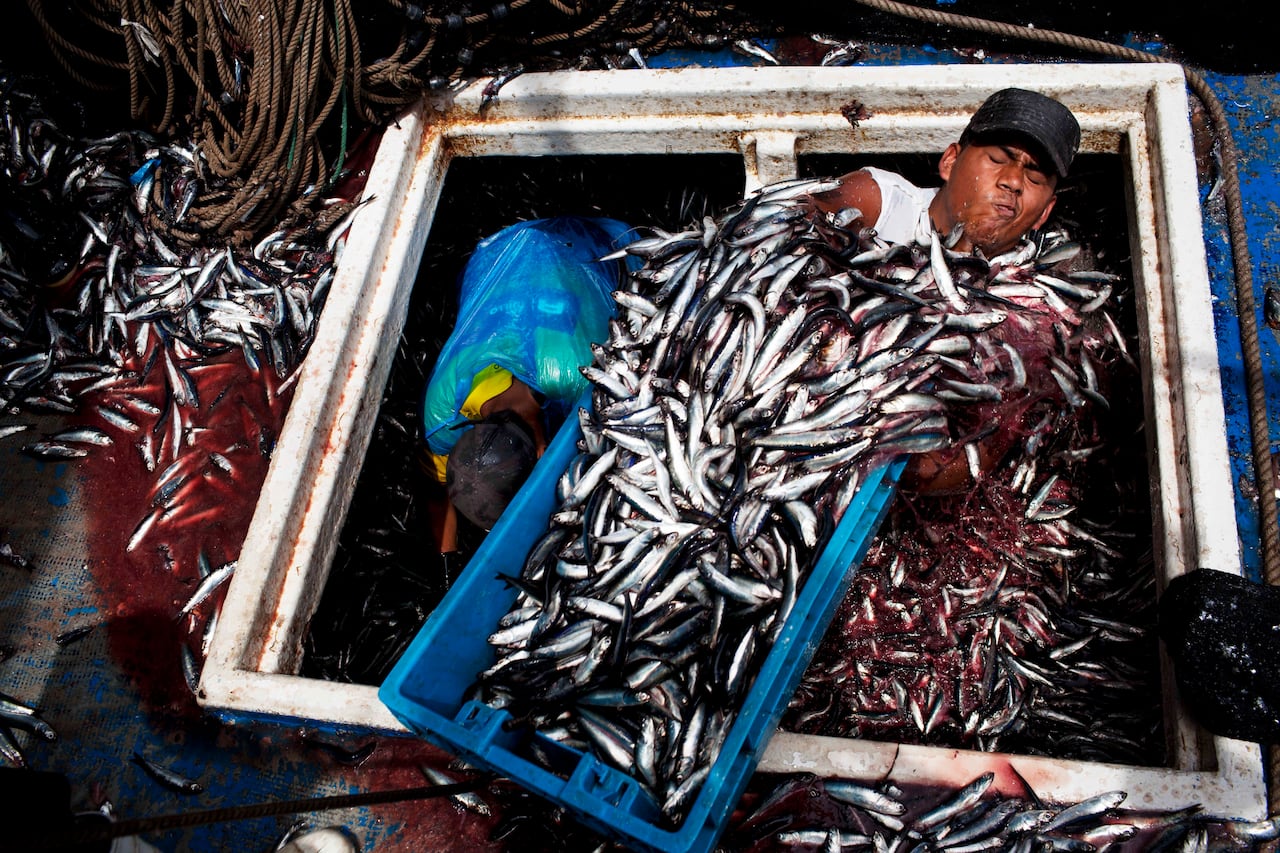
A worker unloads a crate of anchovies from a boat at the port of El Callao, Peru. As the world’s leading producer of fishmeal, Peru faces increasing concerns regarding overfishing and pollution from its fishmeal sector. (Rodrigo Abd/The Associated Press)
Whether sourced domestically or imported, the most commonly consumed farmed seafood in Canada – including salmon, shrimp, trout, sea bass, and sea bream – relies on fish meal, which is derived from the very species of wild fish that aquaculture claims to be preserving, thus exacerbating ocean depletion, according to fisheries scientists.
“Understanding the true impact of aquaculture must begin not with the farm, but with the feed,” stated Daniel Pauly, project director of the Sea Around Us initiative at the University of B.C. in Vancouver.
“Such an analysis presents a significantly different perspective than what the industry portrays.”
Canada’s dependence on global fish meal
Since 2022, over half of the seafood consumed worldwide has originated from fish farms instead of wild catches, as stated by the UN Food and Agriculture Organization. The aquaculture sector is valued at $444 billion and is the fastest-growing component of global food production. Most of these fish farms utilize fish meal and fish oil derived from wild fish harvested from the ocean.
In contrast to farming bivalves like oysters, clams, and mussels, which do not generally require external feed, the primary challenge in raising carnivorous seafood, such as salmon and trout, lies in their feeding.
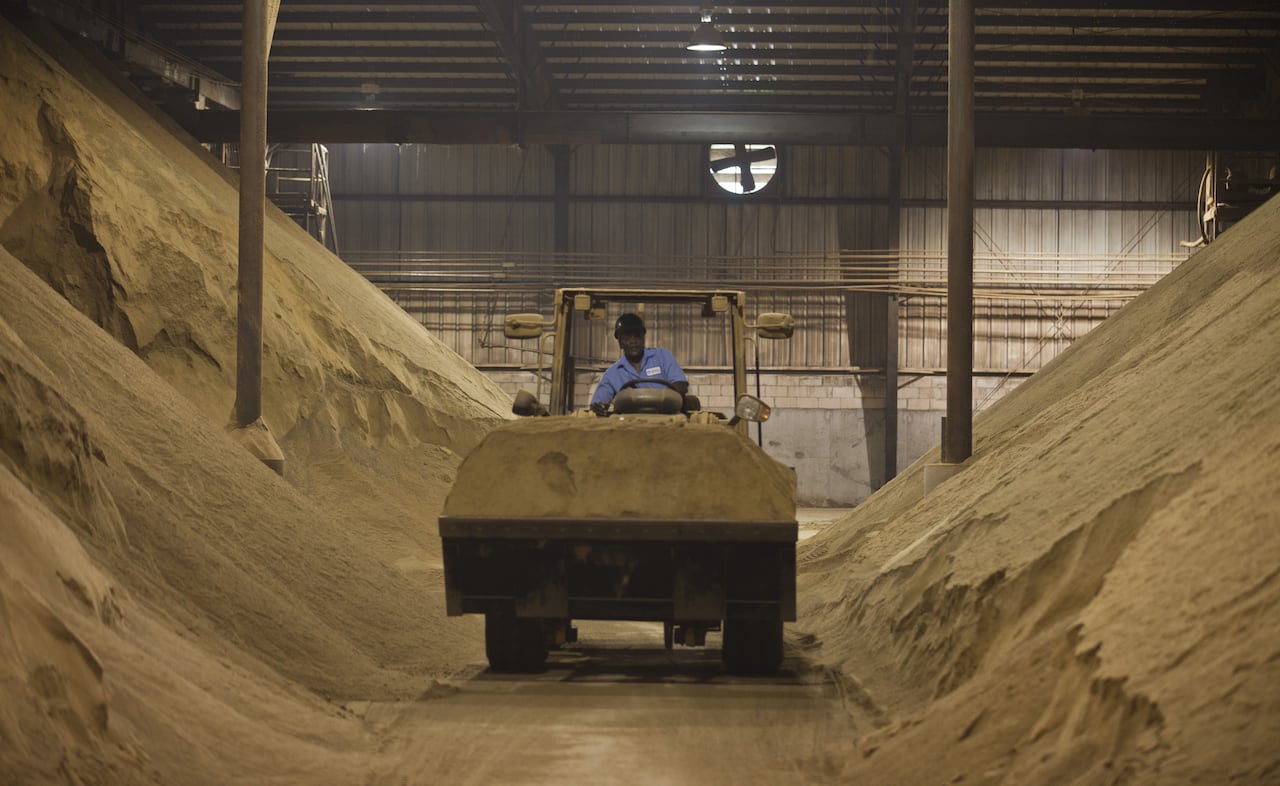
A worker operates a tractor near piles of fish meal produced from menhaden fish for use as animal feed supplements in Reedville, Virginia, in 2015. (Andrew Caballero-Reynolds/AFP/Getty Images)
Canada boasts over 200 fish farms, the majority of which depend on fish meal or fish oil that, when sourced domestically, primarily comes from Pacific anchoveta, chub mackerel, herring, haddock, pollock, sardines, and frigate tuna.
Canada forbids vessels from targeting fish solely for the purpose of producing fish meal or fish oil, thus domestic fish meal is generally created using skins, bones, and other byproducts of processing that would otherwise be discarded. This practice is widely regarded as a more sustainable approach to generating feed protein compared to utilizing whole fish meant for human consumption.
Nevertheless, approximately two-thirds of the fish meal utilized in Canada, particularly by aquaculture facilities — around 53,000 tonnes in 2023 — is imported, linking Canadian consumers to these hidden overseas social costs. Additionally, Canada imports seafood worth over $4 billion each year, with about a third being primarily farmed salmon and shrimp that heavily rely on fish meal and fish oil.
Food for Feed investigation
The Outlaw Ocean Project’s comprehensive investigation mapped the global fish meal industry extensively, documenting over 1,400 fish meal factories across 64 nations, tracing supply chains from fishing vessels to processing facilities, feed mills, fish farms, and seafood sellers.
This reporting endeavor involved numerous journalists from various countries who visited factories and farms and boarded fish meal vessels at sea.
In Gambia and Mauritania, the investigation revealed how the industry contributes to food insecurity by redirecting fish that once supported local populations to fish meal factories for export.
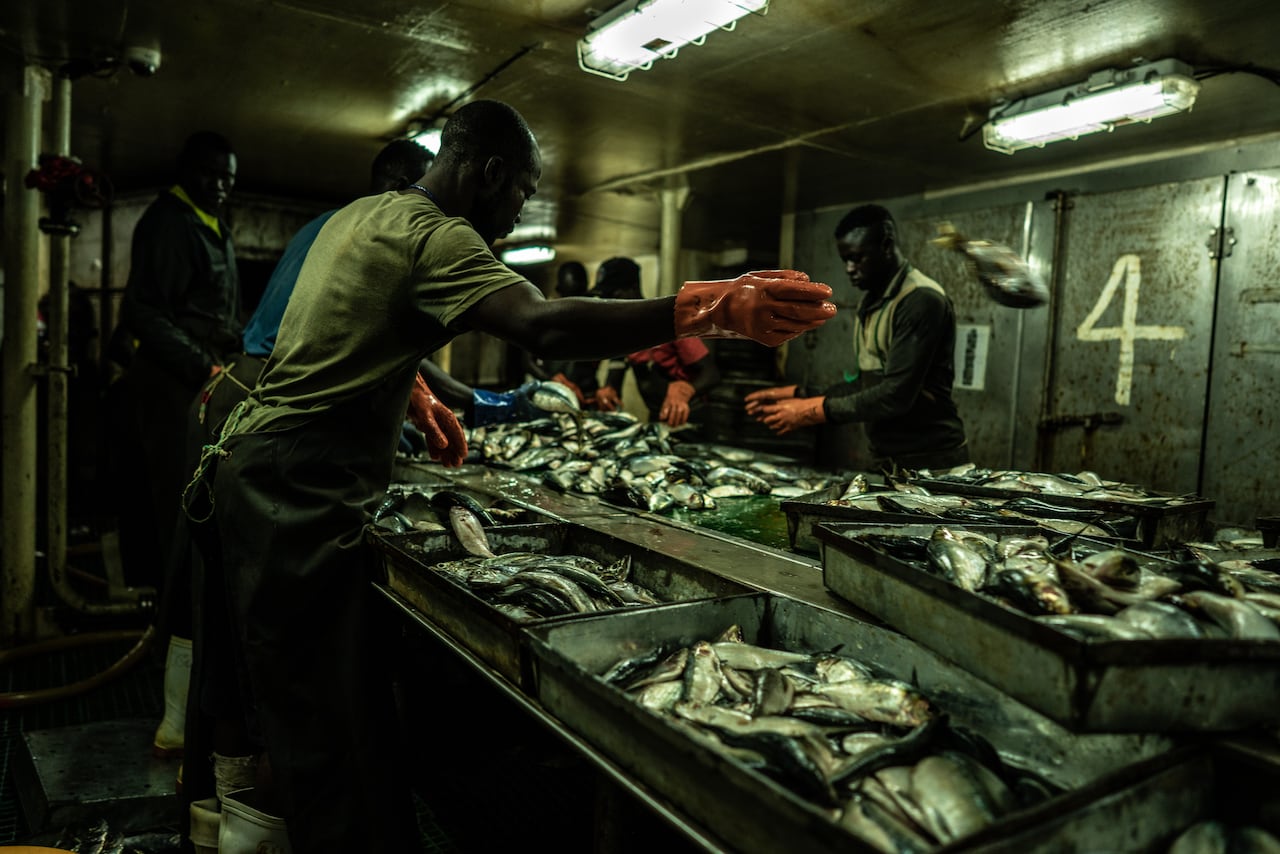
Workers sort their catch aboard the China-flagged Lu Lao Yuan Yu 010 in Gambian waters in 2019. Outlaw Ocean reporters documented widespread grievances about poor living and working conditions while aboard these vessels. (Fábio Nascimento/The Outlaw Ocean Project)
In India and Peru, the investigation noted at least 80 protests, some of which turned violent, arising from labor strikes and demonstrations due to water pollution or the foul odors emanating from factories processing thousands of tonnes of decaying fish. Canada is the largest importer of fish oil from Peru.
In the Xinjiang region of China, the report highlighted the use of forced labor on fish farms.
The investigation identified more than 1,000 fish farms in Xinjiang and Tibet — regions experiencing severe state repression — that produce an estimated half a billion dollars’ worth of aquaculture seafood annually, some of which is exported to the United States and Canada.
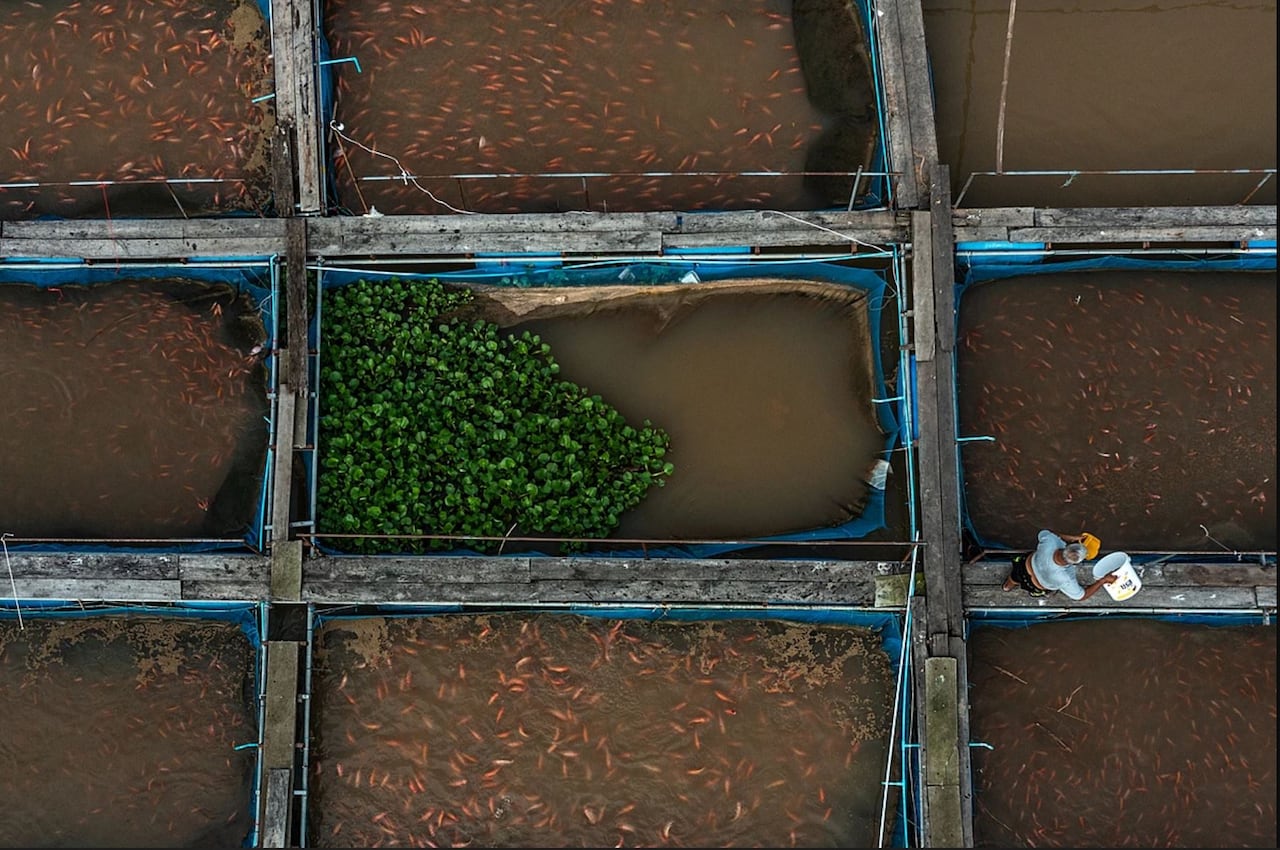
A worker feeds fishmeal pellets into pens at a fish farm in Thailand in 2021. More than half of the seafood consumed globally is sourced from aquaculture. (Mako Kurokawa)
‘Overexploited’ or worse
The investigation evaluated over 2,400 vessels linked to fish meal production across at least 30 countries. It revealed that most of these vessels do not adhere to the Global Charter for Fisheries Transparency, a framework established by ocean-focused civil society organizations outlining accountability standards for industrial fishing fleets.
For instance, under 30 percent of the fleet had publicly accessible location data, and fewer than 25 percent possessed a unique vessel identification number (or ship license plate). This lack of transparency complicates enforcement efforts.
-
A third of global fishing goes unreported, UBC researchers find
-
Somalis say foreign ships are stealing their fish, and it’s fuelling a piracy resurgence
At least half of the fish species caught by the evaluated fish meal vessels were classified by scientific research as “overexploited” or worse — this includes flat and round sardinella in Senegal, oil sardines in India, and anchoveta in Chile.
The majority of the ships in the global fish meal fleet are purse seiners or trawlers, which deploy large nets to capture dense schools of fish, often indiscriminately including bycatch and non-target species.
At least 165 of the vessels in this fleet were bottom trawlers, a harmful type of fishing gear that drags weighted nets across the ocean floor.
Fish meal reliance declining, industry asserts
In response to inquiries from The Outlaw Ocean Project regarding the sustainability of fish meal, the IFFO, the international fish meal organization, emphasized that its “role is not to dictate which markets should utilize fish meal and fish oil.”
Véronique Jamin, a representative from the organization, stated that fish farming is “the most efficient system for animal protein” and is becoming increasingly efficient over time.
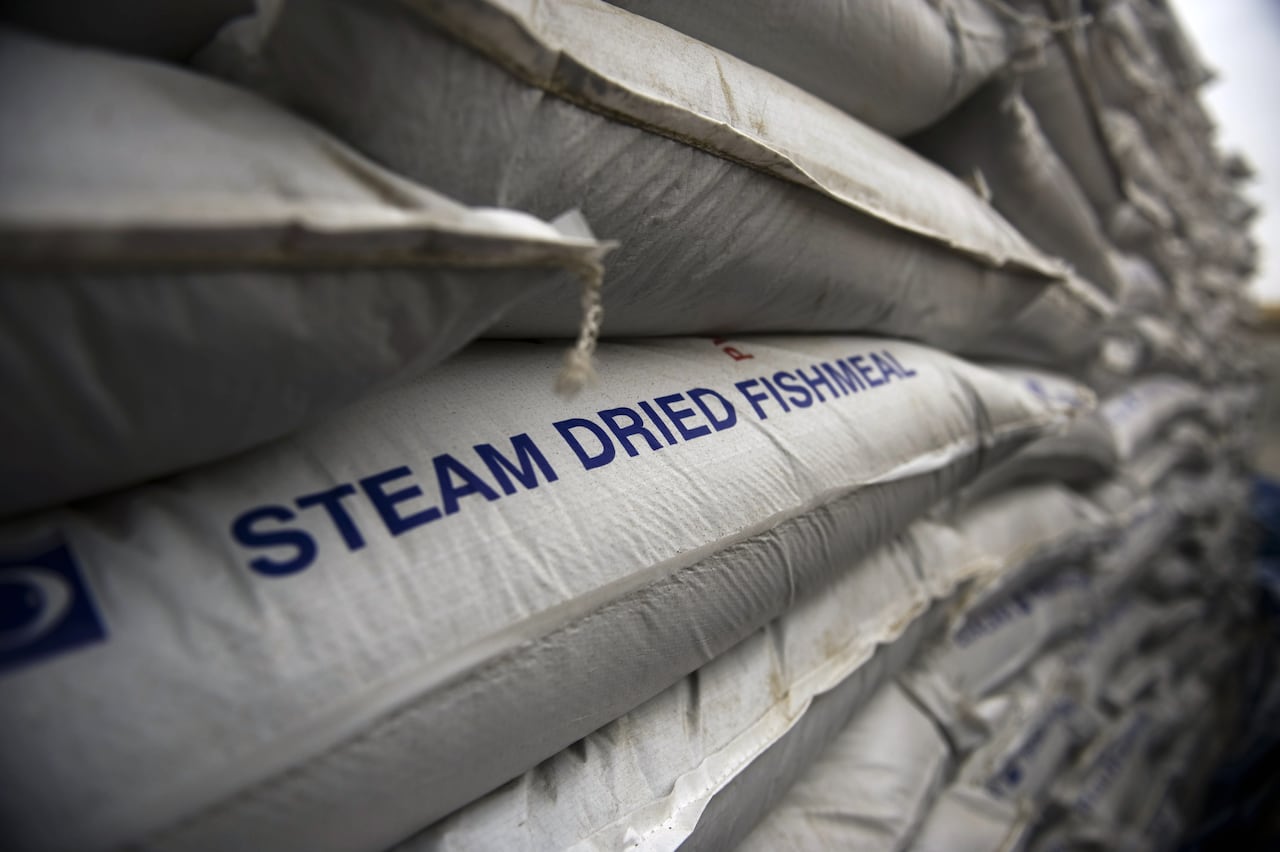
Bags of fish meal stored at a factory in Lima on December 3, 2009. Although the aquaculture sector claims to have reduced its dependence on fish meal, some companies have increased their demand as they expand. (Ernesto Benavides/AFP/Getty Images)
When questioned about the overfishing concerns associated with the fish meal industry, Jamin responded, “Since small pelagic fish are rapidly renewable stocks, their sustainable harvest limits are significantly higher than those of slower-growing species such as cod, tuna, or deep-sea fish.”
The feed and aquaculture sectors have stressed that they are diminishing their reliance on fish meal and fish oil by incorporating alternative ingredients such as insects, algae, and krill. From 2000 to 2020, the proportion of fish meal in global aquaculture feed decreased from 23 percent to eight percent, according to IFFO.
Salmon producers, which generally require larger quantities of fish meal and oil, claim they have also made advancements. Members of the Canadian Aquaculture Industry Alliance, including major producers like Cermaq and Mowi, have reduced the amount of these components in salmon feed to below 20 percent, according to a November 2025 press release.
“These outcomes demonstrate that salmon farming companies have embraced science-based practices that have enhanced the overall sustainability of salmon farming in Canada,” stated Timothy Kennedy, president of the Canadian Aquaculture Industry Alliance, in the release.
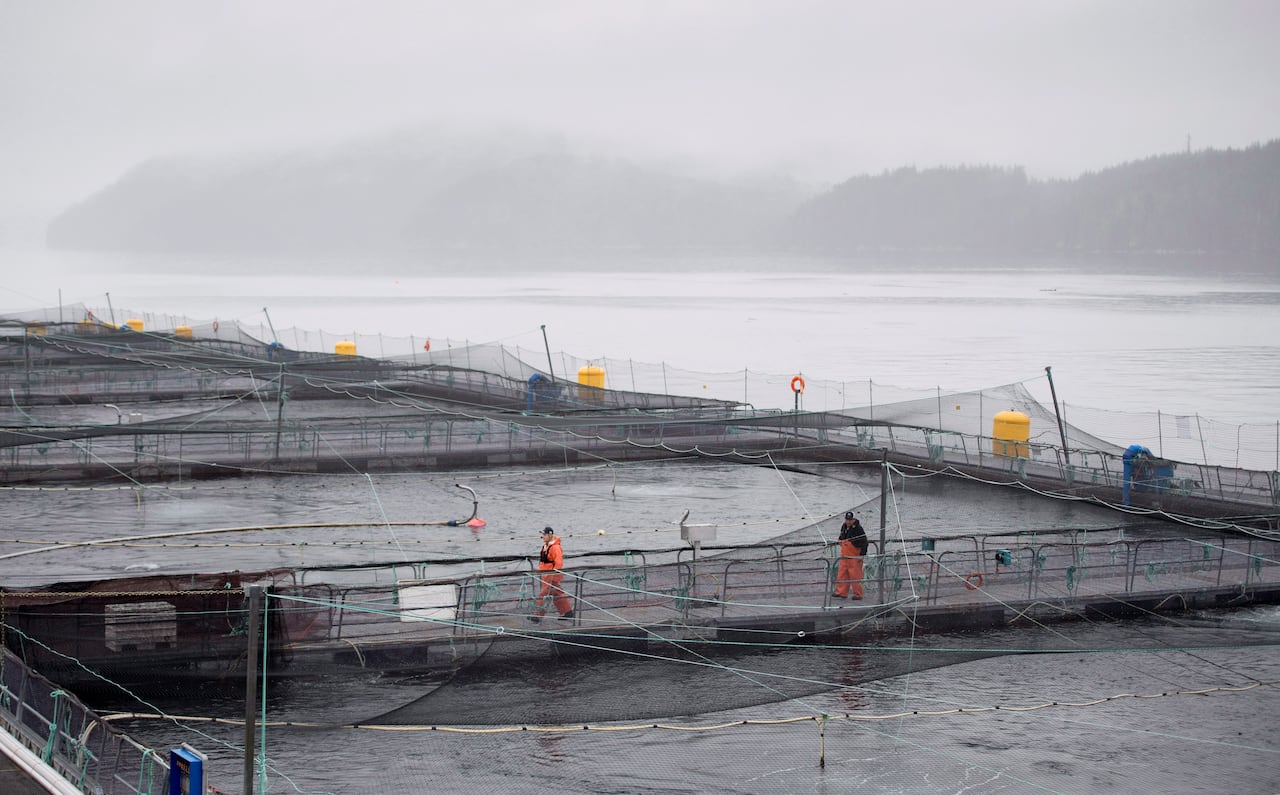
A salmon farm near Campbell River, B.C., shown during a routine health check in 2018. (Jonathan Hayward/The Canadian Press)
However, as the aquaculture industry expands, so does its demand for fish meal.
For instance, to satisfy market needs, five of the world’s largest salmon companies increased their total use of fish meal or fish oil sourced from whole wild fish by as much as 39 percent between 2020 and 2024, according to a report from the Farm Animal Investment Risk and Return Initiative.
Two of these salmon companies with increased usage of fish meal operate in Canada: Mowi, which announced in June 2025 that it was divesting its Canadian farms to Cooke; and Grieg Seafood, whose Canadian operations have since been acquired by Cermaq. (Mowi, Cermaq, Cooke, and Grieg Seafood did not respond to requests for comments.)
Skretting initiates investigation
As of 2025, Canada had at least seven factories processing fish meal and fish oil, and these facilities have their own issues.
Between 2021 and 2024, at least two of these plants were linked to pollution or unsustainable fishing methods, according to Bait to Plate, an online resource created by The Outlaw Ocean Project that monitors the fishing and seafood sectors. Neither company provided a response to the project’s inquiries.
Nonetheless, the significant burdens of food insecurity, dwindling fish populations, social unrest, and environmental pollution are primarily shouldered by the poorer nations producing the fish meal or farmed seafood that Canada imports.
For instance, Canada sources over a third of its shrimp from India, where the investigation uncovered incidents of explosions, fires, and worker suffocations at factories producing fish meal that feeds the country’s shrimp farms.
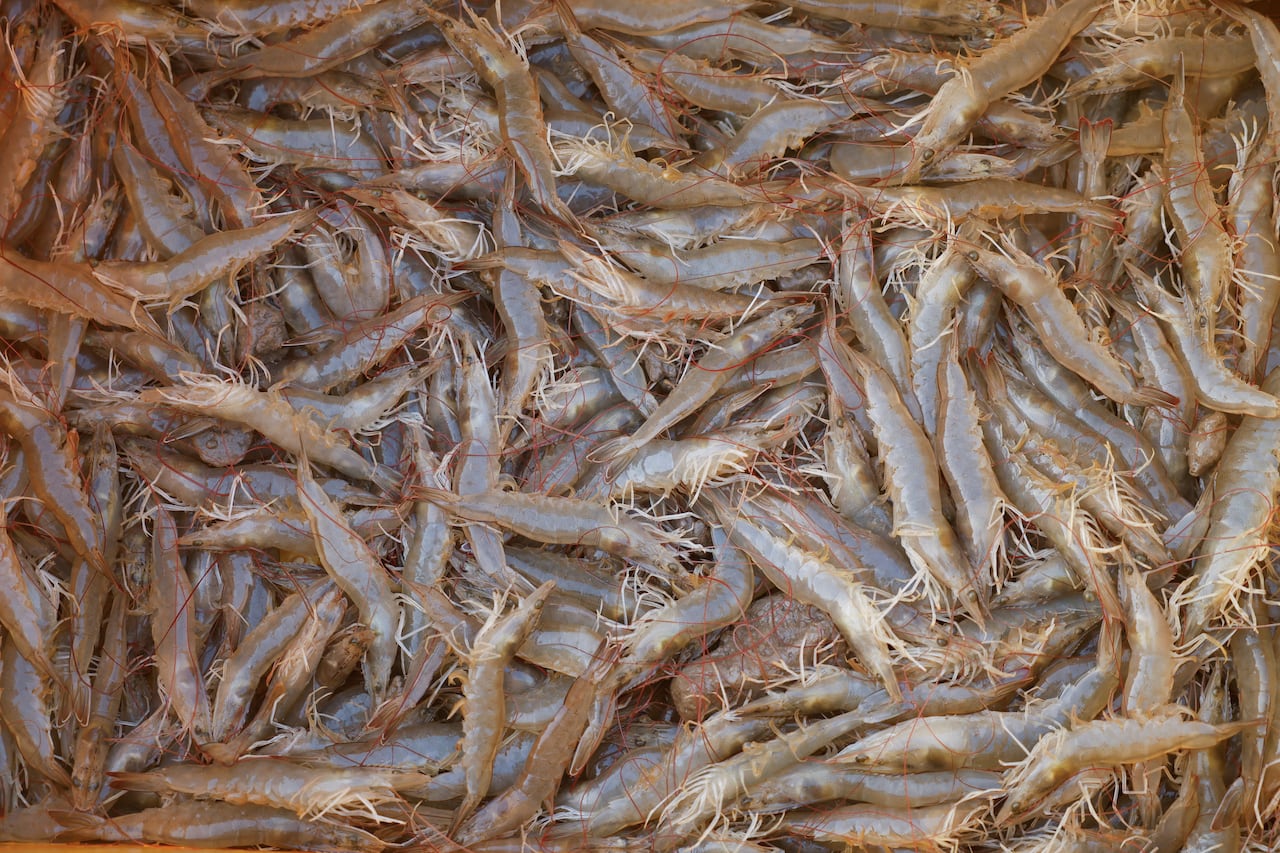
Freshly harvested live shrimp are observed at a shrimp farm in India, April 11, 2025. (Sahiba Chawdhary/Reuters)
As recently as 2022, United Marine Products, the fish meal facility in Goa found to be illegally discharging wastewater, supplied fish meal to Skretting Canada, which manufactures feed for numerous fish farms in Canada.
At another plant called Bismi Aquatic Products in 2021, a migrant worker lost his life while cleaning a wastewater tank after being overcome by fumes. Prominent shrimp brands like IFC and AZ Gems, which source a significant portion of their shrimp from India, are available in major Canadian supermarket chains such as Metro Canada, Loblaws, and Costco Canada.
Skretting implements a “zero-tolerance policy” for violations of its policies that clearly mandate business partners adhere to all relevant laws and regulations governing their operations, stated Jorge Diaz, the company’s Director of Sustainability and Communications, who also mentioned that an investigation has been launched to validate the information uncovered in this report.
In response to inquiries from Outlaw Ocean, Metro spokesperson Stephanie Bonk stated: “All Metro suppliers must comply with working conditions throughout the supply chain as outlined in our Supplier Code of Conduct for responsible procurement.”
IFC, AZ Gems, and Loblaws did not provide a response to requests for comment.