
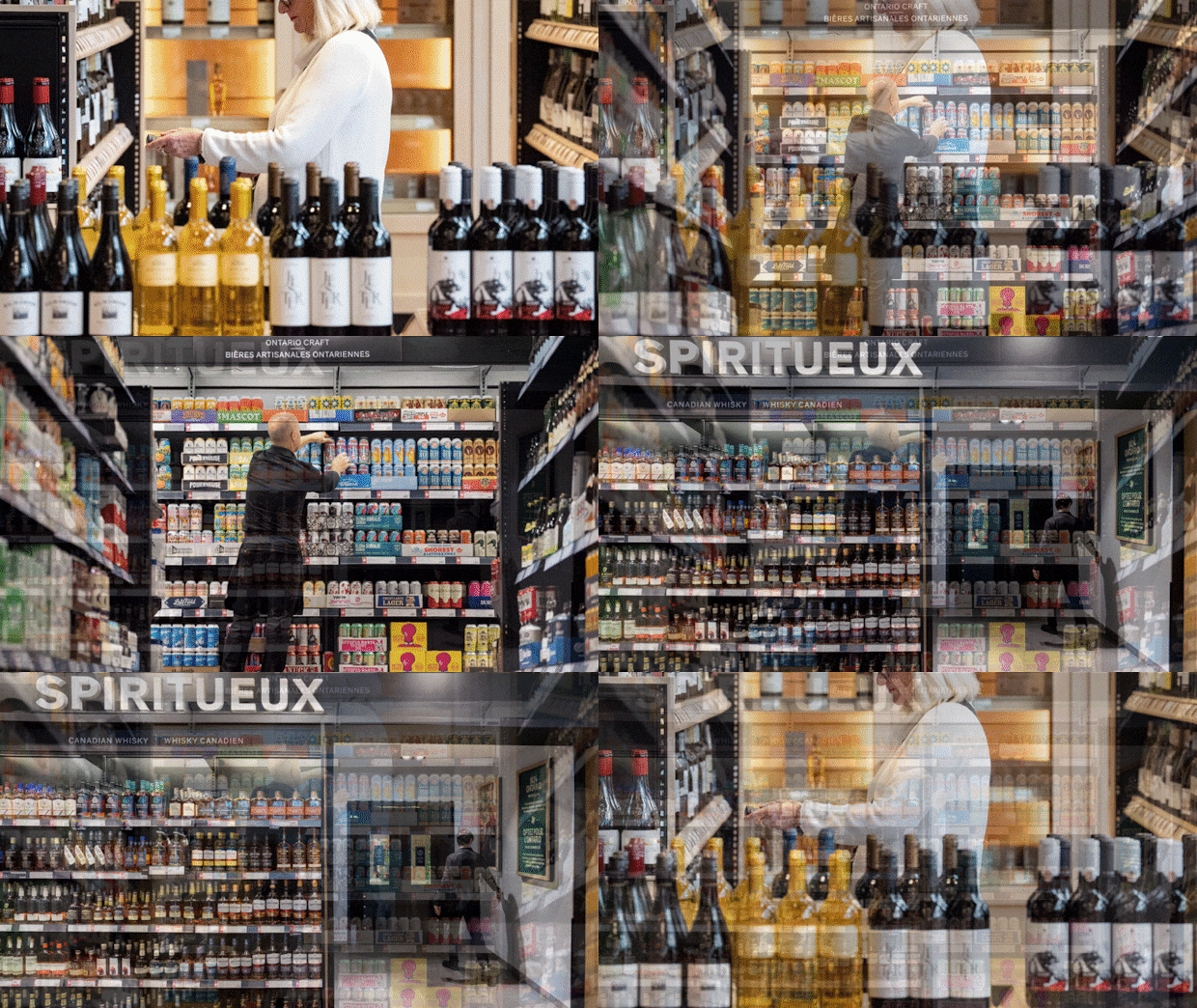

Distiller James Lester has become accustomed to the fluctuating turmoil of the trade dispute, but he is now facing a different challenge — being completely excluded from the U.S. market.
“Honestly, it’s a bit disheartening,” remarked Lester, who is the founder and operator of the B.C.-based distillery, Sons of Vancouver.
Starting Tuesday at 12:01 a.m. ET, the United States has implemented bans on specific Canadian alcohol products, dairy items, motorcycles, and molasses, effectively cutting off certain producers from the U.S. market entirely.
Typically, Sons of Vancouver exports several pallets of wheated rye to the U.S. each year, which constitutes less than 10% of their total business. However, this development is a setback for Lester, who had been diligently working to build connections across the border and grow his operations in that market.
“We still have a small amount available online in the U.S., but that will likely be the end for who knows how long.”
-
Trump banning import of Canadian booze, motorcycles, other goods into U.S.
-
The incoming U.S. import bans on Canadian alcohol, whey, molasses and motorcycles, by the numbers
This situation leaves Lester with limited alternatives for his U.S. clientele, as they would not be able to bring products back to the States even if they traveled to Canada to purchase a bottle.
The import restrictions intensify the trade conflict on one of its most contentious issues — alcohol, which has become a significant point of contention for politicians on both sides of the border during the tariff struggles.

James Lester established the Sons of Vancouver distillery in 2015. He has become accustomed to the trade war’s unpredictability but is disheartened by the U.S. decision to completely ban certain Canadian exports, given his efforts to penetrate that market. (Andrew Lee/CBC)
Smaller producers may face the greatest impact
According to Robert Glasgow, an international trade attorney with KPMG Law, numerous small business owners could suffer due to the import bans halting the flow of various alcohol products, even if the overall economic effect is not substantial.
Producers of spirits could be particularly affected, as Canada exports more liquor to the U.S. than it does beer or wine. In 2025, the U.S. imported $673 million US worth of spirits from Canada, compared to $62.1 million US in wine and just $19.2 million US in beer during the same period, according to data from the U.S. Census Bureau.
Spirits Canada, the national association representing the spirits industry, reports that approximately 93 percent of spirits exported from Canada are sent to the U.S., making the loss of the “very important” American market troubling, as stated by the group’s president, Cal Bricker.
However, the ban will not affect barrels of certain liquors above a particular volume, and tariffs were removed from bulk shipments of specific whiskies and liqueurs when heightened trade measures were announced earlier this month.
This decision will cushion large multinational spirits companies that have bottling and mixing facilities on both sides of the border against some of the ban’s effects, according to Glasgow, while smaller producers may bear the brunt of the impact.
“Many breweries, distilleries, and vineyards — primarily the smaller, independent establishments that rely more heavily on U.S. trade and markets — could experience significant repercussions from this,” Glasgow indicated.
Companies such as Crown Royal, which already ships bulk whisky to the U.S. for bottling according to CNN, are well-positioned to absorb the impact of the ban.
Conversely, some players in the wine industry have expressed that the 50 percent tariff effectively precluded Canadian products, prompting industry representatives to seek increased government aid for Canadian vineyards.

A U.S. ban on select Canadian goods takes effect Tuesday, hitting alcohol producers particularly hard. The move shuts many Canadian spirits, beer and cider products out of their biggest export market as the trade war escalates.
Why target alcohol?
Alcohol has been a central issue in the trade dispute from the outset, when most Canadian premiers removed U.S.-made products from the shelves of provincially-operated liquor stores in March 2025 in retaliation for U.S. tariffs on Canada.
This action garnered criticism from political figures in certain U.S. regions where specific spirits are produced — like Kentucky, where Gov. Andy Beshear urged leaders in the country to reconsider the decision, as it jeopardized bourbon producers in his state.
-
Graphics
How much damage have Canada’s booze bans done to the U.S. wine industry?
-
Ice wine producer in Ontario’s Niagara region says U.S. buyers ‘flabbergasted’ by Trump’s booze ban order
The White House also pointed to Canada’s “discrimination” against American alcohol, in addition to dairy products and vehicles, when announcing new 50 percent tariffs in July, which affected Canadian alcohol as well as a range of other items, from milk to paper goods to synthetic wigs.
Although alcohol represents a relatively small fraction of trade between Canada and the U.S., Concordia University economics professor Moshe Lander comments that it has become a contentious issue in the trade conflict, partly due to its personal nature.
“We partially define ourselves by what we consume,” Lander explained.
Brands like Foster’s from Australia or Guinness from Ireland transcend mere beverages; they embody a nation’s identity, Lander adds. Similarly, Kentucky bourbon and California wine hold significant cultural value, making them effective political targets.
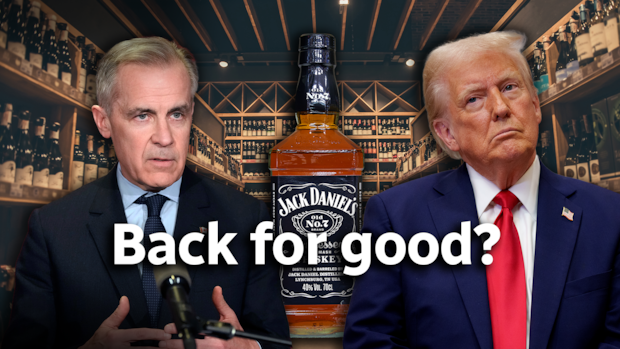
Trade discussions between Canada and the U.S. have reached a critical juncture over alcohol, with Prime Minister Mark Carney urging provincial leaders to restore American liquor to store shelves. Andrew Chang elucidates how alcohol has become a pivotal bargaining chip, the complications posed by provincial liquor boards, and the factors fueling the current tariff standoff.
Moreover, despite consumers’ fondness for their favorite wine or bourbon, it is relatively simple for them to opt for a local alternative and still enjoy their outings, as noted by KPMG’s Glasgow, making it an effective product for policymakers to target.
“This form of retaliation impacts … the nation being retaliated against more severely than it affects your own markets,” stated Glasgow.
A prolonged economic downturn
Joan Kautz, who oversees global sales and marketing for the Californian winery Ironstone Vineyards, expressed her understanding of the strong message conveyed by the removal of U.S. alcohol from Canadian shelves.
“I dislike it, but I comprehend it,” Kautz remarked.
The ongoing dispute over alcohol has resulted in wines from the 2,500-hectare vineyard in Lodi, California, being unavailable in Canada for a year and a half.
Kautz noted that they are still able to sell some products to Alberta, where privately operated liquor stores are not imposing restrictions on U.S. alcohol, but this constitutes only a small portion of Ironstone’s previous exports to Canada.

‘Canada is a very important market to us in all aspects,’ said Joan Kautz with Ironstone Vineyard. About 35 per cent of U.S. wine exports go to Canada, worth more than $1 billion US annually. (Ironstone Vineyard)
Historically, 20 percent of the winery’s export business was directed towards Canada, making it their second most significant market after the U.S.
“This is undoubtedly a financial hit,” Kautz expressed. “We have been cultivating this market for 30 years, and it all vanished overnight.”
Her family’s business exports to numerous countries and has shifted focus to other markets as Canadian demand has diminished. However, some wineries have faced even harsher consequences — some have reportedly filed for bankruptcy or opted to sell their vineyards in recent months.
Across all categories, U.S. exports to Canada for 2025 have fallen after the removal of bottles from the shelves, with spirits sales plummeting by 70 percent and wine exports declining by 87 percent, according to the Distilled Spirits Council of the U.S.
Due to the economic fallout, the council has urged U.S. President Donald Trump’s administration to resolve the alcohol conflict so that long-time trading partners can once again share a drink.
Kautz remains optimistic that resolution will eventually occur. She believes Canadian consumers will not have short memories and will still appreciate California wine when they eventually have the opportunity to purchase it again.
“There will likely be a segment that may be slower to return to the table,” Kautz predicted. “But one must remain hopeful.”