
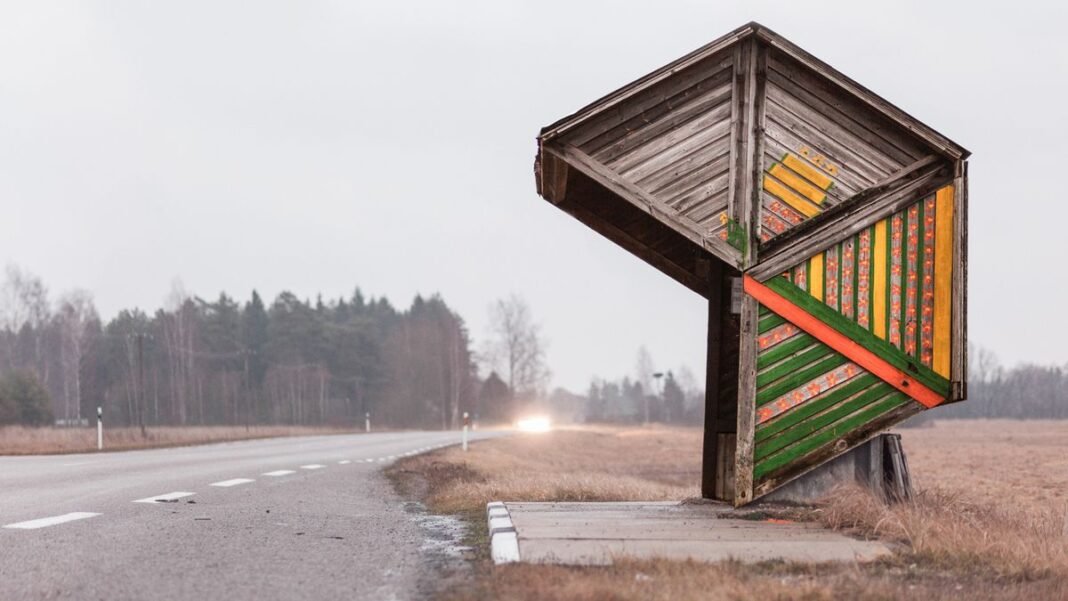

At UK bus stops, you are likely to encounter chewing gum, graffiti, and uncomfortable benches meant to deter people from lying down. In contrast, former Soviet Union countries boast some of the world’s most unique and captivating bus stops scattered throughout their rural landscapes. These countries, including Kazakhstan, Turkmenistan, Uzbekistan, Kyrgyzstan, Tajikistan, Ukraine, Moldova, Armenia, Abkhazia, Georgia, Lithuania, Latvia, Estonia, and Belarus, showcase a blend of creativity and history in their public transport infrastructure, three decades after the Empire’s collapse.
During a recent visit to Moldova, the Mirror’s Jonathan Reynolds was captivated by the extraordinary bus stops in the country, known for its population of 2.2 million and status as Europe’s poorest nation. Moldova, as Jonathan experienced, is rich in creatively designed bus stops that offer shelter and comfort to local commuters, featuring intricate mosaic designs and architectural ingenuity.
Christopher Herwig, the creator of “Soviet Bus Stops” volume 1, has extensively documented the peculiar bus stops across 14 former Soviet countries over the years. He embarked on this project in 2002, aiming to capture the beauty in ordinary objects along the roadsides, such as bus stops, that defy the standardized perceptions of creativity during the Soviet era.
The bus stops, ranging from geometric mosaic patterns to animal-themed structures, reflect a fusion of regional pride and architectural experimentation. Noteworthy architects like George Chakhava have left their mark on these bus stops, showcasing a mix of traditional elements and modern design concepts.
While some view these bus stops as cultural treasures, others see them as eyesores, leading to varied opinions on their preservation. Despite the differing perspectives, these unique bus stops stand as a testament to the blend of art, history, and functionality that defines the public spaces in these former Soviet countries.