
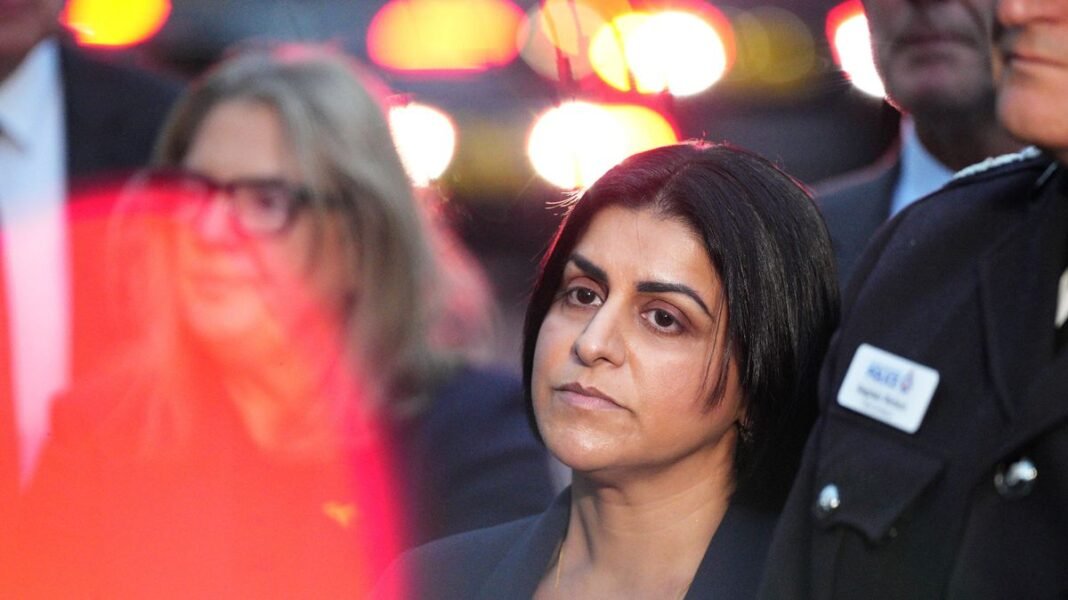

Shabana Mahmood has criticized the absence of Reform UK’s MPs during a significant immigration announcement, labeling their absence as uncharacteristic of British values.
The Home Secretary introduced a major overhaul of settlement regulations, emphasizing that her proposals would benefit individuals who abide by the rules. However, Nigel Farage and his colleagues were notably absent during the announcement.
Ms. Mahmood proposed extending the residency requirement before individuals can apply for permanent settlement. She emphasized that unlike Reform UK, she would not impose changes on individuals already granted settled status, deeming such actions as contrary to British principles.
Addressing Members of Parliament, the Home Secretary affirmed that existing settled status holders would not be affected by the new rules. She highlighted the contributions of long-term residents to British society and emphasized the importance of honoring promises made to them.
In contrast, in September, Mr. Farage stated his intention to eliminate indefinite leave to remain (ILR) if he assumes office, potentially leading to the deportation of hundreds of legal migrants. Ms. Mahmood criticized Reform UK’s stance, describing it as incompatible with British values.
Reform UK’s proposal to abolish ILR could jeopardize the legal settlement status of numerous individuals in the UK. Mr. Farage’s alternative plan involves mandating visa renewals every five years instead of granting ILR.
The Home Secretary outlined that the revised measures would elongate the period before migrants can apply for permanent settlement, aiming to reward those who contribute positively to the economy and adhere to regulations. She suggested extending the qualifying period for permanent settlement to between 10 and 15 years, up from the current five years.
Under the government’s plan, various incentives and penalties will be applied, prioritizing skilled public sector workers, entrepreneurs, and high earners for expedited processing. However, some individuals may have to wait for several decades before becoming eligible for settlement.
Certain categories of migrants, such as those arriving by boat or reliant on benefits, may face extended waiting periods of 20 to 30 years under the proposed rules. Critics have raised concerns about potential long-term instability and stress for individuals fleeing conflict or persecution.
Ms. Mahmood urged MPs to address migration challenges to prevent the proliferation of hate and division. She emphasized the need to demonstrate that controlled migration can align with Britain’s evolving narrative.
The new regulations will impact approximately two million individuals who arrived post-2021 but will not affect those with settled status.