

Almost two years following an unusual fish occurrence at Canada’s largest nuclear power plant that posed challenges to reactor safety, recently obtained documents shed light on the extraordinary nature of the event. Experts caution that atypical ecological conditions are increasingly posing difficulties for nuclear facilities globally.
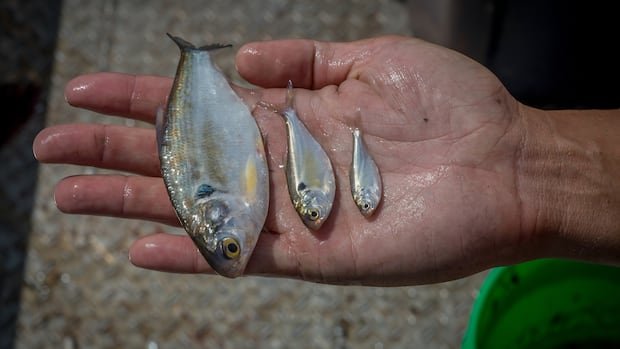
In February 2025, a massive influx of gizzard shad overwhelmed the cooling systems at the Bruce Nuclear Generating Station near Tiverton, Ont., resulting in the shutdown of one reactor, decreased power in another, and the appearance of dead fish along Lake Huron shores for days.
CBC News obtained over 1,200 pages of federal and provincial records unveiling how an environmental phenomenon involving a small, cold-sensitive fish tested the capabilities of Canada’s largest nuclear power plant in unforeseen ways.
The private operator of the plant, Bruce Power, declined a broadcast interview but later provided a written statement without addressing specific queries from CBC News.
According to Bruce Power’s internal investigation, the plant faced “a novel environmental event,” as confirmed by Canada’s nuclear regulator, which described an unexpected and uncharacterized abundance of gizzard shad that overwhelmed the plant’s fish defense systems.
The incident in February 2025 prompted two fish runs that were deemed to have “challenged reactor safety” by a company investigation in June of the same year. David Novog, a nuclear safety expert, explained that such challenges imply a reduction in the effectiveness of defense mechanisms, leading to mandatory reactor shutdowns.
Former principal scientist and manager at Bruce Power, Douglas Boreham, emphasized that while the operation was impacted, there was no compromise to reactor safety, as shutting down reactors under suboptimal conditions is a standard safety protocol.
The Canadian Nuclear Safety Commission’s report in April 2026 outlined the potential consequences of the fish die-off incident that disrupted cooling systems at the plant, leading to shutdowns and power reductions in multiple units.
Notably, the magnitude of the fish event was staggering, with an estimated 8.1 million gizzard shad congregating near the Bruce Nuclear Generating Station on a single day in February 2025. The event was influenced by severe winter conditions, causing cold shock among the fish, which sought refuge in the warm water discharged by the plant.
The incident highlighted the need for enhanced environmental monitoring and adaptive measures to safeguard nuclear facilities from similar disruptions due to changing environmental conditions. Bruce Power has since allocated significant funds for mitigation efforts and research to prevent future occurrences. The implementation of new physical barriers, monitoring technologies, and AI systems aims to anticipate and avert potential disruptions.
As the reliance on nuclear power for low-carbon energy grows, the focus on preventive measures to avoid operational disturbances caused by environmental factors becomes paramount for the industry’s sustainability and safety standards.