
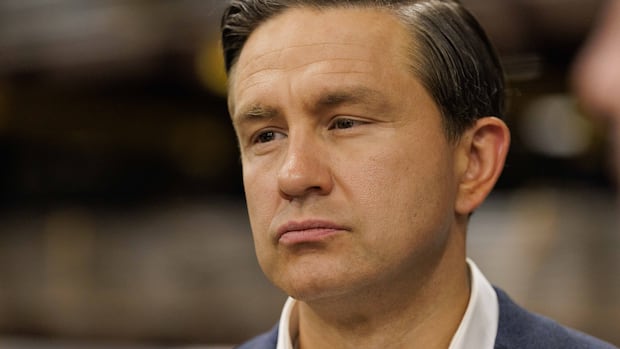

Conservative Leader Pierre Poilievre is urging Prime Minister Mark Carney to reconvene Parliament for clarification on the U.S. trade agreement he declined, along with insights on how his strategy will impact Canadians.
In a letter sent to Carney on Sunday, Poilievre emphasized the necessity of disclosing the deal’s text, asserting that “Canadians deserve to review it to evaluate the available options.”
Furthermore, he pointed out that Canadians should be informed about the potential costs associated with Carney’s trade and economic strategies, including increased prices for groceries, fuel, and other goods.
Additionally, Poilievre inquired about Carney’s plans to safeguard jobs in steel, aluminum, lumber, and auto manufacturing that are at risk due to tariffs.
Carney halted trade discussions with the United States on Friday, accusing the U.S. government of imposing conditions that limited Canada’s ability to negotiate with other nations, and he vowed to implement retaliatory tariffs in response to new U.S. tariffs that took effect on Saturday.
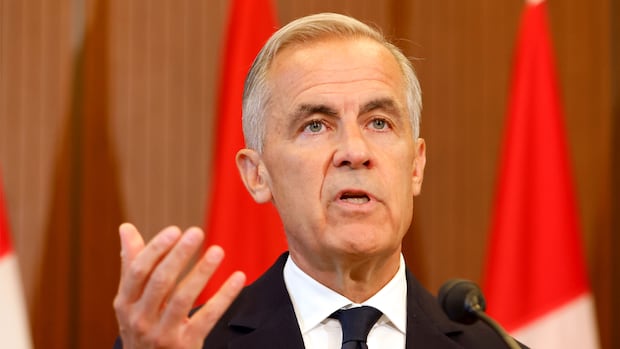
Conservatives are urging Prime Minister Mark Carney to release details of the failed Canada-U.S. trade deal so Canadians can ‘debate and discuss the way forward.’
In his letter, Poilievre stated that it is Parliament’s responsibility to hold the government accountable, and that this responsibility is more critical than ever.
“We need to prioritize the national interest. The inability to secure a sustainable trade agreement, along with increasing tariffs, now poses a significant economic threat on top of a decade marked by rising expenses and stagnant economic growth in Canada,” Poilievre asserted.
“In a crisis that shapes the future of our nation and its citizens, Conservatives are prepared to return to Parliament, act swiftly as our citizens expect, and put Canada first.”
Several points highlighted in Poilievre’s correspondence resonate with those made on Sunday by Shuvaloy Majumdar, the critic for Canada-U.S. relations, who noted that while his party supports the government’s rejection of the deal, Parliament remains uninformed about the specifics that were discussed.
Majumdar clarified that he is not requesting “negotiating secrets,” but rather information that both Canadian and U.S. officials are already aware of.
-
Carney says trade deal became untenable when U.S. ‘asked too much and offered too little’
-
Analysis
Mark Carney doesn’t stop the United States from driving negotiations over a cliff
Poilievre emphasized the importance of transparency, alleging that Carney misrepresented information regarding the deal that eventually allowed the Gordie Howe Bridge to open, stating that the truth was only revealed once Canadians reviewed the agreement.
“Canadians elect Parliament to advocate for their interests and address tough issues. These questions cannot afford to wait any longer,” he declared in his letter.
Details of a ‘bad deal’
On Saturday, the U.S. implemented new tariffs of 50 percent on billions of dollars of Canadian exports. These tariffs affect $28 billion worth of Canadian products, including hockey sticks, honey, essential oils, and dairy goods.
In response, Carney announced that retaliatory tariffs would be imposed on the U.S. starting September 8, after Canada withdrew from what he deemed a “bad deal.”
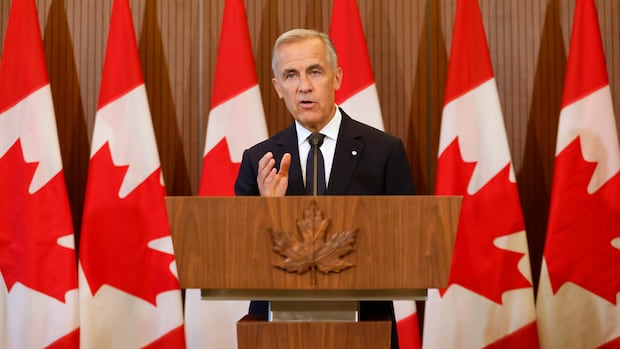
Prime Minister Mark Carney explained why the government chose not to sign a trade deal with American counterparts as U.S. President Donald Trump’s 50 per cent tariffs on almost $30 billion of Canadian goods are in effect. ‘We were not prepared to compromise Canada’s sovereignty or undermine our key industries,’ Carney said.
In an early Sunday post on his Truth Social account, U.S. President Donald Trump resumed his mockery of Canada, suggesting it behaves like a U.S. state, stating, “Canada wants the benefits of being a state, without actually being one.”
Other opposition parties in Canada refrained from demanding that the specifics of the rejected deal be disclosed, but they did express support for the government to brief party leaders or MPs on the developments regarding the trade negotiations.
On Saturday, Carney accused the U.S. government of implementing conditions during the final stages of negotiations that limited Canada’s ability to forge agreements with other nations.
He informed reporters that the U.S. also introduced terms at the conclusion of negotiations that constrained Canada’s ability to protect its language and culture.
Additionally, he mentioned that the U.S. proposed reducing tariffs on vehicles in exchange for other compromises, but that this offer did not extend to medium and heavy trucks.