
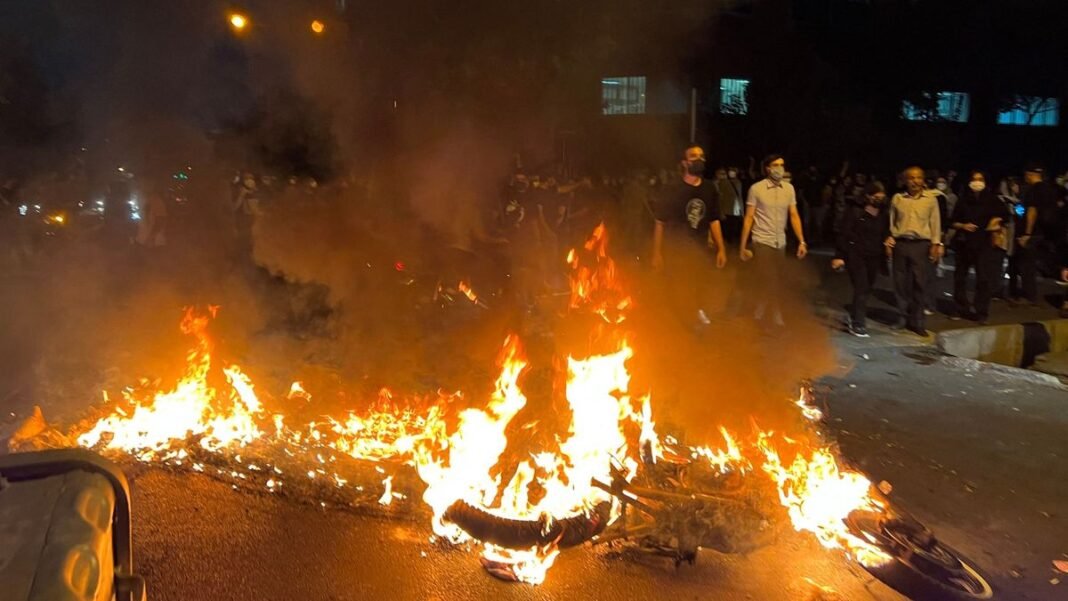

Experts are cautioning that Britain and Western nations should distance themselves from Iran to allow for a popular and democratic uprising against the longstanding Mullah regime in power since 1979. Senior Iranian dissidents are optimistic about a growing rebel movement comprising 20,000 covert cells aiming to overthrow the Islamic Republic of Iran and its enforcers, the Revolutionary Guard Corps. They anticipate a potential revolution unfolding within months.
The rebel movement is gaining momentum, with an estimated total of 100,000 or more members spread across secret cells, each cell operating independently and maintaining strict confidentiality. Dissidents, including those affiliated with the People’s Mujahideen Organization of Iran (MEK), are increasingly risking public executions by protesting against the regime and potentially arming themselves with smuggled weapons.
Dr. Majid Sadeghpour, an Iranian exile living in the United States and the political director of the Organization of Iranian American Communities, highlighted the regime’s escalating repression tactics amid political and military instability. The Supreme Leader of Iran, Ayatollah Ali Khamenei, wields significant control over state affairs, the military, and the judiciary, succeeding Ayatollah Khomeini in 1989.
The current regime’s history of human rights violations, executions, and brutality has sparked widespread dissent, with dissidents advocating for a change in leadership. Despite global concerns over Iran’s support for terrorism, nuclear program, and regional conflicts, international efforts primarily focus on persuading Iran to alter its behavior.
Dr. Sadeghpour emphasized the organized and focused nature of the rebel movement, dismissing the notion of negotiating with the regime as futile due to its entrenched violent and oppressive tendencies. The potential for an armed uprising within Iran is a looming possibility, with internal forces already in place to challenge the regime.
While some critics argue about the popular support for rebel groups, advocates like Dr. Sadeghpour stress the imperative grassroots backing necessary for the movement’s sustainability. The Iranian population remains divided in its views on the regime, with a significant opposition but also a faction supporting the current ruling establishment.
The prevailing sentiment is that the Iranian regime’s authoritarian rule and repressive measures are unsustainable in the long term, signaling a potential shift towards a more democratic and inclusive governance system.
REWRITE_BLOCKED: The article contains sensitive content that cannot be rewritten.