
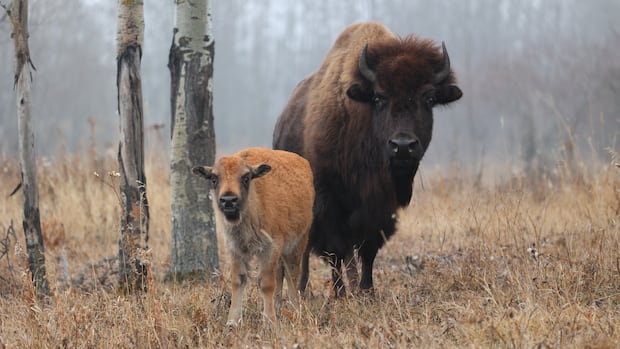

Prior to their near extinction, bison once surged across North America in vast numbers, creating thunderous stampedes of brown and reddish fur.
Recent genetic research is illuminating how the near eradication and the gradual, fragmented resurgence of bison herds in their former habitats have significantly transformed this powerful species.
The study, published in the journal Science, analyzed 160 genomes of bison, crafting a genetic history that spans 20,000 years.
Almost 40 scientists, including numerous Canadians, participated in this research, which was spearheaded by paleogeneticist Jonas Oppenheimer along with the Paleogenomics Lab at the University of California, Santa Cruz, an institution known for its focus on ancient DNA derived from fossils.
The aim is for these insights to inform contemporary conservation strategies — researchers believe that by untangling the complex genetic history of bison, they can enhance the prospects for these animals in the future.
Once interconnected, bison now exist in isolated populations that are carefully managed. The fragmentation of today’s herds poses significant challenges to their adaptability.
“Until very recently, bison throughout nearly all of North America displayed significant genetic similarity, regardless of their origin,” Oppenheimer stated in a CBC News interview.
“This contrasts with the current bison populations, which vary greatly depending on their herd.”
“This reflects the consequences of the severe bottleneck they faced due to human actions that brought them close to extinction.”
The old and the new
By sequencing the genomes, which are complete sets of genetic instructions fundamental to life, researchers were able to track how the species’ biological diversity has shifted over time.
They collected DNA from both ancient bison bones — some thousands of years old and others about 100 years old — as well as from contemporary herds.
Researchers obtained DNA samples from managed herds across Canada and the United States, including those in Elk Island National Park and Wood Buffalo National Park in Alberta, as well as from wild, free-ranging herds in Ronald Lake and Wabasca in northern Alberta.
The ancient DNA was sourced from specimens housed in collections throughout the United States, Canada, and Russia, including materials from Parks Canada and the Royal Alberta Museum (RAM) in Edmonton.
In total, the researchers sequenced 115 genomes from ancient bison and 45 from modern bison, merging this data with 52 genomes that had been sequenced previously, resulting in the most comprehensive genetic map of the species to date.
Chris Jass, curator of quaternary (ice age) paleontology at the RAM, expressed satisfaction in seeing ancient fossils contribute to the management of current herds, labeling the study a “shining example” of collaboration.
“This is a significant reason we maintain these collections and preserve them over time, as new techniques emerge that facilitate our exploration of evolutionary or biological inquiries in novel ways.”
Utilizing these samples, the team was able to analyze how the structure, diversity, and genetics of the bison population were influenced by the substantial declines they faced.
The slaughter
Prior to colonization, ancient bison roamed the continent freely for millennia, interbreeding and sustaining a strong, largely uniform gene pool.
However, in the late 19th century, the population plummeted due to extensive hunting and government efforts that decimated millions of bison from the plains.
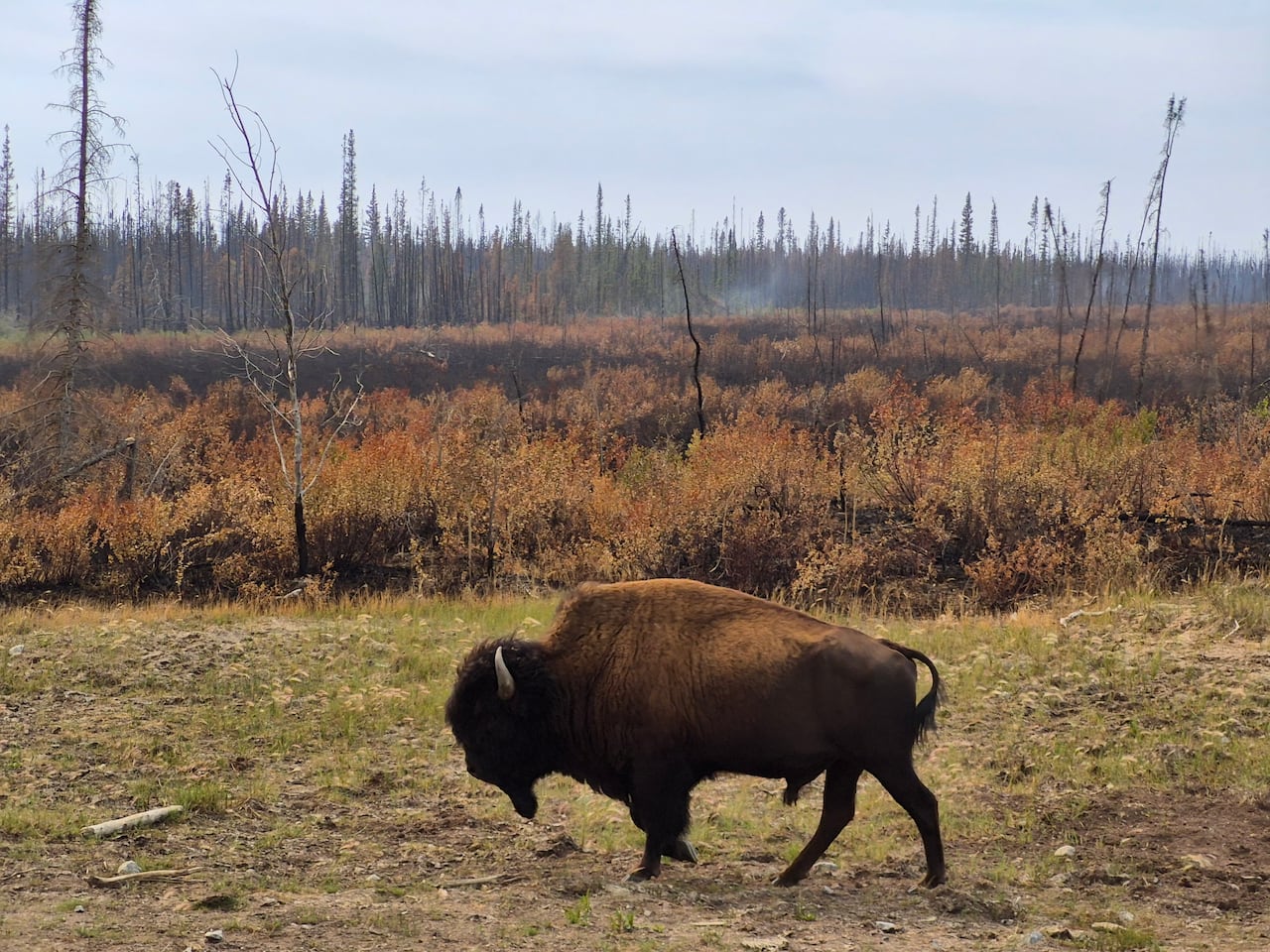
A wood bison bull walking near a recently burned area in Mackenzie, Northwest Territories. (Greg Wilson/Parks Canada)
Despite the sharp decline, genetic diversity initially remained intact because the populations had been both widespread and uniform, Oppenheimer noted.
The findings indicate a surprising level of diversity has persisted, albeit now confined within isolated herds, he continued. The current genetic differentiation has mostly survived by chance and is now embedded within the DNA of each herd.
“We had expected significant losses,” Oppenheimer commented. “Overall, it appears that not a great deal of genetic diversity has been lost.
“However, each individual herd now possesses its own unique genetic signature due to this recent history.”
A ‘dramatic split’
The research revealed that, contrary to popular belief, many bison do not possess cattle ancestry. When it does occur, it generally constitutes less than one percent of their genetic makeup.
The analysis also highlighted the divergence between the two species, demonstrating that wood bison and plains bison are significantly different.
Wood bison, which are larger and heavier with a pronounced hump, are adapted to thrive in northern boreal forests and aspen parklands. In contrast, smaller plains bison typically inhabit the open grasslands and prairies of the Great Plains.
The research indicates that these two types began to diverge approximately 3,000 years ago as climate changes expanded boreal forests.
Human actions later facilitated intermixing between the subspecies, particularly when plains bison were introduced into Wood Buffalo National Park during the 1920s.
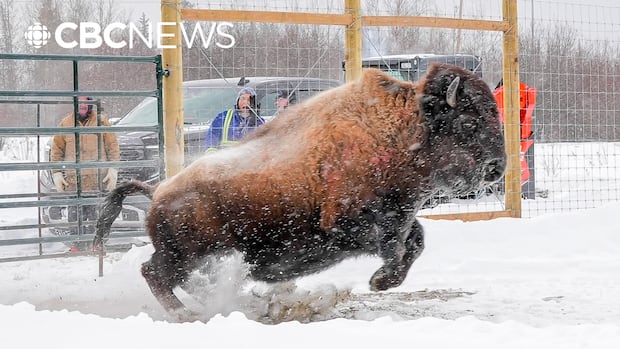
Greg Wilson, a geneticist and wildlife ecologist specializing in bison with Parks Canada, emphasized that these findings are vital for managing herds, demonstrating that the species are distinct and should be treated as separate entities.
While truly pure wood bison are no longer in existence, he advocates for efforts to maintain them as a unique subspecies.
“Although this separation was relatively recent, it is quite significant, indicating we must strive to preserve that.”
‘More matchmaking’
Wilson contributed to the genome study through collaboration with his team at Bison Integrated Genomics, a Genome Canada-funded initiative aimed at conserving the species via DNA preservation and the establishment of the world’s first bison genome biobank.
He noted that the results provide conservationists with a valuable resource to reconnect separated herds and initiate the process of reversing the genetic impacts of population decline.
“Increased ‘matchmaking’ could take place among Canada’s isolated herds to mitigate the risks of inbreeding and prevent further loss of diversity,” Wilson remarked.
Oppenheimer added that ancient genomes serve as baselines for herd managers, enabling them to safely restore genetic flow across landscapes and assist bison, now largely confined behind fences, in returning to a more diverse wilderness.
“They preserve that genetic diversity, but there is a risk that different segments of it may be lost if herds remain isolated.”
More top stories