
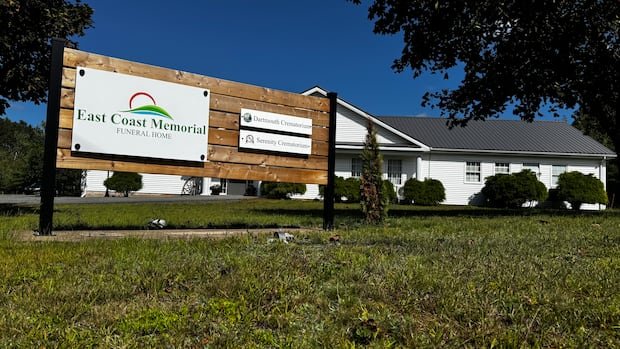

Amid uncertainties in Nova Scotia’s Annapolis Valley, families are facing a distressing situation where the ashes they believed were those of their deceased relatives may not be accurate. Despite the availability of DNA testing technology, experts caution that positively identifying these remains is a challenging task.
Several families who engaged with the former Serenity Funeral Home were recently notified by the new management that ashes attributed to their loved ones were discovered in storage.
One such family is that of Michelle Carey, who enlisted Serenity’s services following the passing of her father, Hendrik (Hank) Sabean, in 2018. Sabean had outlined specific funeral arrangements, entrusting the funeral home with the process.
Now faced with the prospect of repeating the burial procedure and uncertain about the true identity of the buried remains, Carey expressed skepticism about the possibility of ever confirming the authenticity of the ashes.
Carey mentioned, “My sister and I have deliberated and researched, and conducting DNA testing seems highly challenging. How can we be certain that the remains we receive this time are genuinely those of our father?”
Dean Hildebrand, overseeing the forensic DNA lab at the British Columbia Institute of Technology, emphasized the difficulty of extracting sufficient DNA from ashes for identification purposes.
He explained, “While some reports suggest trace amounts of DNA may be present, utilizing this DNA for identification purposes is a different challenge altogether.”
Hildebrand remarked on the resilience of DNA, citing instances where intact DNA profiles were obtained from human remains exposed to severe conditions like fires. However, the extreme heat conditions in a crematorium, reaching 900 degrees Celsius for extended periods, result in the complete breakdown of organic matter.
Hildebrand described the current situation as a challenging one for identification efforts, particularly due to the significant number of remains involved, as confirmed by East Coast Memorial, the new owners of Serenity funeral homes.
Despite the low likelihood of successful identification, Hildebrand stressed that it is not entirely impossible.
He suggested that attempting testing is worthwhile, as even a fragment of bone might yield valuable DNA information.