
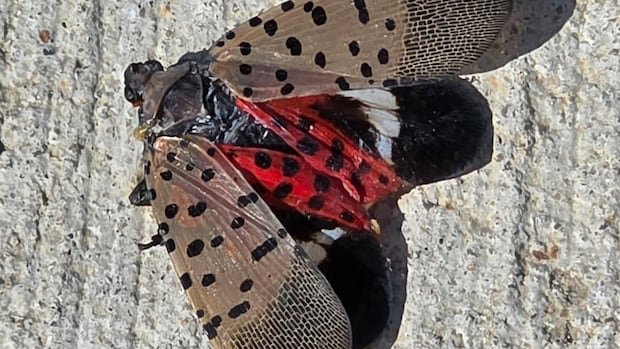

In Canada, the Canadian Food Inspection Agency (CFIA) has identified an invasive insect that poses a threat to grapevines and other vegetation for the first time. The initial detection occurred in Windsor, where local residents had previously reported sightings of the spotted lanternfly, as indicated by a non-profit organization dedicated to combating invasive species. However, this recent discovery marks the first official detection of the insect through an agency survey conducted by the Invasive Species Centre.
The spotted lanternfly is notorious for causing harm to grapevines, thereby impacting the grape and wine industry significantly, according to a recent news release from the Invasive Species Centre. The pest’s potential to affect various crops, as well as the horticulture and forestry sectors, residential areas, and community parks, could lead to broad economic, ecological, and social consequences if left unchecked.
Originating from southeast Asia, the spotted lanternfly was first identified in North America in Pennsylvania in 2014, with a diet that includes sap from over 100 different plant species. The Invasive Species Centre urges individuals to familiarize themselves with the insect’s appearance. In case of a sighting, people are advised to photograph the fly or its eggs, place them in a sealable bag or container, and report the finding to the CFIA promptly.
Everyone is encouraged to report any potential sightings of the spotted lanternfly to the Canadian Food Inspection Agency (CFIA) immediately. Providing accurate location details and photographic evidence is crucial for effective response and management by the CFIA, which may involve on-site assessments and insect collection.
To assist in recognizing the spotted lanternfly, the Invasive Species Centre and CFIA offer the following identification tips:
– Adults are approximately 25mm long and 12mm wide, with specific wing patterns and colorations.
– Nymphs display distinct color variations in different life stages and tend to gather in clusters on plants.
– Egg masses can be identified by their appearance on trees and other surfaces, resembling grey smears or arranged seeds.
The spotted lanternfly’s excrement, known as honeydew, can attract bees and wasps, leading to the development of sooty mold near host trees. To mitigate the spread of the insect, individuals are advised to inspect their belongings for egg masses or insects when visiting areas with known infestations, opt for local firewood, and consider thorough cleaning measures, such as high-pressure car washes.
By staying vigilant and taking proactive measures, communities can help prevent the further spread of the spotted lanternfly and safeguard agricultural and natural landscapes from its detrimental effects.