
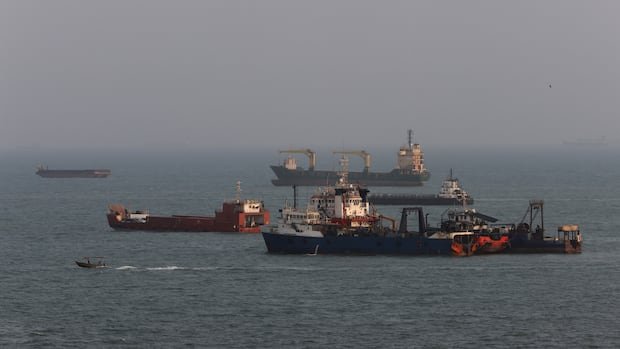

Five high-ranking Iranian officials are set to be penalized for their involvement in activities within the Strait of Hormuz that disrupt global peace, as per Canada’s foreign affairs minister. Emphasizing the significance of free passage through the strait for worldwide trade and energy security, Foreign Affairs Minister Anita Anand condemned the actions of these individuals, stating that they jeopardize these fundamental principles and pose a threat to global economic stability. Anand urged Iran to de-escalate tensions and uphold international navigation rights.
The sanctions have been imposed on key figures of the Islamic Republic of Iran, including members of the Islamic Revolutionary Guard Corps (IRGC), for engaging in activities that have endangered a crucial international waterway, according to a press release from Global Affairs Canada. The sanctioned officials include Ali Abdollahi, commander of Khatam al-Anbiya Central Headquarters and a senior IRGC figure; Lt.-Col. Ebrahim Zolfaghari, a spokesperson for Khatam al-Anbiya Central Headquarters; Ebrahim Azizi, a parliamentarian and head of the Iranian parliament’s national security and foreign policy committee; Shahram Irani, commander of Artesh, the Iranian navy; and Hamid Hosseini, chair of the board of directors and spokesperson for the Iranian Oil, Gas and Petrochemical Products Exporters Union.
Canada has now sanctioned a total of 232 individuals and 260 entities associated with Iran’s security, intelligence, and economic sectors, as confirmed by Global Affairs Canada following the latest actions.
The imposition of sanctions comes amidst mounting pressure to resolve the ongoing conflict between the U.S., Israel, and Iran, as efforts to finalize a peace agreement, initially reached in June, have faltered. The conflict, which erupted in February after a joint U.S.-Israeli assault on Iran, has seen fluctuating rhetoric from U.S. President Donald Trump, who has vacillated between threats of escalation and claims of imminent peace. Iran has sought to leverage control over the strait as a means of influencing Washington, leading to attacks on vessels navigating the vital waterway, through which a significant portion of the world’s oil and liquefied natural gas typically flows.
Trump has called on allies to assist in securing the strategic oil shipping route, with Canada joining other nations in urging Iran to halt blockades in the Strait of Hormuz to facilitate commercial shipping. As tensions persist, the U.S. remains prepared to maintain a naval presence in the region to enforce its blockade of Iran, according to Secretary of War Pete Hegseth.
The pressure on Trump to resolve the conflict intensifies as soaring fuel prices impact his approval ratings ahead of the U.S. midterm elections in November, while the global economy continues to suffer. The International Energy Agency has forecasted a significant decline in global oil supply, further underscoring the economic implications of the ongoing crisis.