
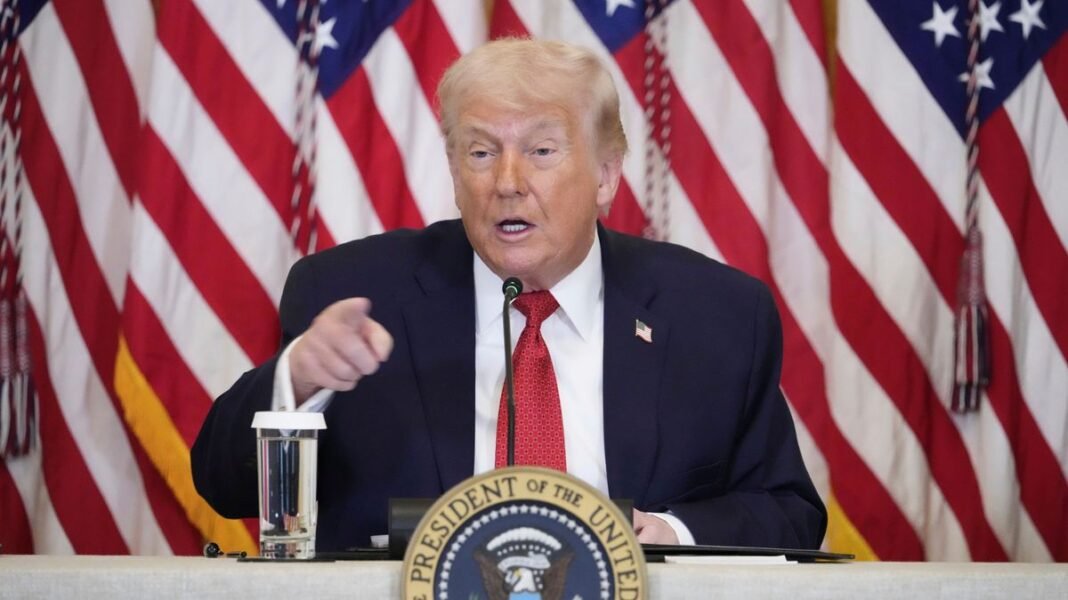

Donald Trump, at 80 years old, holds the record for the oldest person to occupy the Oval Office. While he remains active for his age, the reality is that no one is immortal. In the unfortunate event of a President passing away during their term, the Vice President assumes power immediately without the need for an election or delay. JD Vance would step into the presidency to complete Trump’s tenure if such an event were to occur, following a historical precedent that has taken place eight times in the nation’s past.
In the most recent instance, Lyndon Johnson took over the presidency after John F. Kennedy’s tragic assassination in 1963. An interesting aspect of this scenario is how the two-term limit for a President applies when assuming office mid-term, leading to potential complexities in the case of Vance taking over and serving part of Trump’s term.
Should Vance serve less than two years of Trump’s term, he would be eligible to run for two additional terms, potentially extending his stay in the White House to a maximum of ten years, the only legal way to exceed the usual two-term limit. However, if Vance serves more than two years as Vice President before seeking election, he would only be able to run for one more term, allowing for a total of six more years in office with just one election.
In either scenario, Vance would need to promptly nominate a new Vice President, subject to confirmation by both chambers of Congress. Presently, Republicans control both houses, though the upcoming Midterm elections in November could change this landscape. The outcome of these elections may significantly impact the confirmation process, especially if Democrats gain control and challenge Vance’s choices.
Furthermore, Vance’s selection for Vice President holds great significance as the chosen individual would be positioned as a frontrunner in the subsequent Presidential election. A strategic choice could solidify a succession plan aligned with the current movement’s goals well into the 2030s.
On the flip side, inheriting Trump’s legacy would present Vance with challenges such as navigating trade disputes, legal battles, foreign policy complexities, and an administration centered around one individual’s persona. The US Constitution outlines the course of action following such circumstances, yet the ability to maintain cohesion without Trump at the helm remains a pressing question.
In conclusion, the potential transition in leadership raises critical implications for the future political landscape, underscoring the significance of strategic decision-making and adaptability amidst evolving circumstances.