

The Montreal police have been discreetly expanding their array of AI-driven tools to monitor vehicles and individuals throughout the city, sparking concerns about transparency and privacy rights.
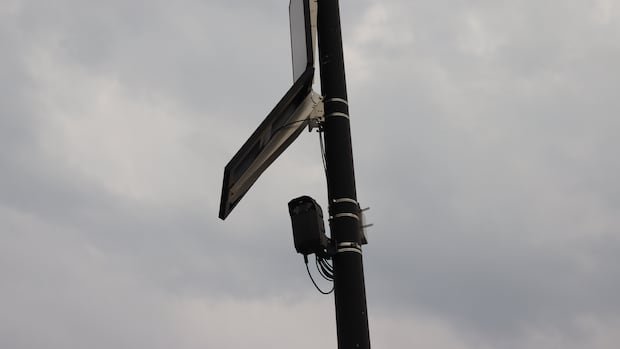
An advanced camera capable of scanning and recognizing vehicles was recently sighted by a Radio-Canada journalist on a lamppost along Henri-Bourassa Boulevard in Montreal’s Rivière-des-Prairies district.
The camera, identified as a Cloudrunner CR-H2 model by Genetec, a Montreal-based company, was promptly removed on Wednesday following an article published by Radio-Canada.
Unlike the controversial Flock Safety cameras extensively utilized in the United States, the Cloudrunner CR-H2 system not only reads license plates but also records specific vehicle attributes such as color, make, and model, as per Genetec’s official website.
While Flock cameras in the U.S. share data in a centralized database accessed by various law enforcement agencies, Genetec’s system operates differently, with the collected data managed by its designated operator.
According to Marc-Antoine Bélanger, a spokesperson for the Service de police de la Ville de Montréal (SPVM), access to the captured images is restricted solely to investigators handling the relevant cases.
Bélanger explained via email that the camera was removed to safeguard the ongoing investigative strategies of the SPVM.
He emphasized that the SPVM deliberately keeps its technological tools confidential to avoid impeding intricate investigations.
However, critics argue that there has been a lack of transparency in introducing new technology.
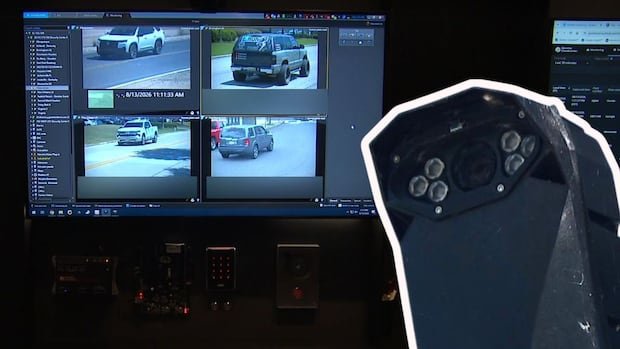
A high-powered camera able to scan and identify vehicles was spotted on a lamppost on Henri-Bourassa Boulevard in Montreal’s Rivière-des-Prairies neighborhood. It was quickly taken down on Wednesday, after Radio-Canada published an article about the camera.
Dominique Peschard, a representative of the Ligue des droits et libertés, a Quebec human rights organization, emphasized the importance of police informing the public about the tools they employ while safeguarding their operations.
Peschard stressed in an interview, “We’re not asking for detailed specifics of their operations, but rather about the procedures in place. Investigative techniques are becoming increasingly invasive due to technology, necessitating enhanced oversight to prevent overreach and uphold our Charter rights.”
Expanding Technologies
The utilization of Cloudrunner cameras is just one aspect of the SPVM’s broader adoption of AI-powered technology.
The SPVM confirmed its usage of iMotion ROC AI software, developed by Rank One Computing, to assist investigators in sorting through vast amounts of video footage.
Anik de Repentigny, a spokesperson for the SPVM, clarified to CBC News that the software’s facial recognition and biometric features are not being utilized by the force.
De Repentigny stated in an email earlier this year, “This software is not intended for identity verification of individuals in video images but specifically to locate instances where the targeted known element appears.”
Furthermore, de Repentigny mentioned that the system operates on an isolated network