
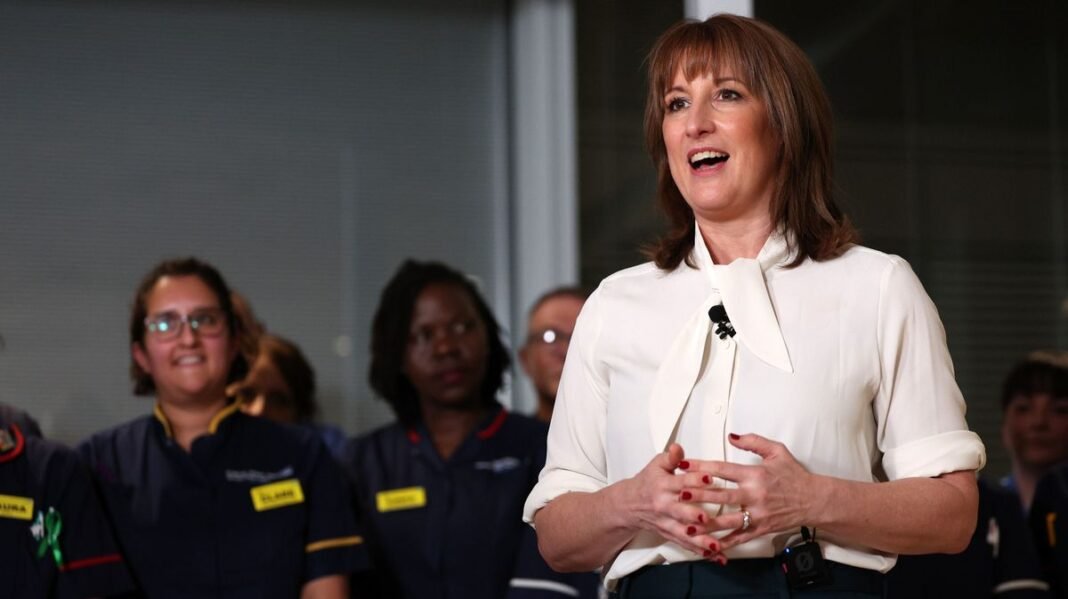

In her Budget announcement, Rachel Reeves unveiled a set of measures aimed at easing financial burdens on struggling households, underpinned by a £26 billion tax increase. The pivotal moment faced an initial setback when key details were prematurely leaked by the Office for Budget Responsibility, though Reeves swiftly pivoted to address the pressing needs of ordinary citizens, including relief on energy bills, wages, rail fares, and fuel expenses.
Emphasizing her commitment to reducing the cost of living, Reeves received enthusiastic cheers from Labour MPs as she revealed plans to eliminate the Tory-imposed two-child benefit cap, a move expected to uplift 450,000 children out of poverty. Additionally, she pledged to eliminate the controversial “rape clause,” labeling it as dehumanizing and cruel, vowing to eradicate it from legislation.
Addressing the impact of tax increases, Reeves acknowledged the strain on working individuals due to the extension of tax thresholds freeze. While recognizing the need for all to contribute to filling the fiscal gap, she targeted affluent individuals by introducing a mansion tax on properties exceeding £2 million and imposing levies on rental income, dividends, and savings.
Furthermore, gambling taxes exceeding £1 billion were imposed on remote gaming and online betting, while in-person gambling and horse racing taxes remained unchanged, with bingo duty set for complete abolition from April. Reeves, who had raised taxes by £40 billion in the previous year, justified the additional tax measures as necessary due to economic challenges, global uncertainties, and previous policy adjustments.
Despite the growth projections being revised downward by the Office for Budget Responsibility, Reeves’s Budget decisions were deemed to alleviate the impact on low-income households, according to analysis from the Joseph Rowntree Foundation. Speaking after the announcement, Reeves highlighted the progressive nature of the reforms, emphasizing that the burden was predominantly placed on higher-income brackets to minimize the impact on working individuals.
While the Institute for Fiscal Studies criticized Reeves for breaching Labour’s tax protection pledge for working people, she defended her stance, arguing that the contribution from ordinary individuals was kept to a minimum by closing loopholes and redistributing the tax burden. The Budget received mixed reactions from business leaders, with concerns raised about potential stalling in economic growth and increased costs for employers, particularly in sectors like hospitality.
In response to industry concerns, Reeves reiterated the necessity of balancing fiscal policies to support economic recovery while ensuring fairness and social welfare enhancements. Former Prime Minister Gordon Brown praised the Budget for its focus on alleviating child poverty and emphasized the long-term benefits of such investments.