
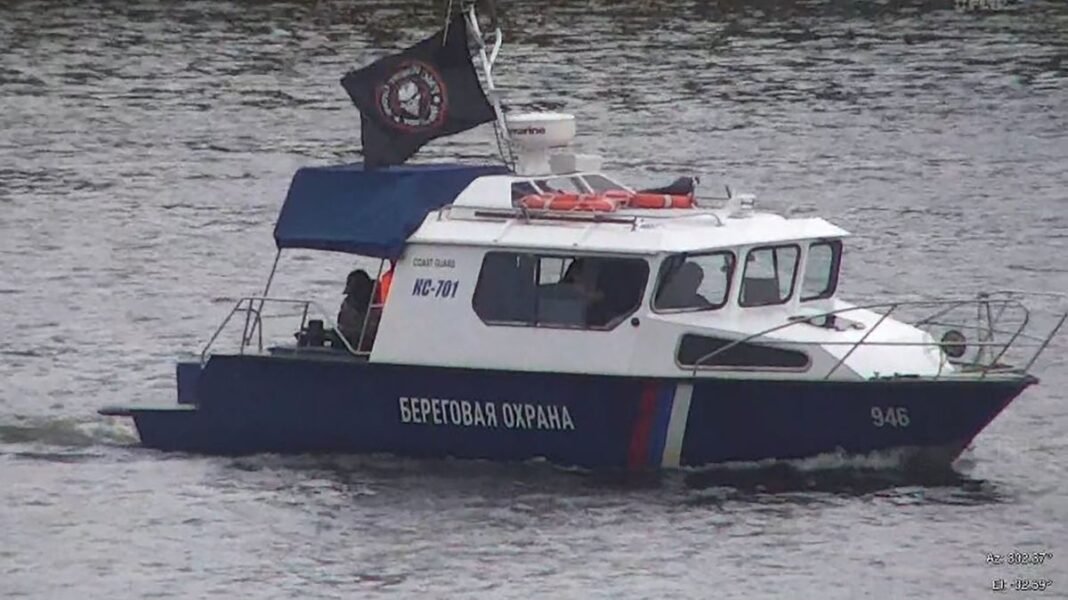

Tensions rose as Russian forces displayed a provocative gesture towards NATO by sailing a vessel bearing the flag of the infamous Wagner private army near the EU border, closely observed by Estonia. The presence of the border force vessel, associated with Moscow’s FSB security service, along the Narva River raised concerns for Estonia, prompting an official request for clarification from Russia. Despite the incident, Moscow has yet to provide a response.
Wagner, once a sizable force with thousands of mercenaries, played a significant role in Vladimir Putin’s initial incursion into Ukraine before a falling out with its leader, Yevgeny Prigozhin, who was later killed in a plane crash following a failed coup against Putin’s regime in June 2023. Now reduced to an estimated 5,000 soldiers, Wagner continues to engage in military activities in Africa and possibly on a limited scale in Ukraine.
The use of the Wagner flag near the Narva River, a sensitive area between Russia and NATO member Estonia, has fueled speculation about the group’s intentions, with some suggesting a potential challenge to Putin’s authority. Estonian Foreign Minister Margus Tsahkna hinted at the possibility of renewed disloyalty to Putin within Russia or a shift in Wagner’s focus towards Moscow or St. Petersburg.
The incident underscores the perceived fractures in Russia’s established system due to ongoing aggression and external pressures. Estonia remains vigilant, closely monitoring any activities along the Narva River. With a 183-mile shared border, Russia and Estonia maintain a delicate relationship, further complicated by the presence of British, French, and local forces under Operation Cabrit aimed at bolstering NATO’s presence in the region.