
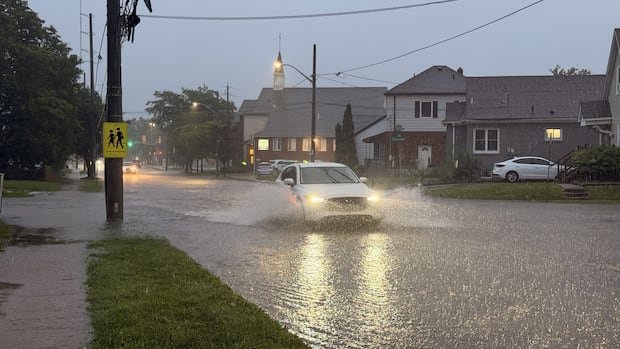

After a series of heavy storms in St. Catharines, Ontario, remnants of the flooding remain evident with discarded furniture and drywall lining the streets. Mayor Mat Siscoe highlighted that the city faced three significant storm events within a short span of 11 to 12 days, the most severe in its history.
The initial storm was managed by the stormwater system, but subsequent storms overwhelmed the already saturated ground, causing widespread flooding and sewage backups into homes. Some residents experienced sewage entering their homes, exacerbating the damage.
Local farmer, Dave White, adapted to the situation by harvesting his garlic crop in advance, recalling past losses due to heavy rain. He implemented measures like cleaning ditches and creating trenches to divert excess water from his fields. Despite these efforts, the recent storms have kept his restoration business busy with flooded properties.
As St. Catharines grapples with infrastructure challenges, Mayor Siscoe emphasized the need for significant investment in upgrading the drainage and sewage systems. He mentioned that the city’s infrastructure, some dating back 150 years, struggled to cope with the recent deluge, exacerbated by a lack of separate stormwater infrastructure in most areas.
While the city has increased spending on sewer systems in recent years, the complete overhaul of the system would require substantial funding and a shortage of contractors poses another challenge. The aging infrastructure across Canada is a common issue, with over 11% of water and wastewater systems in poor condition.
Adam Keane from Upper Canada Consultants explained that the recent storms exceeded the design capacity of the region’s drainage infrastructure, causing widespread inundation. These back-to-back storms pushed the systems beyond their limits, leading to overflows and bypass states at treatment plants.
To mitigate future flood risks, St. Catharines is exploring innovative solutions like redesigning parks to absorb excess rainwater temporarily. The city is also considering changes to the development process, requiring new projects to incorporate stormwater retention plans. However, the Mayor stressed the need for additional provincial and federal funding to expedite the infrastructure upgrades necessary for long-term flood prevention.
Siscoe acknowledged that the restoration work will be a multi-year endeavor, emphasizing the importance of prioritizing infrastructure projects to safeguard residents’ quality of life. Despite the challenges, the city is committed to addressing the vulnerabilities exposed by the recent flooding events.