
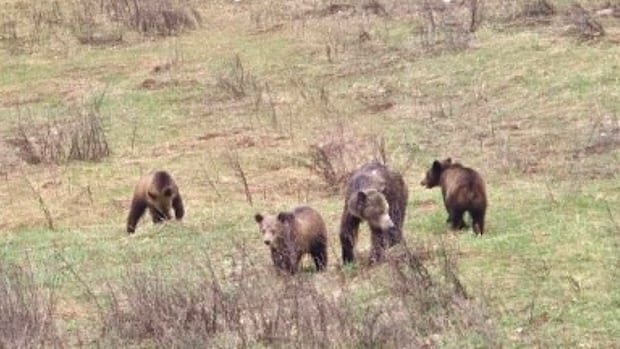

A protest occurred in Nelson, British Columbia, as community members rallied against the decision by the British Columbia Conservation Officer Service to euthanize a young grizzly bear. The bear, part of a group of grizzlies frequently seen in and around Nelson, was put down due to concerns over its behavior and lack of fear towards humans. The mother grizzly was also killed for public safety reasons, while the two remaining yearlings were relocated to a undisclosed location for monitoring.
Katie Graves, the founder of the Ursa Project Society, expressed disappointment over the decision, stating that the yearling bear, which had a leg deformity or injury, was mobile and able to keep up with its family. Despite the bear’s condition, Graves argued that it could have survived in the wild like many other bears with similar disabilities.
The British Columbia Conservation Officer Service defended its actions, citing the bear’s age, injury, and previous conflicts as factors that made rehabilitation or relocation unfeasible. The decision to euthanize the bear was described as a difficult but necessary step in ensuring public safety.
The incident has sparked a debate in the community, with many criticizing the decision to kill the grizzly bear. Wildlife biologist Clayton Lamb emphasized the importance of reducing attractants to prevent conflicts with bears and stressed the need for stronger policies at the provincial and municipal levels. The City of Nelson stated its commitment to preventing conflicts with bears through measures such as installing bear-resistant garbage cans and educating the public on wildlife interactions.
Efforts to manage attractants and enforce regulations on waste disposal aim to mitigate conflicts between humans and bears, ultimately ensuring the safety of both species in shared habitats.