
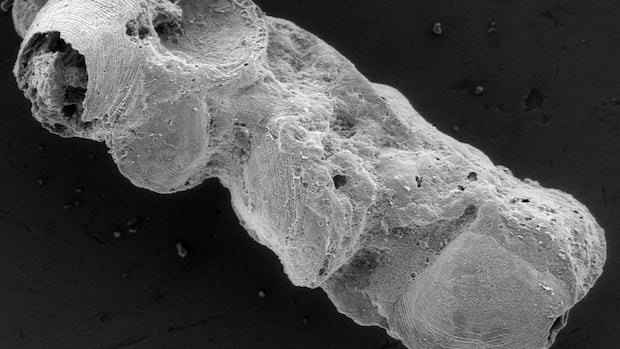

Long before the era of dinosaurs, a surge in biodiversity led to the emergence of early forms of modern animals and a rise in fecal matter. A recent study sheds light on how the examination of coprolites, or fossilized feces, aids in comprehending the ecosystems of ancient Earth and their relevance to present-day nutrient cycles and animal interactions.
The research, featured in the journal Trends in Evolution & Ecology, delved into an analysis of fecal fossils dating back to the Cambrian period, around 540 million years ago. By studying fecal remnants from primitive worms, invertebrates, and mollusk-like creatures, scientists determined that fecal matter likely played a crucial role in enhancing the habitability of deep-water environments and increasing nutrient availability during that period, which predates dinosaurs by approximately 300 million years.
The discovery of abundant feces during the Cambrian era holds significant implications for unraveling the origins of today’s marine ecosystems. Julien Kimmig, one of the study’s co-authors and head of the paleontology division at the Karlsruhe Natural History Museum in Germany, emphasized the importance of recognizing the prevalence of fecal matter in marine ecosystems, highlighting its crucial contribution to sustaining modern marine life.
The study, conducted by Kimmig and Russell Bicknell, examined hundreds of coprolites from various locations worldwide, including specimens collected over the years and those housed in museum collections. These fecal samples originated from diverse burrowing worms, arthropods, brachiopods, and hyoliths, with sizes ranging from microscopic in the early Cambrian to nearly the size of rabbit droppings 15 million years into the period. The coprolites eventually grew larger, became visible to the naked eye, and occasionally contained remnants of shells or worms.
Beyond offering insights into evolution and predator-prey relationships, the analysis of coprolites aids in understanding Earth’s ecology and the transformative impact of the Cambrian Radiation, also known as the Cambrian Explosion, on ecosystems. The study revealed a notable increase in fecal matter during the Cambrian Radiation compared to the preceding Ediacaran period.
Paleontologists studying the Cambrian era find fecal analysis to be an essential component in unraveling one of Earth’s most intriguing events. Prior to the Cambrian, during the Ediacaran period, fossils emerged, but the organisms within them were markedly distinct from modern marine life forms. The Cambrian Radiation brought forth fossil evidence of relatives to present-day animals, marking the establishment of modern biological diversity.
The research on coprolites not only sheds light on the past but also holds relevance for comprehending modern and future ecosystems. By examining waste products, nutrient cycles, and their impact on biological diversity, scientists gain valuable insights into ecosystems, providing a basis for predicting and modeling future environmental changes.
Karen Chin, a paleontologist at the University of Colorado, emphasizes the significance of coprolites in understanding ancient ecosystems. While fossils of animal and plant remains offer insights into biology, coprolites add a layer of interaction, revealing details about food chains, decomposition processes, and carbon cycles. Chin’s research focuses on the Mesozoic era when dinosaurs roamed the Earth, showcasing how coprolites provide unique insights into ancient dietary habits and ecological interactions.
The study of coprolites presents an exciting avenue for paleontologists to uncover unexpected details about the past. Despite being challenging to study and lacking the glamour of dinosaur bones, coprolites are a valuable resource for understanding ancient ecosystems. By delving into fecal fossils, researchers can glean information about ancient life forms and environmental conditions, paving the way for a deeper understanding of Earth’s history and potential future developments.