
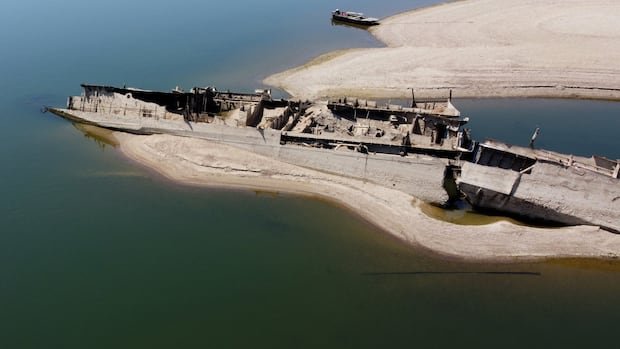

Nazi German warships that sank in the Danube River during World War II are resurfacing due to plunging water levels, highlighting the severe heat and drought affecting Europe this summer. The fifth heatwave in the region since May is forecasted to bring scorching temperatures to western Europe, with countries like Spain, France, and Italy nearing 40 degrees Celsius. The Copernicus climate monitoring service of the European Union confirmed that June and July were the hottest months on record in western Europe, leading to approximately 25,000 heat-related deaths.
The intense heat has fueled devastating wildfires and caused water levels in crucial waterways like the Danube to hit record lows. Climate scientists warn that these resurfacing wrecks are a visible indicator of the escalating impact of fossil fuel-induced climate change, intensifying heatwaves, droughts, and their repercussions on wildfires, agriculture, shipping, and energy systems across the continent.
Experts emphasize that the current extreme conditions are just a glimpse of the broader effects of global heating, underscoring the urgent need to address greenhouse gas emissions. Historically, the Nazis scuttled around 200 warships near Prahovo, Serbia, in 1944 to impede Soviet advances. However, due to the receding water levels, more wrecks, including a German military motorcycle in Hungary and ancient mammoth remains in Bulgaria, have been uncovered along the Danube.
The unprecedented low water levels in the Danube have raised significant concerns for several European countries that rely on the river for various purposes. Governments have implemented measures such as water restrictions for agriculture, redirection of river flow to maintain nuclear power plants, and energy conservation initiatives due to reduced water availability.
The rise in temperatures and drought conditions in Europe are clear manifestations of climate change exacerbating heat extremes and drought cycles, as highlighted by climate experts. The drying Danube and emerging wrecks serve as stark reminders of the urgent need for sustainable environmental practices and mitigation strategies to combat the escalating impacts of climate change.