
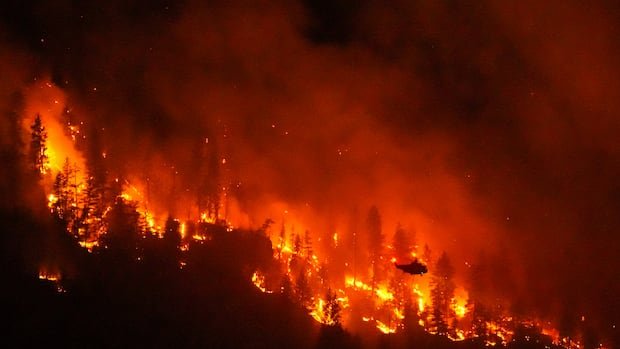

The impact of global warming on wildfires and permafrost thaw has been highlighted in a recent study. The study reveals that these events are releasing additional greenhouse gases into the atmosphere, contributing to accelerated climate change beyond current global estimates.
These climate feedback loops, where carbon emissions are triggered by climate change, leading to further climate change, could result in a 20 to 30 per cent increase in warming compared to current projections for this century. This study was conducted by researchers from U.S. institutions, including Stanford University, the Environmental Defense Fund, and Spark Climate Solutions.
Ben Poulter, a co-author of the study and program director at Spark Climate Solutions, emphasized that the remaining carbon budget is likely smaller than previously estimated. He warned that without accounting for these additional feedback mechanisms, there could be a significant gap between policy targets and the Earth’s response to climate change.
The study, published in the journal Environmental Research Letters, offers an extensive analysis of warming-induced emissions and their impact on global temperature rise. Most existing climate models primarily focus on emissions from human activities such as fossil fuel combustion, food production, and waste decomposition.
Of particular concern is Canada, where a considerable portion of these warming-induced emissions originates. The study underscores how changes in Canada will not only affect the country but also contribute to global climate change. It builds upon previous research that has documented the effects of extreme weather events, such as the unprecedented wildfires in 2023 that released a billion tonnes of carbon.
Canada, being a northern country, is experiencing accelerated warming compared to the global average. According to a recent report, the country could face up to five degrees of warming by the end of the century, leading to significant impacts on ecosystems, communities, and landscapes.
The thawing of permafrost, driven by rising temperatures due to global warming, is happening at an alarming rate. The study highlights not only gradual permafrost thaw but also abrupt thawing processes triggered by extreme events like wildfires and heavy rainfall. These abrupt thaws can release large amounts of carbon previously stored in the soil, contributing to the release of methane and carbon dioxide into the atmosphere.
Another critical source of warming-induced emissions is wetlands, which are prevalent in Canada. Concerns have been raised about methane emissions from wetlands, as they have been identified as significant contributors to the recent increase in atmospheric methane levels. Microbial activity in wetlands, driven by warmer temperatures, plays a key role in methane production. Scientists emphasize the importance of including freshwater wetlands in climate models to better understand and address this source of emissions.