
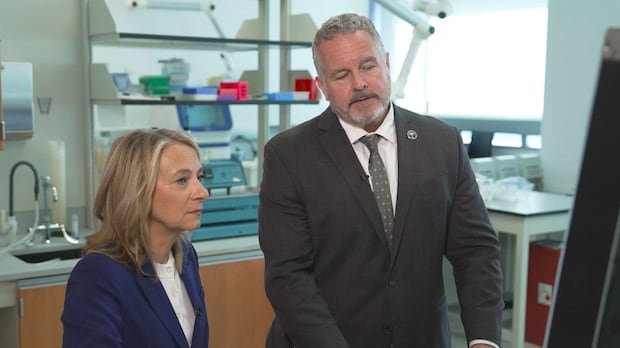

In a laboratory located in Manhattan, forensic experts in white lab garments are dedicatedly working to fulfill a commitment made a quarter-century ago. Their task involves extracting DNA from numerous human remains retrieved after the tragic events at the World Trade Center. The aim is to compare this DNA with samples obtained from personal items like toothbrushes and razors provided by the families of the victims. The methods for extracting DNA and the forensic techniques have evolved significantly since 2001.
Mark Desire, the assistant director of forensic biology at the New York City Office of the Chief Medical Examiner, expressed the profound impact of being able to identify and reunite a loved one with their family after years of scientific advancements. Despite their efforts, 40% of the 2,753 individuals who perished at Ground Zero remain unidentified, including around 10 of the 24 Canadian victims.
Recently, the lab achieved its first identification of previously unknown remains using an innovative technique. This breakthrough method combines DNA testing with genetic genealogy, which involves family tree research conducted by the New York City Police Department. Dr. Jason Graham, the Chief Medical Examiner of New York, hailed this approach as a new frontier likely to lead to further identifications.
For Monica Iken-Murphy, whose husband was a victim on 9/11, this development brings renewed hope. Despite not receiving personal effects of her husband, she finds solace in the potential for closure offered by these scientific advancements.
Desire, who was present at Ground Zero on the day of the attacks, recalls the challenges faced during the preservation and identification process. The vast debris field of the World Trade Center posed immense difficulties due to the variety of destructive elements present, necessitating innovative preservation techniques.
Over the years, advancements in DNA extraction from bone fragments have been crucial in the identification process. However, bone remains particularly challenging to extract DNA from, given the need to pulverize it. The lab faces the dilemma of balancing the need for multiple tests on remains with the risk of consuming the limited material available.
The introduction of new identification techniques, such as genetic genealogy, offers fresh prospects for identifying the remaining unidentified victims. The Chief Medical Examiner’s office urges families to provide samples to facilitate more matches and bring closure to those affected. Despite the ongoing efforts, some families prefer not to know if a match is made, opting to remember their loved ones in their own way.
The commitment to preserving the memory of the victims is evident, with remains being stored at the 9/11 Memorial and Museum at Ground Zero. This dedication underscores the ongoing mission to honor and remember those lost in the tragic events of September 11, 2001.