
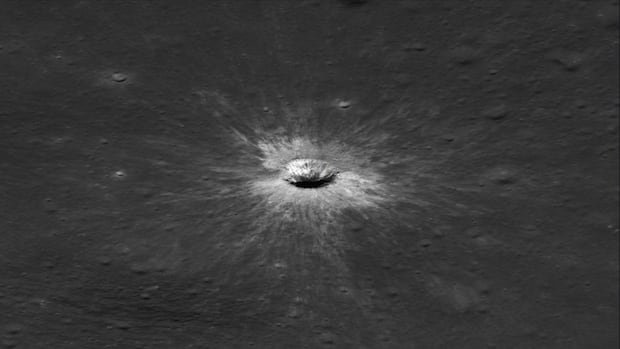

Scientists recently identified a massive crater on the moon resulting from a significant impact event two years ago, previously unnoticed. The crater, measuring 222 meters in diameter and up to 43 meters deep, is considered the largest impact crater in the solar system formed in recent history. This rare occurrence, estimated to happen approximately once every 132 years, offers valuable insights for NASA’s lunar base construction plans.
The discovery of the crater, named after the late Thomas McGetchin, was made by NASA’s Lunar Reconnaissance Orbiter (LRO) in May 2024, following a collision with an asteroid or comet fragment. Despite escaping immediate detection by Earth-based and space telescopes, LRO’s detailed images confirmed the crater’s existence in early 2026.
Mark Robinson, the chief scientist for LRO’s cameras at Intuitive Machines, described the impact’s aftermath, which extended over 100 kilometers on the moon’s surface, ejecting dust and rocky material at unexpected angles. Another study associated with the crater revealed a seven-kilometer cold spot around it, suggesting a disturbance in the moon’s topsoil similar to gardening activities.
Robinson highlighted the LRO’s findings indicating that the moon’s top layers are overturned by ejected material every 80,000 years, dispelling the myth that Apollo moonwalkers’ footprints will endure forever. The next phase involves assessing the risks posed by ejected crater material to NASA’s upcoming moon base, aiming to enhance structural resilience for potential impacts.