
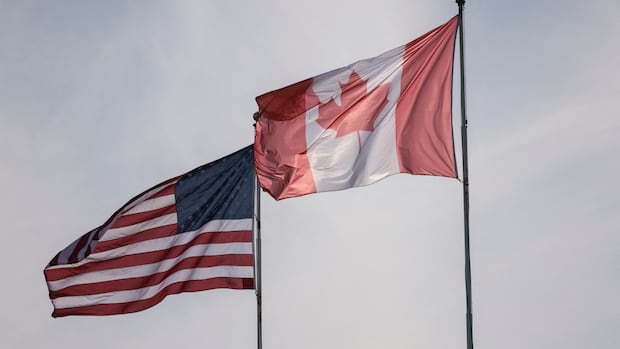

Canada and the United States are currently engaged in a significant trade conflict, with repercussions that may be more difficult for citizens to ignore this time.
Trade talks between the two nations fell apart last week, leading to the implementation of U.S. tariffs at 50 percent on $27.6 billion worth of Canadian goods beginning Saturday.
In retaliation, Prime Minister Mark Carney declared “dollar-for-dollar” counter-tariffs on an equivalent $27.6 billion of U.S. products, which are set to take effect on September 8.
Following this, U.S. President Donald Trump issued threats of additional tariffs, which could escalate duties on Canadian vehicles, auto parts, trucks, and steel from 25 percent to 50 percent, effective January 1, 2027.
Currently, neither party appears willing to compromise.
As the stalemate continues, the potential impact on Canadians grows. Ottawa is allocating $7.5 billion to support workers and businesses affected by the new tariffs.
As tensions rise, Washington journalists Willy Lowry, Katie Simpson, and Paul Hunter explore the severity of this trade conflict and what steps might be needed to re-establish dialogue between both nations.
Below are some key excerpts, edited for brevity and clarity. Listen to the complete podcast discussion here.
Paul Hunter: Katie, how severe could this trade war become?
Katie Simpson: Canadians should prepare for challenging times ahead.
The cabinet ministers’ announcement on Tuesday included additional financial assistance for Canadian businesses that will face significant losses due to this situation.
The decision by the U.S. to impose those 50 percent tariffs was calculated and targeted. Many might have considered them harmless, affecting items like hockey sticks and honey, but these carefully chosen tariffs will significantly impact numerous small to medium-sized enterprises, particularly in one-employer communities, resulting in considerable economic turmoil.
I anticipate we will hear many stories about the hardships faced by individuals who will worry about their ability to pay their mortgages, provide food for their families, allow their children to participate in sports, or support their kids’ post-secondary education. These concerns will be prevalent.
Difficult discussions will unfold across Canada in the coming weeks and perhaps months, as there currently seems to be no clear resolution in sight — we are in a phase of escalation, and there will eventually need to be talks to diffuse the situation. The challenge is determining who will concede first, as both sides are wary of appearing to back down.
The federal government may need to enhance social support measures for those who might be laid off or experience reduced working hours.
Paul Hunter: The government is beginning that process, but the reality is becoming more pressing. This is indeed a test of resilience.
Katie Simpson: We’ve discussed the strong sense of patriotism in Canada and the movement to purchase Canadian products while avoiding American goods.
This is something that both the government and Canadian businesses are encouraging.
However, as this situation drags on, it’s important to consider that Canada has a population of 41 million, while the United States has 350 million.
The Canadian economy relies on the U.S. market for growth, as Canada cannot sustain itself without selling its goods to the American market.
The longer this conflict persists, the more difficult it will become for Canadian businesses and employers to navigate.
Willy Lowry: That’s a valid point, Katie. Over the past year or so, many of the tariffs and the American economic measures against Canada have been somewhat alleviated, right?
Although many have felt the impact of these tariffs, it has not been as severe as initially expected.
Paul Hunter: Mark Carney has frequently noted that the relationship between Canada and the U.S. has evolved and that the U.S. has changed, which is accurate.
Trump’s strategy may rely on the assumption that Canadians will not tolerate these measures and will compel the Canadian government to yield. This could very well be the perspective held by U.S. officials.
It’s reasonable to assume that Mark Carney would respond by saying, ‘It’s up to Canadians to prove him wrong.’